Hope for Renewables? Even the Slightest?

There may be a model for progress in renewable energy from a somewhat unexpected source.

I starting working seriously in what was then called alternative energy (now,most often, renewables) in the early 1980s. It was a moment of optimism or, more accurately, the end of a moment of optimism, some would say foolish optimism, about weaning western economies off complete reliance on fossil fuels. There were very advantageous tax credits for investment in non-fossil energy, like solar, wind, cogeneration and hydroelectric. The federal and state governments, even many local governments, were investing directly in projects, some pilots and some to full-scale.

As a staff member of a state agency in North Carolina in the 1980s, I remember running some financial analyses in which 55 percent of investment costs in a certain cogeneration project were returned in the form of first-year tax credits, both federal and state. Operating under those conditions, few projects were rejected. That was good, in a way, because a lot of generation capacity and infrastructure was built and a lot of new technologies were developed. But, of course, it wasn’t completely good, because some of those projects were not, as it turned out, the best use of resources.

In any event, there was significant interest in non-fossil energy development, there was substantial growth, new enterprises, significant investment, and projections of much more of the same.

Many of these non-fossil energy programs had started with characteristic super-seriousness in the Carter administration following the ‘moral equivalent of war’ speech to the nation, but fell into disrepute with the election of Ronald Reagan and were either unfunded or allowed to expire. And that, as they say, was pretty much that. Renewables have continued to grow in importance and scale, but at nowhere near the size or pace once forecasted.

In the intervening thirty years, or so, we in America have engaged in mostly ineffective and unproductive, finger-pointing, blaming and shaming Kabuki theater that passes for debate hereabouts. Renewable supporters pretty much directly accuse the mainstream oil and gas industry of orchestrating a money-fueled conspiracy to perpetuate our addiction to fossil fuels. Supporters of the fossil energy industry, including many government officials who still count on ‘big oil’ for contributions to both campaign and constituent economies, complain about undue environmental restrictions which prevent the country from effectively employing its domestic resources.

Result? Mistrust. Muddle. No progress. (By the way, my experience suggests the situation is much more nuanced than our national dialog suggests; people in the energy business aren’t necessarily evil and environmentalists waste a lot of air-time accusing them of being so.)

America might best look – as it often should for examples of how adults behave in matters of serious policy debates – to Europe for a way forward.

Günther Oettinger is the European Commission’s energy commissioner. And, although he was a member of German Chancellor Angela Merkel’s center-right party and himself a political conservative, he was won praise from Europe’s environmentalists for promoting a sensible way forward in promoting decarbonization, the use of non-fossil fuels to promote the reduction of carbon dioxide emissions. He has also proposed comprehensive energy efficiency programs, funded by utility re-investment.

Oettinger has taken no little flak from his conservative colleagues back home but he has remained steadfast in moving the agenda forward because he thinks it is the right way forward for Europe. No blaming. No posturing. No demonizing.

Can you imagine an American conservative doing the same? Can you imagine one even publicly acknowledging the issue of carbon dioxide emissions much less taking on conservative colleagues to get something done on the issue?

We have so much to learn.

When I Go Away

Early in the morning
When the church bells toll
The choir’s gonna sing
And the hearse will roll
On down to the graveyard
Where it’s cold and gray
And then the sun’s gonna shine
Through the shadows
When I go away

When I Go Away, Levon Helm (Electric Dirt, 2009)

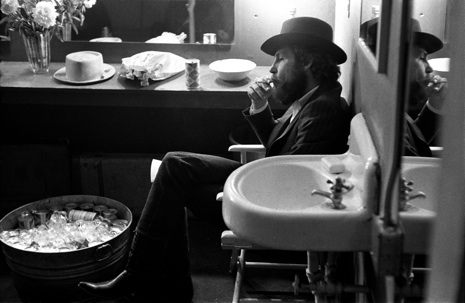
The sound of The Band, prominently featuring Levon Helm’s vocals, was an extraordinary combination of undeniably important, completely unique and timelessly familiar. When I first heard ‘Music from Big Pink,’ The Band’s first studio album, it felt like the first time I ever heard a reading from The Bible.

Helm’s voice reflected knowledge, life knowledge, sad knowledge, resigned knowledge, in the same way Frank Sinatra’s did. When Helm sang about unbearable yet inevitable heartbreak, you could hear that he knew of what he sang; it wasn’t pretense or artifice. Especially in his later, post-Band recordings, his voice, then showing the effects of cancer, was chillingly honest, raw, natural. More like, say, Johnny Cash’s later recordings than Frank Sinatra’s.

When I heard that Levon Helm had passed this week, I got a sick feeling in my stomach, like I hadn’t kept up with an old friend who moved to a different city. I just listened to a couple of interviews Terry Gross did with Helm on her NPR show, Fresh Air [click to listen].

As in Levon Helm’s song, ‘When I Go Away,’ (selected lyrics above) life goes on when someone passes away. Doesn’t mean we have to like it.

Eternal peace to you, Levon.

Clowns in Funny Hats

So Long, Dick

For some of my readers, this will come as news. Before the ubiquity of online social media, Google, YouTube, NetFlix, and iTunes, you pretty much had to rely on local radio and, to a much lesser extent, television for introduction to new music. Or maybe, if you were really lucky (as I was – thanks, Melecio), connected and knowledgable friends.

The rest of America relied on Dick Clark and/or Don Cornelius. (You can read my thoughts about the passing of Don Cornelius here.) Clark’s show started as a local affair in Philadelphia; it grew to become Bandstand, then, as it went national, American Bandstand. From the start, a couple of things were obvious: (1) Dick Clark was and was always going to be the adult in the mix – this was no ersatz kid – and (2) he loved music and musicians.

He seemed genuinely happy interviewing the kids who danced on the show and wore the latest fashions (My God, the crushes I had on Bandstand’s cast members.). Clark dug deeply into what they liked about what they’d just heard. American Bandstand, courtesy of the host’s earnestness, must have been gold for the research departments of the nation’s advertising agencies.

Over the years, Dick Clark presented a dizzying array of artists. Maybe not always the best artists, although that can be debated, but the variety was both odd and amazing. Reading the list induces incredulity. Here’s a (very) partial list:

Sam Cooke, Bill Haley and the Comets, Chuck Berry, The Supremes, Fats Domino, Till Tuesday, The Jackson Five, The Beastie Boys, Smokey Robinson and the Miracles, Sonny and Cher, Paul Revere and the Raiders, Don McClean, The Temptations, ELO, Jethro Tull, The Young Rascals, Culture Club, James Brown…

Clark became the butt of jokes and a hollow self-parody of his better self at some point, then, in part due to a severe stroke, was seen only as the wooden television presenter of New Year’s Eve. It was a crappy public end to a long and storied career dedicated to something as great as popular music.

May Dick Clark rest in eternal musical peace.

Completely and Precisely Wrong

[PLEASE NOTE: The following photograph is disturbing. Some readers may wish to avoid.]

Earlier today, the Los Angeles Times published photos of American soldiers posing smugly and triumphantly with the dead bodies of their adversaries in Afghanistan. They, and the many other photos the LA Times chose, out of propriety, not to publish, are appalling, disrespectful of the dead, debasing of humanity. Not to excuse the behavior, but these are exactly the characteristics that can come out in people who are in protracted military conflict situations.

These photos, along with those of American soldiers cavorting in “humorously” sexualized positions with their prisoners, from inside Iraq’s Abu Ghraib prison, paint a horrendous picture of American forces, their commanders and their mission, their disrespect for our adversaries and their Islamic traditions.

And, as one would expect, the statements of response from the Pentagon were swift and furious. But the most intense condemnations were directed, not at our soldiers’ behavior, but at the Los Angeles Times. The spokesperson for Leon Panetta, the Secretary of Defense, said his boss was “disappointed that despite our request not to publish these photographs, the Los Angeles Times went ahead. The danger is that this material could be used by the enemy to incite violence against U.S. and Afghan service members in Afghanistan.”

Dead wrong, Mr. Secretary.

It is absolutely not the publication of these photographs that will incite violence against America and Americans. It is not even the fact that these horrific photographs exist. What incites violence against our men and women in the armed forces and against our nation is the fact that some of our servicepeople treat our adversaries as playthings and, frankly, the fact that our forces are still in Afghanistan.

Do you really want to end the violence against Americans in Afghanistan, Mr. Secretary? Bring our men and women home. We have no business being there. But because it is impolitic to state the plain truth – namely, that our mission in Afghanistan is both fruitless and endless – you create a false issue around the LA Times’ publication of these photographs.

In this matter, sir, you are not only wrong, you are shamefully so.

One of Us Was Adopted

It was a cold rainy day in the Sierra Nevada foothills, somewhere just west of Sonora, where we first met a few years back. It all started as a lark, as these things often do. Just something to do because we were all damn tired of looking at each other in the closed confines of the dark cabin.

The four of us had taken quite a while before we were ready to even think about getting another dog after our beloved Buck passed. (Anyone who’s known me for any length of time might still remember dear Buck’s writing as my alter ego.) So, it was a genuine surprise that the kids asked to visit the humane society and look at the dogs they had for adoption.

Good to kill a couple of hours, I thought. I should have known better; we never stood a chance.

The moment we walked in, she sat attentively, leaning against the chain-link fencing that separated the dogs from the people. Her big brown eyes never left us. Not as we walked toward her. Not as we walked around to look at her kennel mates.

Looking back, I think she knew she had us from the first look.

We talked with her. Walked outside together. Tested our chemistry.

The kids loved her immediately. The staff told us, in a very serious whisper, that she’d not had a happy young life. She’d been abused. She had some behavioral issues. She was fearful and sometimes aggressive. We had to be ready for that, had to be in it with her for the long haul. She’d be a great dog, they said, with a real family.

And so, we adopted Dee Dee.

From the first day, we noticed the odd quirks (She barks fiercely at UPS trucks but is perfectly fine with FedEX.), the anger coming out of nowhere (Dee Dee reacts violently to Giggy’s former pre-school teacher because, we assume, he has a beard.), the piggishness around bed space (It’s okay because I’m flexible and, heck, I can always sleep in the shape of a pretzel if I have to.).

She’s been part of the family now for about five years. Her neuroses have, if not completely disappeared, moderated a lot. I can’t imagine walking at Fort Funston, or going up to the mountains, or even sitting down in the evening without her.

We may have given her a loving family, but she’s given us plenty in return. Which we knew from the day she adopted us.

Congressional Profile: North Carolina’s Virginia Foxx

This may be no big deal to her. In fact, Virginia Foxx, a Republican representing the far northwest corner of North Carolina in Congress might be delighted to be criticized by a San Francisco liberal. If so, get ready for  the waves of delight, Ms. Foxx.

Representative Foxx was one of only 11 members of Congress to vote against the aid package to help Gulf Coast victims of Hurricane Katrina. She was one of only 33 Republicans to vote against extension of the Voting Rights Act in 2006. Both are extraordinary positions, the first is inhumane to those who were suffering, but the second is particularly sad because of North Carolina’s long tradition of support for Civil Rights. Its former governor, Terry Sanford, was among the most active southern governors supporting civil rights. She is also confused about who worked to pass the act initially. Here, she reveals her ignorance on the floor of the House of Representatives and is called out by another Representative.

Representative Foxx asserted that Matthew Shephard’s murder was not a hate crime committed because he was gay, but rather a robbery gone bad. She went on to say that the use of the crime to pursue hate crime legislation was a “hoax.” All police evidence shows clearly that the crime was, in fact, directed against Shephard because he was gay.  Here is Foxx’s statement on the floor of the House of Representatives.

Representiative Foxx perpetuates the fiction that the president (that is, the Democratic president) can have an effect on gasoline prices in the United States and can create “energy independence.” Nothing can be further from the truth. Energy independence is but a conservative wet dream. The very notion has been discredited by every knowledgable and responsible energy analyst, even many within the energy industry itself, including the then-CEO of America’s second largest energy company. Here is Foxx’s statement on the floor of the House of Representatives.

Representative Foxx has said she “has little tolerance” for people who had to accumulate debt (i.e., take out student loans) in order to pursue their educations. Here, she discusses how things were back in the dark ages when she and her husband went to school. She is apparently unaware how expensive higher education has become, the cost of which forces many to accept large amounts of debt in order to obtain education. This is especially startling when one remembers that, before she entered politics, Foxx was president of a community college.

To stand out as an exemplar of ignorance and stupidity in an organization like Congress takes hard work; by her own record and words, Virginia Foxx proves herself more than up to the task.

It’s Easter, to Some

If you’re of the Eastern Orthodox variety of Christian (Greek, Russian, Serbian, et al.), today is Easter. Last week was a kind of dress rehearsal and early opportunity to get chocolate bunnies.

A couple of things I ponder:

First, what the hell is the deal with the Easter Bunny, candy, hunting for eggs? What does this have to do with Easter? Why are these the prevailing images Americans have for the commemoration of the moment the Christian God, after taking the form of a human on earth and being crucified, was resurrected and returned to unify in Heaven with the other forms of the Holy Trinity? Is it just gross commercialization, along the lines of ho ho ho jolly fat-man present-bearing Santa Claus becoming the poster-boy for Christmas? I’m befuddled.

Second, at some point in long-ago history times, St. Gregory re-examined the Holy Bible and found an indication that calendars were wrong. He studied hard and adjusted some things and, voila, we have the calendar, the Gregorian Calendar by name, adopted nearly-universally by the western Christian church. Others, mostly from the eastern Christian church, figured the older interpretation of the Holy Bible was correct and stayed with the pre-existing calendar. As just one consequence, two Easters. Among other things, this situation leaves me to sincerely scratch my head when anyone says they know and follow a literal interpretation of the Holy Bible. I always wonder if these people suspect there’s only one possible interpretation to have. Or, if they don’t understand that serious Biblical scholars (even Christian ones) have never completely aligned on the same interpretations over the years.

Well, I’m off to start cooking. On Easter, we Greeks say “Christos Anesti,” Chist is risen, to which we respond “Alithos Anesti,” or He is truly risen.  So, as you dig into your chocolate bunny leftovers today, I wish you a very happy Easter.

Naughtily Secret (Not)

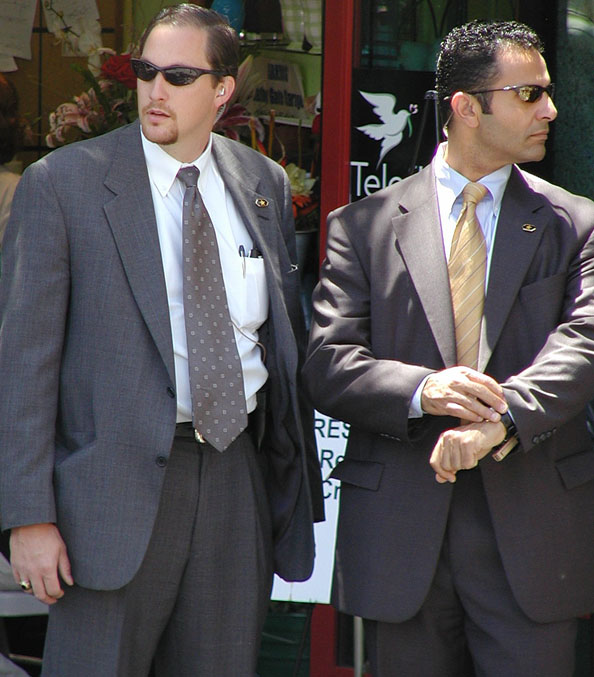
So, let’s say you’re a Secret Service agent. You fly with the President of the United States to Colombia, right? He’s got some, you know, high level meetings with the president down there. (I guess they have a president.)

But, you know, standing around in a dark suit while these stiffs talk all day is, you know, a complete drag. Besides, the heat you’re packing under your coat is heavy and it’s, you know, chafing a little bit.

So, your buddy says into the cuff of his shirt (which, as all Secret Service agents know, is where you keep your secret microphone), “Hey, pal, I was just having this awesome idea.”  And he goes on to say that, hey, you’re just a couple of bored and lonely guys in Colombia. “Let’s party.”

What could possibly go wrong?

Quite a lot, as it turns out. Read all about the president’s good-time party protection team here.

A Sure Sign For North Korea

The message from yesterday’s disastrous rocket launch couldn’t be clearer. If only the North Koreans could see it.

Sadly, the government of North Korea doesn’t seem able to. Their public reaction to the blown missile launch was to announce further nuclear tests. Remember, please, that while their neighbors to the south live in a strong, vibrant and economically sound democracy, the North Korean people are quite literally starving to death. Such is the way of totalitarian dictatorships who’ve lost any reason for continuing to exist.

Rattle the sabers. Look strong. Threaten. Play a game of nuclear chicken.

The global community agrees on little but, for the most part, remains steadfast in keeping North Korea the pariah state it has made itself by its own behavior.

The country could be different. It could build its own infrastructure, now frozen in the 19th century. It could feed its people, now scratching a bare living in subsistence agriculture. It could concentrate on creating a market economy as South Korea has so successfully done.

Of course, I have no particular standing in this issue; I’m neither Korean, nor a diplomat. But simply as a human being, I beseech the North Korean government to take yesterday’s abortive missile launch as a clear sign that it’s time to change direction.