What Is Love, Anyway?

It’s a question as old as human beings – what is love? Something that gives us strength? Something that lasts, that brings out the best in us? An obsession? Warmth? Companionship? Pain?

Answers here, some more unusual than others, in song.

Howard Jones, What is Love? (1983)

David Bowie, Heroes (1977)

Willie Nelson, Always on My Mind (1982)

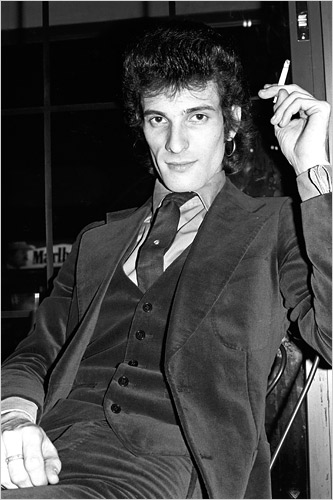
Mink DeVille, Mixed Up Shook Up Girl (1977)

Bruce Springsteen, Tunnel of Love (1988)

Chris Isaak, Wicked Game (1989)

Bonnie Raitt, Love Has No Pride (1976)

Rickie Lee Jones, We Belong Together (1981)

Billy Joel, You’re My Home (1973)

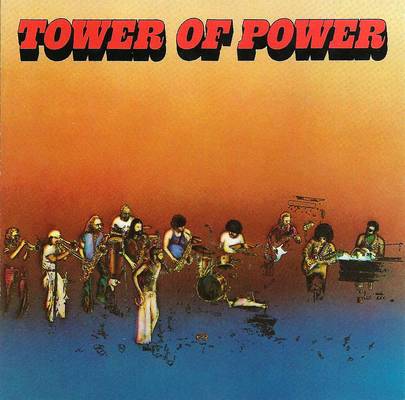
Tower of Power, So Very Hard to Go (1972)

Reality Check

Athens is ablaze.

Many Greeks are consumed with anger over the terms necessary to avail themselves of the financial bailout offered by the deities of the European community and have taken to the streets in protest. The changes, protesters claim,  amount to a significant and unacceptable change in Greek life, in Greek society, in what it means at its core to be Greek.

This is a precarious moment. Failure of the Greek government to deliver on these terms (and get the bailout funds) would result in serious consequences for Greece, and for the rest of Europe. Together with other developments, it may signal the end of European financial union – no more single currency, open trading relationships, free flow of people across historic national boundaries.

Care to watch a complete meltdown of the European community economy? Care to consider for just a moment what that might mean to the rest of the world? War? Complete world economic collapse?

The scale of this issue is, I realize, hard to fathom, even, perhaps, harder to take. So, I understand my fellow Americans wanting ready distraction – professional golf, the “tragic” death of a pop music princess, Oscars, baseball’s spring training, March Madness, etc.

All well and good; I enjoy diversions too. But our media is splashed with every angle possible on Whitney Houston, God rest her soul, and not a sentence for events that could shape our world for the rest of our lifetimes.

Time for a good strong dose of reality.

It’s Life’s Illusions, I Recall

When I was younger (lots younger) practically every teenaged girl I knew sang this Joni Mitchell song by heart. And they sang it, sometimes tearfully, often to each other, whenever their hearts were broken.
Bows and flows of angel hair and ice cream castles in the air
And feather canyons everywhere, i’ve looked at cloud that way.
But now they only block the sun, they rain and snow on everyone.
So many things i would have done but clouds got in my way.
I’ve looked at clouds from both sides now,
From up and down, and still somehow
It’s cloud illusions i recall.
I really don’t know clouds at all…
I’ve looked at life from both sides now,
From win and lose, and still somehow
It’s life’s illusions i recall.
I really don’t know life at all. – Joni MItchell
Micthell’s Both Sides Now tells the story of a person whose illusions of youth – romantic notions about the world, love and life – are shattered by disappointment and lead, very literally, to disillusion.The song’s singer, now a somewhat embittered cynic, looks back both at her earlier, more romantic, understandings and her later, dark ones and concludes  she has achieved no real, deep understandings, indeed, that such understandings are likely impossible.
It’s a song that encourages and validates the despair that’s sometimes too common in heartbroken teens.
Contrast Mitchell with Episcopal Bishop Steven Charleston, who sees losing illusions about life, not as a function of loss, disappointment and despair, but of replacing one lens, one perspective for another by virtue of greater and perhaps more mature understanding. In other words, personal growth. And as a result of this change, Charleston posits we can see things (in his example, the Bible) in new and more enlightened ways.
We walk on water. As a child I did not understand and took the story for magic. But now I see that the boat is the illusion and the truth is waves beneath my feet. I do not know where my next step will take me. I have no certain ground that life will guarantee. With the weight of pride in mind, stones of judgment in hand, heart heavy in anger: I could so easily sink into the dark. But if I trust, if I forgive, if I love as I am loved, then my soul stands feather light, no matter the path I take. We walk on water every day. The challenge is to reach the shore. – Steven Charleston

Here, the child’s understanding of the Bible as a series of magic tricks is replaced by an adult’s understanding of it as an outline of an expansive and different way to live. How rich is this way to break through life’s illusions, how rich, too, it makes the Bible – a source of ways to live, instead of, as many would have it, a book of literal stories.

As a way to break through the illusions of life, I believe there’s much more value in Charleston’s approach than Mitchell’s.

Where’s the Market Now?

There are lots of things, apparently, I do not understand about the economics of pharmaceuticals.

Here is a story from The New York Times about the American dwindling supplies of an anti-cancer drug for kids (We may run out completely in a matter of weeks, according to the article.).

A crucial medicine to treat childhood leukemia is in such short supply that hospitals across the country may exhaust their stores within the next two weeks, leaving hundreds and perhaps thousands of children at risk of dying from a largely curable disease, federal officials and cancer doctors say.

The drugs are wildly popular because, well, they seem to work. Their price has increased in some quarters “eightyfold.” Shouldn’t market forces dictate that such a drug would be amply produced and available to help children fight cancer?

Courage, please

During the last great economic upheaval in America, in the 1930s, there were a lot of people out of work, hungry, without decent places to live, without access to meaningful educational opportunities, unable to afford spending on the goods and services that make our economy and our society function.

Like now.

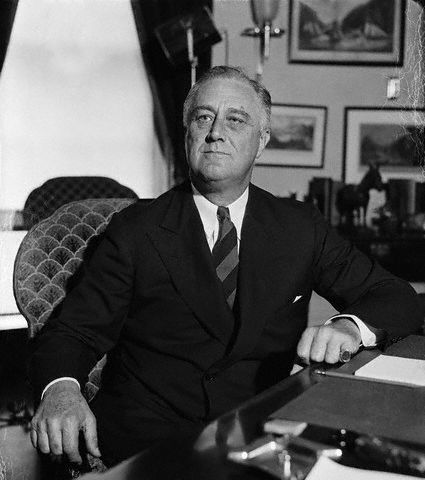
Then, unlike now, we had a leader, Franklin Delano Roosevelt, who ably articulated a path forward based on American principles. We would spend, he said, on projects that would put our fellow Americans back to work. We would build things of lasting social benefit, like roads, schools, dams and bridges. We would create public art. We would write books and plays that would enrich our lives. And we would get benefit, not only from the specific things these projects created, but from the renewed ability of presently unemployed people to again take full part in both the economy and the society.

And the result?

We got highways we still use, dams that still generate power and divert water to agriculture and cities, schools that still educate our young people (I went to a Depression-era school myself, San Francisco’s George Washington High.), plays that ennobled and entertained, murals and other art still recognized as exemplars of their age, running water and electricity extended to millions who otherwise would have done without (Are you listening, my friends in Texas? This is how farms in your state got electricity.), and bridges, including what is one of the best known and most beloved landmarks in the world (its picture, below).

And even more, we enabled our fellow Americans, our fellow human beings, to feed their families, to regain some measure of dignity and self-respect, to achieve some measure of engagement with their own country. We stabilized our middle class. We made our economy, not to say our society, functional again. We avoided many of the class warfare difficulties felt in Europe during the same period.

Now, facing similar economic disruptions, where is the leader who is willing to buck the “free market” tide (that got us into this mess to begin with)? Where is the leader who is willing to say that we need more public sector spending, not less? (Employment is now growing, by the way, except in the public sector.) Where is the leader brave enough to conceive of and communicate an agenda as audacious as Roosevelt’s? Where is the leader who has enough confidence in American principles, and the American people’s sense of fairness and rightness to even say this out loud?

Where? Sitting silent and afraid.

Places I Love: Lisbon

It was only a bit of professional happenstance that brought me to Lisbon; the city was never on my list of travel must-sees. Yet, when I arrived, I somehow felt at home from the very first. Lisbon is a city of unique homes clinging to several hilly neighborhoods. The climate was mild and foggy and the city smelled of the many Australian eucalyptus trees planted long ago by Portuguese sailors returning from the South Pacific, just like my San Francisco.

I loved the trams that run on Lisbon’s streets, then turn into funiculars to climb its many hills.

Like Paris, Lisbon has several fresh markets for flowers, produce, housewares and, most importantly for this city with an historic connection to seafood, fish. Here, the Mercado Da Ribeira.

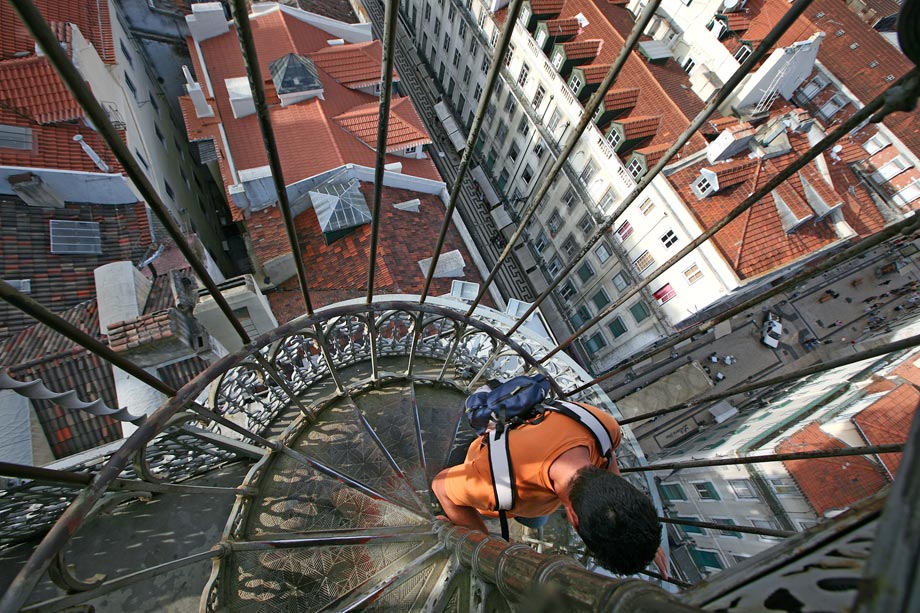
Connecting two very hilly neighborhoods is the Santa Justa, a real machine-age elevator and bridge. Yeah, it is as vertigo-inducing as it looks. This will give you a feel for the ride.

I live in one of the world’s great food cities and I’m not easily impressed but Lisbon’s food blew me away. The fish was fresh, varied, plentiful and prepared simply. Pick your fish and it’s pulled live from a tank, killed, cleaned, salted and grilled. Small side dishes include fresh beans, green vegetables, cured meats. Cod is served in hundreds of ways. All the wines were amazing, not just the port.

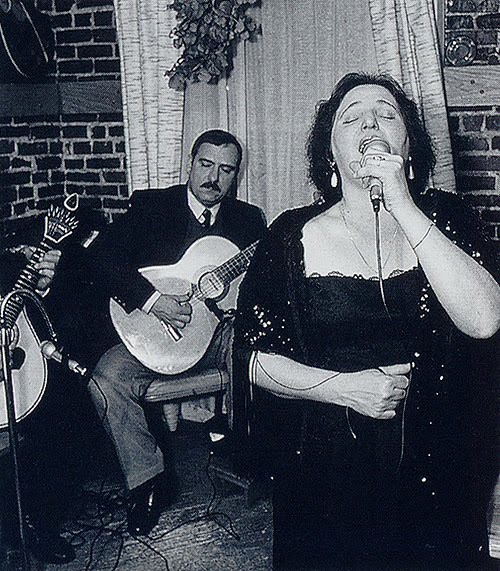
Lisbon is a city with a deep, and sometimes deeply sad soul. There is a music here, brought initially from Africa, called Fado (“fate” in Portuguese). The lyrics are sad, brooding, as fatalistic as its name would suggest; listening to Fado can take your breath away. Artists play in clubs and bars, at festivals and on the streets everywhere. A modern example.

I don’t know when or if I’ll be back but I think of Lisbon fondly, and often.

Films of Faith and Inspiration

These films bring more than just feel-good stories and swelling music. When you’re ready for a serious look at faith, or want a story about overcoming significant odds, I personally recommend getting your hands on one of these.

The Passion of Joan of Arc (1928): First, it’s silent, so I know that automatically drops it out of consideration for some people; their loss. This film is a masterpiece of the effect of faith on one human being. The face of Maria Falconetti, who plays Joan, is absolutely a window to the soul. Here’s a look at the film’s opening 10 minutes.

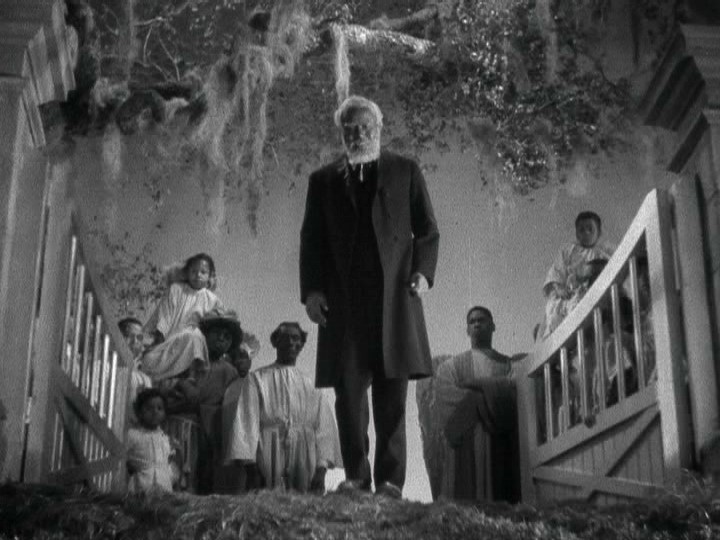
The Green Pastures (1936): Almost all Biblical films place the stories somewhere in the MIddle East, using European or European-American actors in drapery-heavy wardrobe. Imagine, if you can, putting the stories of the Bible in the context of rural African Americans, using their social structures, culture, music and vernacular.  This is a powerful and entertaining film that can open a great many possibilities for better understanding stories that seemingly have little to do with our modern lives. Some images may strike some modern viewers as racist – and they do use stereotypes, there’s no denying – but they make Biblical stories more tangible. And the music is wonderful. Here’s a short clip.
The Apostle (1997): I’ve heard it took Robert Duvall 20 years to get this picture made; so worth it. An American slice of life, which is worth watching the movie for all by itself. But you get much more. We’ve all seen films with evangelical preachers as central characters. Typically, they are fakers, con men, in it for a buck. The great strength of ‘The Apostle’ is the idea that a deeply flawed human being, and Duvall’s character is surely that, can have a serious religious faith. This film takes that faith seriously. Duvall and the supporting cast (including a small but critical role for Billy Bob Thornton) are brilliant. Here’s a brief clip.

Amazing Grace (2006): Based on the true story of William Wilberforce, this film shows that adhering to just but unpopular principles can be a difficult and challenging path. After a mid-life conversion to evangelical Christianity, Wilberforce led the British parliament to abolish the lucrative slave trade in 1807 against fierce commercial and political opposition. The cast includes the amazing Youssou N’Dour. See the trailer here.

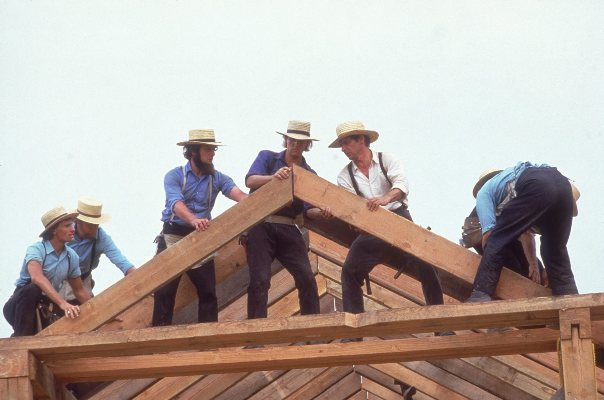
Witness (1985): Warning: This film is violent, and yet, it may cause you to question your faith in the expediency and effectiveness of violence itself. This hard-nosed police thriller concludes in a very unusual way; at the end of the day, it’s the wholesomeness, neighborliness and values of the Amish community that seduces the Philadelphia cop as much as the comely widow.  Here’s the [over-the-top] trailer.
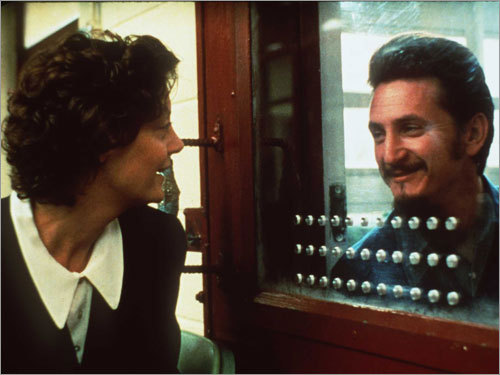
Dead Man Walking (1995): The story of a nun, Sister Helen Prejean, who became the counselor to a death row inmate and tried to give him some understanding and appreciation of real human love before his execution. Because we know how unlikely it is the sentence of execution will be commuted, we’re forced to find another way for the principle characters to achieve something meaningful in this intensely gripping story. This film is deserving of the many awards it received. Here is one of the film’s many powerful scenes.

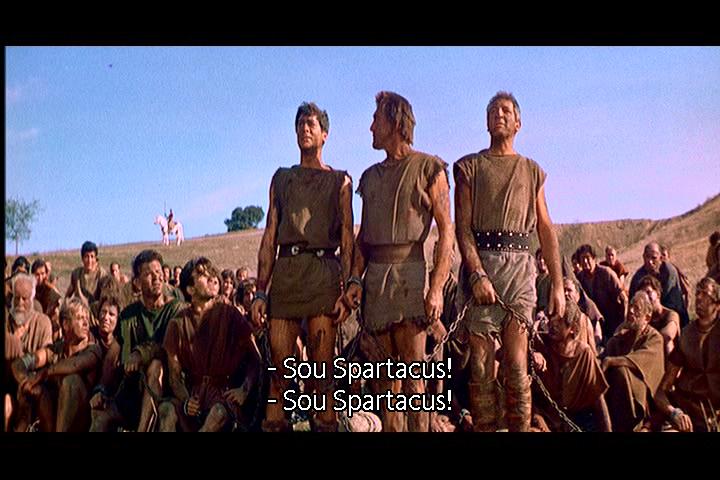
Spartacus (1960): Let’s see if this sounds familiar, contemporary…Fight against the world’s superpower to achieve freedom. Think as a revolutionary, even as you experience deep privation. Yourself a slave, organize people with no power, no money, no stake. Taken from the little that’s actually known about the real Greek slave who led a rebellion against Rome. “I am Spartacus!” You damn right.
Gandhi (1982): Nonviolence, active nonviolence, can topple empires. Witness the life of Mohandas Gandhi, the preeminent philosophical, political and spiritual leader of the Indian independence movement. This film of grand scope follows Gandhi’s epic life. Here, Oscar-winner Ben Kingsley delivers a stunning speech about his commitment to nonviolence, despite resistance within his movement. “There is no cause for which I am prepared to kill.”

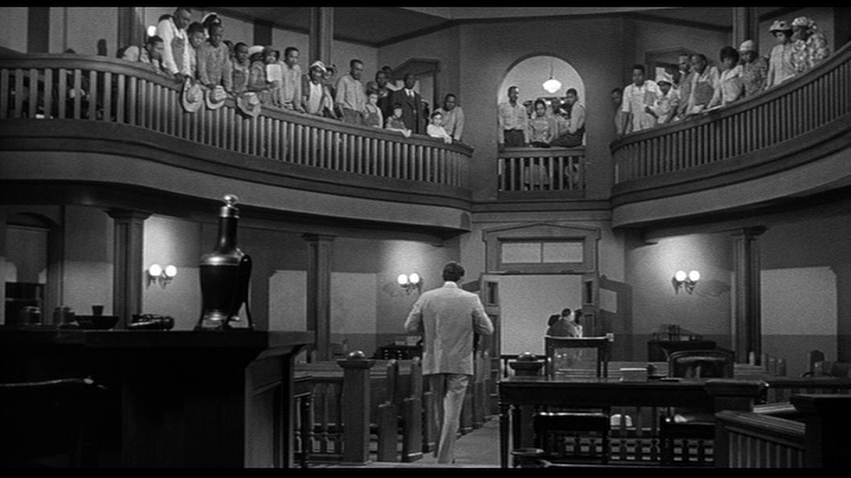
To Kill a Mockingbird (1962): Taken from Harper Lee’s novel, this film shows the Depression-era life of a southern girl as remembered by the woman she has become. Her father, the town’s beloved and respected lawyer, is put in the position of defending an African American man against obviously false charges of rape. The film, in turns savage, warm, funny and frightening, shows the love and growing admiration of a daughter for a father who takes a principled stand against her hometown’s prevailing racism. The lawyer’s closing argument remains a classic.

The Best Years of Our Lives (1946): This film shows the lives of men who have returned home after service in World War 2 – how they’ve changed, the scars they return with, how deep the divisions are between them (and those they served with) and the people who stayed at home, and how they put their lives back together. Extraordinarily, it was made the year after the war ended – as America was actually dealing with the return of its servicemen – with actors who’d actually been in combat. One member of the cast, Harold Russell, had lost both hands in the war, adding a poignant reality to the film. Here, Russell comes home but is too self-conscious of his hooks to hug his girlfriend when she runs out to meet him. War, this film reminds us, leaves scars.

A Few Words in Defense of Marriage

[This was originally written and posted in 2009. Reposted here in response to today’s 9th Circuit Court’s decision on California’s Proposition 8.]

Start with a simple thought – we don’t have enough love in the world. No, that’s not it exactly. We don’t express love to each other often enough, well enough. Look around; it can be a harsh, violent, rough, unjust, threatening, disconnected world, and I believe we’re often better at hurting than loving each other.

What is our society’s best, highest, deepest, most lasting expression of love? It might be marriage. I’ve been blessed to be married to the same person since 1990. It’s been a happy and proud experience, even during those times when it’s been challenging and tough, but it’s always been deep and lasting. And it has provided a model of the permanence of love to our friends and family and the community we live in.

I know many married couples. Most are of the 1 man, 1 woman variety. Many are not. I know married couples of the 2 man variety and the 2 woman variety too. Not “married.” Not “sort-of-like-married.” Not “play-acting married.” Married. Many have been married as long as Erika and I have, but some are just starting their life journeys together. No matter the length, they’re experiencing what married couples experience.

This controversy over the definition of marriage has to be resolved, not primarily in courts, but in hearts and minds. Here’s my opinion: in this world – with all its violence and challenge and difficulty and trial – I believe we should do everything we can to encourage two human beings to publicly declare the permanence of their love for each other. It’s good for the people involved, of course, but it’s affirming and stabilizing and humanizing and positive for the rest of us too.

I hereby personally celebrate – and defend – marriage.

It’s Money That I Love

We might at times get distracted by soaring rhetoric or stadium-sized crowds or even policy-wonks on TV but leave it to Randy Newman to remind us in song what really keeps politics going – money.

In his recent reversal on accepting money from so-called ‘superpacs,’ unregulated, untraceable, and limitless sources of campaign funding, President Obama acknowledged as much.

I’ve read numerous articles over the past couple of days outlining the ‘secret’ ways candidates amass war chests, both to fund their campaigns and to keep their potential challengers at bay, as if such was really a secret to anyone paying attention. Today’s Los Angeles Times says the president’s ‘superpac’ reversal reflects a ‘new reality.’

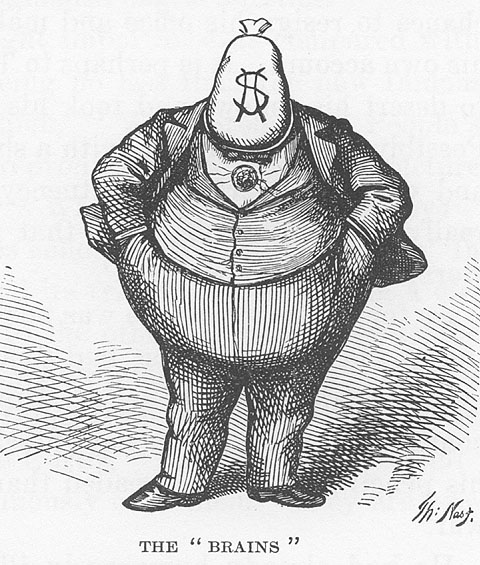
Nothing could be further from the truth, as this turn-of-the-century (that is, the last century) cartoon from Thomas Nast shows. Our politicians have always sung along with the tune, ‘It’s Money That I Love.’

My Dog Speaks French

What do we know about dogs and the way they communicate with human beings?

Scientific American concludes they don’t, at least not really.

Numerous times in fiction, especially in films, dogs can give voice to very complex ideas.

In his wildly popular comic, The Far Side, artist and lunatic Gary Larson hypothesized a very low level of canine understanding (or is it interest in?) of our spoken commands, much less ability to respond verbally.

But human propensity to dress dogs up, babble at them endlessly, and make them into little playthings leads me to conclude that we humans believe dogs can indeed understand, if not communicate in response. Given my long experience living closely in the familiar company of “man’s best friend,” I have come to believe that (1) dogs do talk, but (2) they don’t speak all languages equally well.

Evidence?

There’s a professional dog walker I’ve observed speaking to his pack in a sort of pidgin Gaelic; and they never listen to him. He’s constantly repeating commands again and again, to no apparent result.

 On the other hand, here’s my dog, DeeDee.
I speak to DeeDee, most often in English, but sometimes in Greek and every so often in French. Why? Just to see if she notices any difference and, probably most of all, just because I find it funny.
Does she respond any differently to “Let’s go!” than she would to, say, “Allez!”? (Or should that properly be “Allons!”?) Not that I’ve noticed. She also responds to French and English, and only sometimes Greek, in a soft verbal response that is not barking. I would classify this as speaking.
Therefore, from my scientific – albeit not exhaustive – study, I can conclude that DeeDee’s understanding of French is equal her understanding of English.
What can we conclude? Dogs understand English and French, and some Greek, but not Gaelic.

I know just what DeeDee would say: “Ca ne fait rien.”