Courage, please

During the last great economic upheaval in America, in the 1930s, there were a lot of people out of work, hungry, without decent places to live, without access to meaningful educational opportunities, unable to afford spending on the goods and services that make our economy and our society function.

Like now.

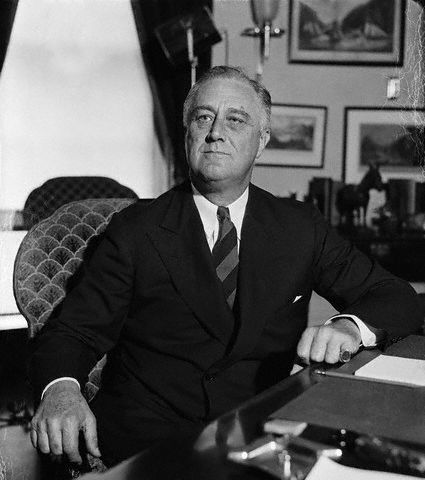
Then, unlike now, we had a leader, Franklin Delano Roosevelt, who ably articulated a path forward based on American principles. We would spend, he said, on projects that would put our fellow Americans back to work. We would build things of lasting social benefit, like roads, schools, dams and bridges. We would create public art. We would write books and plays that would enrich our lives. And we would get benefit, not only from the specific things these projects created, but from the renewed ability of presently unemployed people to again take full part in both the economy and the society.

And the result?

We got highways we still use, dams that still generate power and divert water to agriculture and cities, schools that still educate our young people (I went to a Depression-era school myself, San Francisco’s George Washington High.), plays that ennobled and entertained, murals and other art still recognized as exemplars of their age, running water and electricity extended to millions who otherwise would have done without (Are you listening, my friends in Texas? This is how farms in your state got electricity.), and bridges, including what is one of the best known and most beloved landmarks in the world (its picture, below).

And even more, we enabled our fellow Americans, our fellow human beings, to feed their families, to regain some measure of dignity and self-respect, to achieve some measure of engagement with their own country. We stabilized our middle class. We made our economy, not to say our society, functional again. We avoided many of the class warfare difficulties felt in Europe during the same period.

Now, facing similar economic disruptions, where is the leader who is willing to buck the “free market” tide (that got us into this mess to begin with)? Where is the leader who is willing to say that we need more public sector spending, not less? (Employment is now growing, by the way, except in the public sector.) Where is the leader brave enough to conceive of and communicate an agenda as audacious as Roosevelt’s? Where is the leader who has enough confidence in American principles, and the American people’s sense of fairness and rightness to even say this out loud?

Where? Sitting silent and afraid.

Places I Love: Lisbon

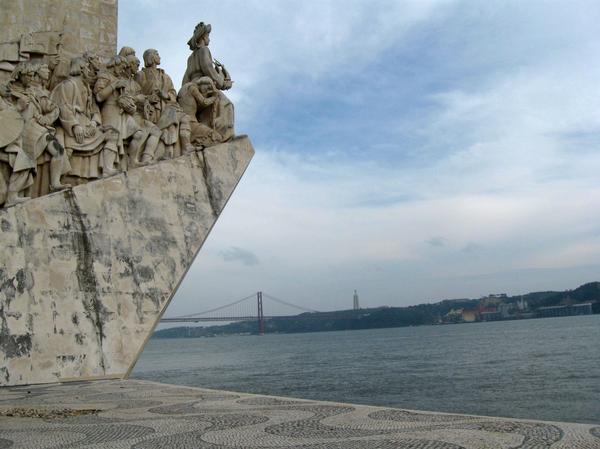
It was only a bit of professional happenstance that brought me to Lisbon; the city was never on my list of travel must-sees. Yet, when I arrived, I somehow felt at home from the very first. Lisbon is a city of unique homes clinging to several hilly neighborhoods. The climate was mild and foggy and the city smelled of the many Australian eucalyptus trees planted long ago by Portuguese sailors returning from the South Pacific, just like my San Francisco.

I loved the trams that run on Lisbon’s streets, then turn into funiculars to climb its many hills.

Like Paris, Lisbon has several fresh markets for flowers, produce, housewares and, most importantly for this city with an historic connection to seafood, fish. Here, the Mercado Da Ribeira.

Connecting two very hilly neighborhoods is the Santa Justa, a real machine-age elevator and bridge. Yeah, it is as vertigo-inducing as it looks. This will give you a feel for the ride.

I live in one of the world’s great food cities and I’m not easily impressed but Lisbon’s food blew me away. The fish was fresh, varied, plentiful and prepared simply. Pick your fish and it’s pulled live from a tank, killed, cleaned, salted and grilled. Small side dishes include fresh beans, green vegetables, cured meats. Cod is served in hundreds of ways. All the wines were amazing, not just the port.

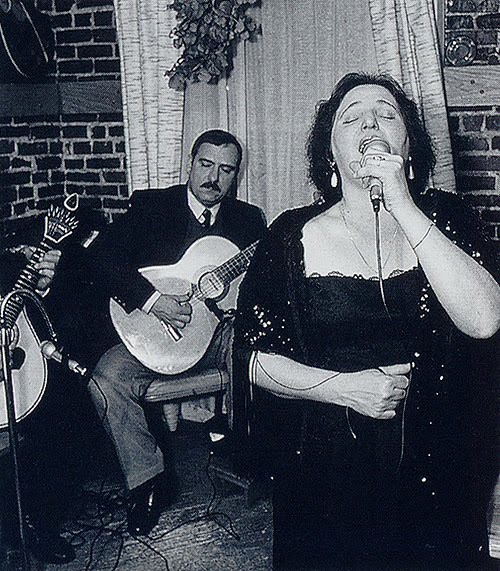
Lisbon is a city with a deep, and sometimes deeply sad soul. There is a music here, brought initially from Africa, called Fado (“fate” in Portuguese). The lyrics are sad, brooding, as fatalistic as its name would suggest; listening to Fado can take your breath away. Artists play in clubs and bars, at festivals and on the streets everywhere. A modern example.

I don’t know when or if I’ll be back but I think of Lisbon fondly, and often.

Films of Faith and Inspiration

These films bring more than just feel-good stories and swelling music. When you’re ready for a serious look at faith, or want a story about overcoming significant odds, I personally recommend getting your hands on one of these.

The Passion of Joan of Arc (1928): First, it’s silent, so I know that automatically drops it out of consideration for some people; their loss. This film is a masterpiece of the effect of faith on one human being. The face of Maria Falconetti, who plays Joan, is absolutely a window to the soul. Here’s a look at the film’s opening 10 minutes.

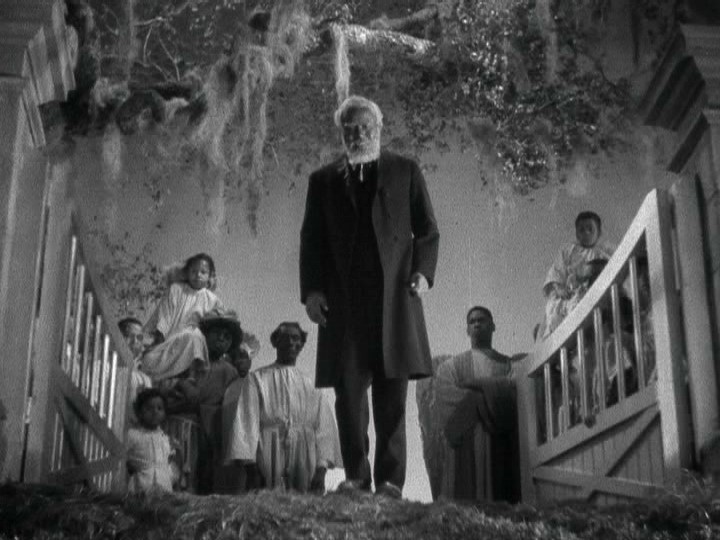
The Green Pastures (1936): Almost all Biblical films place the stories somewhere in the MIddle East, using European or European-American actors in drapery-heavy wardrobe. Imagine, if you can, putting the stories of the Bible in the context of rural African Americans, using their social structures, culture, music and vernacular.  This is a powerful and entertaining film that can open a great many possibilities for better understanding stories that seemingly have little to do with our modern lives. Some images may strike some modern viewers as racist – and they do use stereotypes, there’s no denying – but they make Biblical stories more tangible. And the music is wonderful. Here’s a short clip.
The Apostle (1997): I’ve heard it took Robert Duvall 20 years to get this picture made; so worth it. An American slice of life, which is worth watching the movie for all by itself. But you get much more. We’ve all seen films with evangelical preachers as central characters. Typically, they are fakers, con men, in it for a buck. The great strength of ‘The Apostle’ is the idea that a deeply flawed human being, and Duvall’s character is surely that, can have a serious religious faith. This film takes that faith seriously. Duvall and the supporting cast (including a small but critical role for Billy Bob Thornton) are brilliant. Here’s a brief clip.

Amazing Grace (2006): Based on the true story of William Wilberforce, this film shows that adhering to just but unpopular principles can be a difficult and challenging path. After a mid-life conversion to evangelical Christianity, Wilberforce led the British parliament to abolish the lucrative slave trade in 1807 against fierce commercial and political opposition. The cast includes the amazing Youssou N’Dour. See the trailer here.

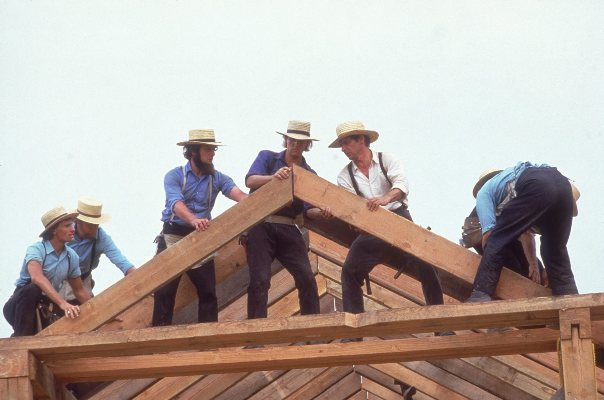
Witness (1985): Warning: This film is violent, and yet, it may cause you to question your faith in the expediency and effectiveness of violence itself. This hard-nosed police thriller concludes in a very unusual way; at the end of the day, it’s the wholesomeness, neighborliness and values of the Amish community that seduces the Philadelphia cop as much as the comely widow.  Here’s the [over-the-top] trailer.
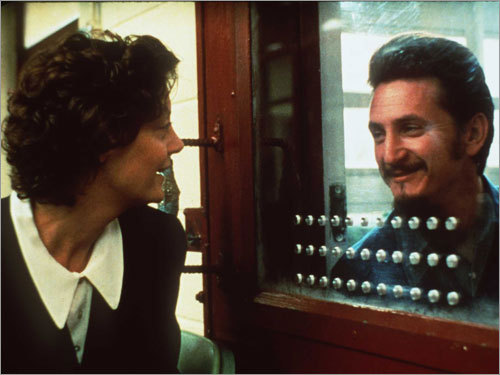
Dead Man Walking (1995): The story of a nun, Sister Helen Prejean, who became the counselor to a death row inmate and tried to give him some understanding and appreciation of real human love before his execution. Because we know how unlikely it is the sentence of execution will be commuted, we’re forced to find another way for the principle characters to achieve something meaningful in this intensely gripping story. This film is deserving of the many awards it received. Here is one of the film’s many powerful scenes.

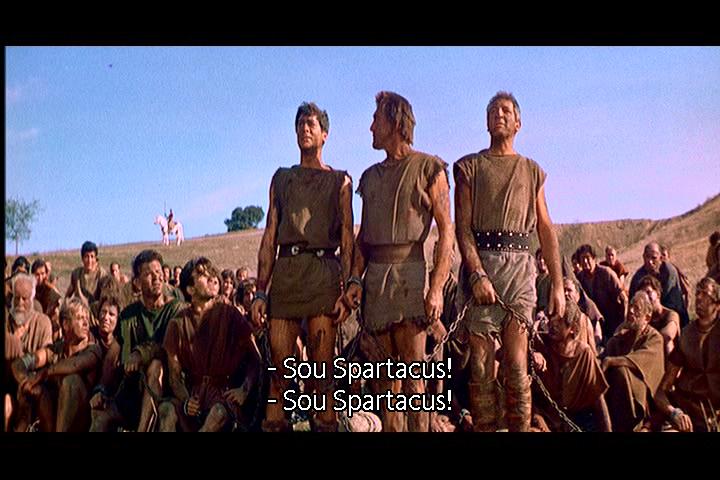
Spartacus (1960): Let’s see if this sounds familiar, contemporary…Fight against the world’s superpower to achieve freedom. Think as a revolutionary, even as you experience deep privation. Yourself a slave, organize people with no power, no money, no stake. Taken from the little that’s actually known about the real Greek slave who led a rebellion against Rome. “I am Spartacus!” You damn right.
Gandhi (1982): Nonviolence, active nonviolence, can topple empires. Witness the life of Mohandas Gandhi, the preeminent philosophical, political and spiritual leader of the Indian independence movement. This film of grand scope follows Gandhi’s epic life. Here, Oscar-winner Ben Kingsley delivers a stunning speech about his commitment to nonviolence, despite resistance within his movement. “There is no cause for which I am prepared to kill.”

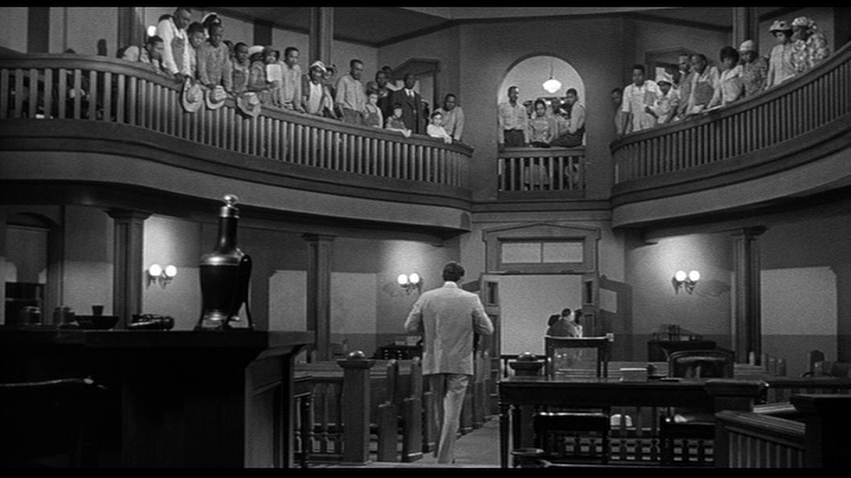
To Kill a Mockingbird (1962): Taken from Harper Lee’s novel, this film shows the Depression-era life of a southern girl as remembered by the woman she has become. Her father, the town’s beloved and respected lawyer, is put in the position of defending an African American man against obviously false charges of rape. The film, in turns savage, warm, funny and frightening, shows the love and growing admiration of a daughter for a father who takes a principled stand against her hometown’s prevailing racism. The lawyer’s closing argument remains a classic.

The Best Years of Our Lives (1946): This film shows the lives of men who have returned home after service in World War 2 – how they’ve changed, the scars they return with, how deep the divisions are between them (and those they served with) and the people who stayed at home, and how they put their lives back together. Extraordinarily, it was made the year after the war ended – as America was actually dealing with the return of its servicemen – with actors who’d actually been in combat. One member of the cast, Harold Russell, had lost both hands in the war, adding a poignant reality to the film. Here, Russell comes home but is too self-conscious of his hooks to hug his girlfriend when she runs out to meet him. War, this film reminds us, leaves scars.

A Few Words in Defense of Marriage

[This was originally written and posted in 2009. Reposted here in response to today’s 9th Circuit Court’s decision on California’s Proposition 8.]

Start with a simple thought – we don’t have enough love in the world. No, that’s not it exactly. We don’t express love to each other often enough, well enough. Look around; it can be a harsh, violent, rough, unjust, threatening, disconnected world, and I believe we’re often better at hurting than loving each other.

What is our society’s best, highest, deepest, most lasting expression of love? It might be marriage. I’ve been blessed to be married to the same person since 1990. It’s been a happy and proud experience, even during those times when it’s been challenging and tough, but it’s always been deep and lasting. And it has provided a model of the permanence of love to our friends and family and the community we live in.

I know many married couples. Most are of the 1 man, 1 woman variety. Many are not. I know married couples of the 2 man variety and the 2 woman variety too. Not “married.” Not “sort-of-like-married.” Not “play-acting married.” Married. Many have been married as long as Erika and I have, but some are just starting their life journeys together. No matter the length, they’re experiencing what married couples experience.

This controversy over the definition of marriage has to be resolved, not primarily in courts, but in hearts and minds. Here’s my opinion: in this world – with all its violence and challenge and difficulty and trial – I believe we should do everything we can to encourage two human beings to publicly declare the permanence of their love for each other. It’s good for the people involved, of course, but it’s affirming and stabilizing and humanizing and positive for the rest of us too.

I hereby personally celebrate – and defend – marriage.

It’s Money That I Love

We might at times get distracted by soaring rhetoric or stadium-sized crowds or even policy-wonks on TV but leave it to Randy Newman to remind us in song what really keeps politics going – money.

In his recent reversal on accepting money from so-called ‘superpacs,’ unregulated, untraceable, and limitless sources of campaign funding, President Obama acknowledged as much.

I’ve read numerous articles over the past couple of days outlining the ‘secret’ ways candidates amass war chests, both to fund their campaigns and to keep their potential challengers at bay, as if such was really a secret to anyone paying attention. Today’s Los Angeles Times says the president’s ‘superpac’ reversal reflects a ‘new reality.’

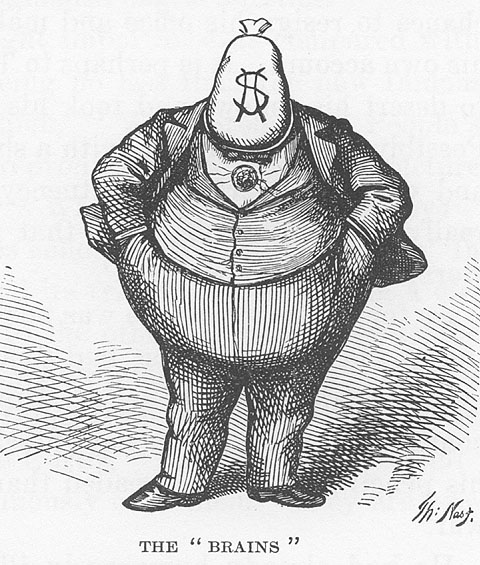
Nothing could be further from the truth, as this turn-of-the-century (that is, the last century) cartoon from Thomas Nast shows. Our politicians have always sung along with the tune, ‘It’s Money That I Love.’

My Dog Speaks French

What do we know about dogs and the way they communicate with human beings?

Scientific American concludes they don’t, at least not really.

Numerous times in fiction, especially in films, dogs can give voice to very complex ideas.

In his wildly popular comic, The Far Side, artist and lunatic Gary Larson hypothesized a very low level of canine understanding (or is it interest in?) of our spoken commands, much less ability to respond verbally.

But human propensity to dress dogs up, babble at them endlessly, and make them into little playthings leads me to conclude that we humans believe dogs can indeed understand, if not communicate in response. Given my long experience living closely in the familiar company of “man’s best friend,” I have come to believe that (1) dogs do talk, but (2) they don’t speak all languages equally well.

Evidence?

There’s a professional dog walker I’ve observed speaking to his pack in a sort of pidgin Gaelic; and they never listen to him. He’s constantly repeating commands again and again, to no apparent result.

 On the other hand, here’s my dog, DeeDee.
I speak to DeeDee, most often in English, but sometimes in Greek and every so often in French. Why? Just to see if she notices any difference and, probably most of all, just because I find it funny.
Does she respond any differently to “Let’s go!” than she would to, say, “Allez!”? (Or should that properly be “Allons!”?) Not that I’ve noticed. She also responds to French and English, and only sometimes Greek, in a soft verbal response that is not barking. I would classify this as speaking.
Therefore, from my scientific – albeit not exhaustive – study, I can conclude that DeeDee’s understanding of French is equal her understanding of English.
What can we conclude? Dogs understand English and French, and some Greek, but not Gaelic.

I know just what DeeDee would say: “Ca ne fait rien.”

A March to Nowhere

Last night, Mitt Romney won the GOP’s Nevada Caucus. Someone else finished second. A completely different person finished third.

On February 7, Colorado and Minnesota will hold their caucuses and Missouri will hold its non-binding primary.

On February 28, both Arizona and Michigan will hold primaries.

On March 6, primaries or caucuses will be held in Alaska, Georgia, Idaho, Massachusetts, North Dakota, Ohio, and a whole bunch of other places.

Later in the year, there will be other primaries in different states that will mean about as much as the color of the housecoat my 86 year-old mother will wear today to clean up her kitchen.

Let’s be honest. The other candidates may cobble together enough resources to continue (or not) but the race for the Republican presidential nomination is over. We know who will win it. Why, then, are we all behaving as if any of this Kabuki theater had any relevance to anything? Why all the breathless TV punditry? Why the handwringing over misstatements and their effects on polls?

These questions are rhetorical, of course, but that doesn’t mean there aren’t answers. The problem isn’t that we don’t know the answers but rather that we can’t face them.

In American politics today, money wins – not just for candidates and officeholders (obvious – look at the data), but also for the politics industry (campaign managers, pollsters, advance people, speechwriters, lawyers) and for the political media (pundits, columnists, networks, advertising). And all these stakeholders, whose livelihood depends on the continuation of and interest in campaigns, will do everything they can to make sure this essentially meaningless march not only continues but does so in a way that is as entertaining as possible. Their incomes depend on the fact that you’ll continue to watch.

So, send out the memo:

  • Cue today’s gaffes…
  • Show new polls…
  • Make mountains out of molehills…
  • New hairstyle on the spouse…
  • Wicked-cool 3-D graphics…
  • Find scandal…must find scandal.

End of the day? Means nothing.

Money has already won. End of story.


Goodbye, Ben

Pretty faces come and go but great character actors get inside you, and stay there.

We lost the brilliant Ben Gazzara this week.

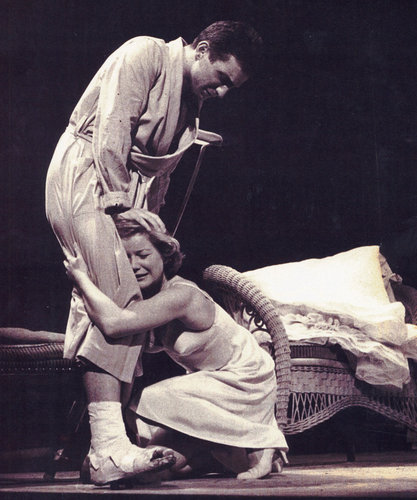
His roles ranged from the original Brick in “Cat on a Hot Tin Roof” on Broadway to a drunk and restless married man in the 1970 film “Husbands.” In every role, even the light comedies (to his popular disadvantage), he burned with an intense heat that got your attention and kept it, even when paired with stars of greater physical beauty and market popularity.

In movies or television shows intended for grown-ups (if such can even be believed in this age of mindless and childish crap directed solely at the high-consuming pre-teen audience) Ben Gazzara played tough men forced to make a life in a dirty, brutal world. His face, manner and posture, and famously gravelly voice conveyed a person who’d maybe seen too much to be easily impressed, frightened or intimidated.

WIth Ben Gazzara’s passing this week of pancreatic cancer, we should be sad not only for the loss of an actor but perhaps also for the loss of the type of role he would have inhabited so well.

A Veil, Lifted

It’s been a bizarre couple of days for a well-funded, widely-supported and generally sure-footed nonprofit foundation.

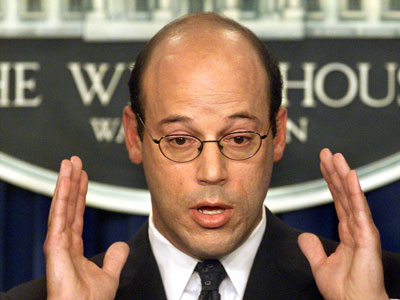
But now, all the Keystone Cops’ missteps make sense. In this latest shitstorm over Planned Parenthood, the Susan G. Komen Foundation was being advised by Ari Fleischer, former (and disastrous) press secretary for George W. Bush.

Read all about it here.

You Know We’re in Trouble When…

…only a comedian is seriously taking on the US Supreme Court’s insanely stupid, ill-informed, utopian, and vile Citizens United decision. Well, maybe not so much if the comedian is the savagely funny Stephen Colbert.

It today’s Slate, Dahlia Lithwick reviews how Colbert has courageously and brilliantly exposed the decision for exactly what it is (a corporate conservative’s wet dream) and the justices for exactly what they are (political rubes completely out of touch with reality).

Read Lithwick’s piece and thank your lucky stars Colbert has our backs.