Stop It, For the Love of God and Humanity

Gerald_Ford[1]

An open letter to the GOP

Dear Republicans,

Sorry, but I have to give you a little tough love right now. Please take your collective head out of your ass; I sincerely beg you.

Now, please read on.

I grew up in a very political family, in a particularly politically-charged era. Politics was what we talked about at the dinner table the way some other families might have talked about school, sports, movies, or the weather. When my grandmother died, San Francisco’s Board of Supervisors adjourned – out of respect for her and the family.

My brother still deeply lives and breathes his style of politics. My father and I both held appointive office in our hometown. And I’ve been a professional speechwriter off and on since the late 1980s and have been involved in many political campaigns.

Politics, in short, runs deep in my blood and is bred in the bone.

Here’s something I believe to my core: there are both Republicans and Democrats that have served our country and the public’s interest well. In my lifetime, Republicans have tended to be the reasonable, rational party of Main Street business values, fiscal responsibility, honest and hard-earned patriotism, shared sacrifice, political moderation.

Dwight_D._Eisenhower,_official_Presidential_portrait[1]

Even though I live in a very blue city, I know a great many Republicans; I like them, understand them, respect them. I have cocktails with them regularly. I’ve even worked for them.

1101531221_400[1]

All that said, I do not understand and cannot accept the currently prevailing direction of the Republican Party.

What I believe the current Republican agenda to be:

  1. Stop any and every initiative of President Obama.
  2. Use one particular (and, to my personal thinking, peculiar) interpretation of one particular religious text, the Bible, as a guide to policymaking, exclusive of all other texts and interpretations.
  3. Forestall, if not completely prevent, the dilution of white, Christian rule in America by what are certainly inevitable demographic changes. 

All three are, to recall the words of John McCain (R-AZ), fool’s errands.

ted-cruz-blasts-republicans-for-being-scared-of-an-obamacare-fight[1]

Here’s why:

  1. They hurt constituents.
  2. They’re not American.
  3. They’re irrational (And, BTW, they make you look irrational for pursuing them.).

Michele Bachmann at Rasmussen

Here’s what you Republicans really need to understand:

  1. Uncritical reactive opposition to anything is juvenile. Witness Ted Cruz. To 90% of America, Ted Cruz is a mirthless joke. Is that what you want Americans to think of you? It can’t and shouldn’t be.
  2. The Bible is a book. (‘Bible’ is Greek for book, not THE book.) There are good and patriotic American Jews and Hindus and Sikhs and Muslims and Buddhists too. And The Bible is not a book upon which our republic was/is based. Our founders were rational humanists not evangelical Christians. Read some real American history, for fuck’s sake. Nor were our founders radical libertarians/individualists. (You’re confusing real American history with John Ford western movies.) America’s founders were communitarians. By the way, Ayn Rand was an asshole. And people who use her writings as the basis of anything in the real human world are also assholes; only an asshole would try to base something as important as government on her writings. Special message to Paul Ryan, et al.: Grow the fuck up, already.  
  3. Do you not realize the potentially tremendous position you’re in? Sorry, rhetorical question. You obviously don’t. Get your head out of your ass. This could be a Republican century if only you’d realize the potential you have to organize and energize the coming wave of Americans. You can virtually own entrepreneurship and economic opportunity, two critical reasons people come here in the first place, if only you’ll leave abortion rights, guns, Obamacare, marriage and employment equality, equal voting rights, and the rest of the so-called ‘values’ issues alone. They’re not what the majority of Americans believe, not even the majority of your ‘real’ Americans. They’re just the way to quick death. (Besides, see above, they also make you look like irrational, ignorant idiots.)

gop_congressman_says_free_birth_control_will_end_the_human_race[1]

Please?

Your Democratic friend,

Brent
 

(On the Value of) Forgetting

o-COLLEGE-facebook

Would you be remembering me?
I ask that question time and again
– ‘Coast of Marseilles,’ Keith Sykes

The other day, and quite completely out of the blue, my teenaged daughter Ella happened to ask me about a long-distant former girlfriend. My daughter doesn’t know this former girlfriend or what she looks like, doesn’t even know her name. She does, however, know a few things about her, like when we knew each other and where.

Ella was, I believe, asking more about conceptual relationship issues than the flesh-and-blood reality of my grad student era personal life (yuck). Because it is not my practice to deceive or hide things from my kids, I answered her questions as directly and truthfully as I knew how. Nonetheless, our exchange left me with some uneasy feelings that were hard to process and even name.

Now, I must say that I do not pine for this person. I do not wish things had turned out differently enough such that we’d ended up together in a permanent, committed relationship. I have no ambivalence about that. Still, I had to acknowledge I’d had feelings for her. I was attracted to her, and admired her drive and intellect. I’d cared for her and we’d had fun together.

Still, I was honestly unsettled after my daughter’s questions.

So, what was I feeling?

Last month, my family and I visited my undergrad alma mater, mostly to watch a football game (in which my team was thoroughly trounced, by the way). Walking around campus and sharing stories specific to that place had stirred up emotions as well. Now, this is nothing new for me and Berkeley. From my very first days there, the Cal campus has always held the feeling of ghosts for me. But this visit was different, the feelings more mixed and confused and not altogether pleasant.

Why?

It’s no coincidence this came as I prepared to visit my old grad school, to meet with current students and poke around old classrooms and re-visit an old professor to two. [And my recent visit to Philadelphia? Don’t get me started.]

There’s a Keith Sykes song performed most notably by Jimmy Buffett called ‘Coast of Marseilles’ (Full lyrics and link to listen, are below.) that’s always been one of my favorites. The singer wonders if an old love would remember him and, if so, would think well of him.

To me, it’s a profoundly disturbing thought, especially when put in the context of a real life’s experiences: real people, times, places. The truth is – and I say this with neither ironic detachment nor pride – I can clearly remember being a complete dick to some people. Cold. Aloof. Unthoughtful. Mindless. Critical. Dishonest about my feelings. Today, at this very moment, flying east to Durham, North Carolina, I cringe to even think.

Would the actual, specific people I’ve known and cared about remember me at all? And, upon remembering, would they think well or ill?

When I think back – not to mention revisit those very places, or get asked about them by certain curious teenagers – I must confess I’m nowhere near sure. And, at times, it makes me desire a much more selective memory than I actually have.

120423_cn-nostalgia-college_p465

Coast of Marseilles, Keith Sykes

I sat there on the coast of Marseilles
My thoughts came by like wind through my hand
How good it’d be to hold you
How good it’d be to feel like that again

Would you be remembering me?
I ask that question time and again
The answer came and haunted me so
I did not want to think it again

You make it hard for me to forget
I haven’t stopped loving you yet

When I left the coast of Marseilles
I hadn’t done what I’d come to do
I spent all the money I’d saved
And did not get over you
I did not get over you

To hear Jimmy Buffet performing this song, click here.

Free Advice: How to Say You’re Sorry

JP-WEINER-superJumbo

Saying you’re sorry with grace can be hard under the best of circumstances. Saying it in public, whether in the glare of news cameras or simply in the presence of aggrieved parties, can be near-impossible.

Trust me; I’ve been through these situations a lot in my professional life. Please let me help you say you’re sorry so you and those nearest you can all get on with your lives.

Anthony Weiner, like Tiger Woods and so many more before him, stood in front of hot camera lights to apologize for publicly-disclosed bad behavior. Weiner, unlike Woods, had the added heat of a righteously (and rightly) pissed off wife standing right next to him the whole time, except for those unbearably excruciating moments when she herself took the microphone.

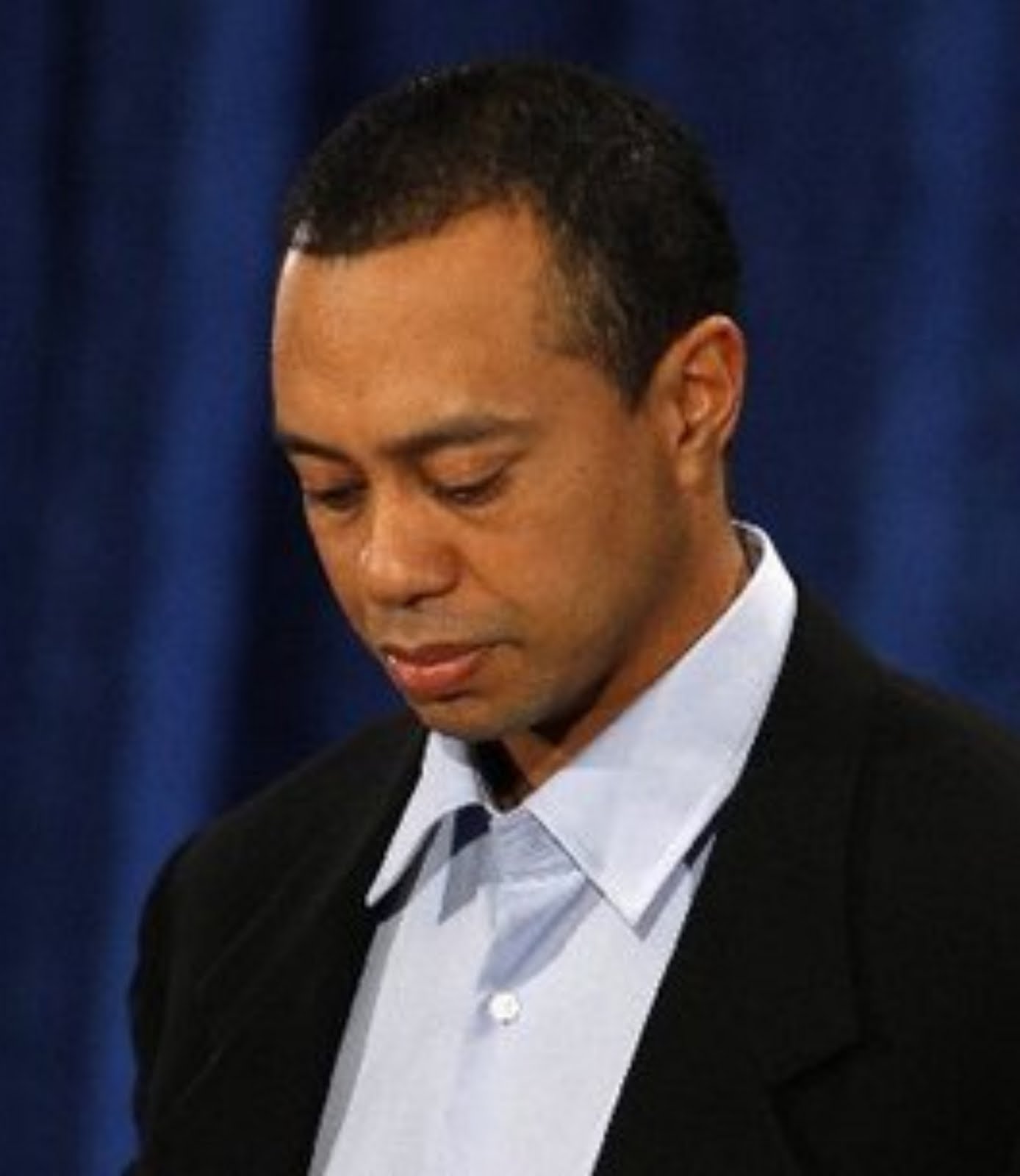
Woods, when he took his turn at on-camera apology was really more bizarre than cringe-worthy. Looking like an East German prisoner, not the super-winner mega-millionaire sports entertainer we’d come to know, Woods recited his pro formas from a thoroughly vetted script in an uncharacteristically unemotional monotone.

Public apologies for bad personal behavior are always painful, humiliating for all concerned, embarrassing, risky. Few people in that kind of environment do well, so these events rarely go well. No one leaves satisfied.

For next time (because there will be next times), here is the outline of how to apologize properly:

  1. I did this thing.
  2. I am responsible for its effects.
  3. I know I hurt people and I am sorry.
  4. I won’t do it again.
  5. Please let me make it better, or at least mitigate the harm I’ve caused.

Done. More is just self-indulgent groveling. Anything less is incomplete.

Following these steps has less to do with business gain or political success, which is why, I suppose, public figures rarely follow them, than it does becoming whole again as a human being.

To the extent these steps aren’t followed in practice, it is likely there are uncertainties, ambivalence, continuing fear or, perhaps as likely, the apologizing public figures are just following the advice of legal counsel instead of the wiser counsel of their own human hearts.

TigerPressPic

Travel makes epiphanies

HoF

This summer, our family took its first pilgrimage to the Baseball Hall of Fame, in Cooperstown, New York. As anyone who’s made the trek can tell you, it takes determined intent. You don’t drive by Cooperstown on the way to somewhere else. It’s about 200 miles northwest of New York City, 250 miles west of Boston and, not to mention, about 2500 miles east of our hometown, San Francisco.

We went because (a) we’re all baseball fans, (b) since the focus of the trip was touring colleges for our daughter, we felt our son deserved a destination he’d more fully appreciate [He’s 14 and he sat through an intimate hour-long conversation with the admissions director of Bryn Mawr without complaint. Nothing less than heroic.], and (c) a visit to the shrine of baseball seemed an appropriately American thing to do.

The Hall itself didn’t disappoint us – we walked through beautiful and well-curated exhibits and saw artifacts from our favorite players and teams. Nor did Cooperstown, which was quaint and naturally beautiful. But it was a serendipitous and overheard conversation at dinner that made the greatest impression and will always stick with me.

We went to Cooperstown’s Alex & Ika, a wonderfully unique place to eat, and had to sit at the bar because it was so crowded. Happened to sit next to two women, one younger and Japanese, the other older and white, sharing some awesome-looking appetizers. They were having an intense conversation and, for once, my habitual eavesdropping paid off. The younger woman had a very good command of English, although it was heavily accented. She was a student at Williams College, itself a two-hour drive, or several-hour bus ride to the east [As I said, you don’t drive by Cooperstown on the way to anywhere.].

She’d come to Cooperstown right before the start of her fall semester specifically to see the Hall of Fame. Turns out she knew a lot about our ‘national passtime’ and very much wanted to better appreciate the quintessentially American game.  And she knew and wanted to see all the Japanese players who had exhibits or artifacts in the hall – Hideki Matsui, Daisuke Matsuzaka, Hideo Nomo and, of course, Ichiro Suzuki – and mentioned them reverently by name. For her, a visit to the Baseball Hall of Fame seemed a trip of devotion and respect, not just for baseball or the players who represented the Japanese game but also for America.

What a great testament, was that pilgrimage, not just to this woman’s spirit, and her dedication to her home country and its long baseball heritage, but to the beauty of this country as well, and its generation-after-generation attraction of people to its shores, for the fulfillment of whatever driving purpose.

IKA

American Colleges Need Help

dartmouth-green-ve30nu

I come to the title’s surprising conclusion based on my recent experience touring with my daughter, who is a rising high school senior. Together, over the past 2 weeks, we sat through about 20 information sessions and took as many tours at northeastern colleges.

And I can say without a moment’s hesitation that America’s colleges and universities need some serious help in the branding department; not, as anyone who’s been in a college bookstore recently can tell you, in developing hot logos or color schemes or apparel merchandising.

All those mission-critical components seem safely under control.

51-store 1

No, our colleges need work saying out loud what it is, precisely, they stand for, what they’re about, what they promise. In short, my recent experience tells me few of America’s elite colleges are any good at the very basics of communicating their own brands, even to an interested, self-selected and highly qualified audience of potential customers.

And, as any brand advisor will tell you, that’s a big-time fail.

What do high-performing, brand-driven organizations do? They drive all their behaviors and communications off the basis of their message architecture, brand promise and desired attributes. Collateral materials are supportive, that is to say specifically illustrative, of the messages the enterprise wishes to build. Customer contact moments are constructed to reinforce brand attributes. Brand ambassadors (i.e., everyone who represents the institution to relevant audiences, like potential customers) embody the characteristics of the brand as well.

I saw almost precisely the opposite at these elite educational institutions. In our visit experiences, we saw and heard mostly mush, generalities, overly cute and obviously manufactured stories, and oft-used clichés. (The oldest building on campus? For the 20th time, pardon me while I stifle a yawn.) Worst of all, I observed indifference to assembled groups of their potential customers.

Junior College Tour (KT)129

The (very) few notable exceptions, NYU, Emerson, Bates and, perhaps, Boston College deserve kudos and can safely skip my seminar. They each, in their own ways, creatively, clearly and engagingly stated their brands, and illustrated and supported them with presentations, materials and ambassadors.

All the rest of you: my advice is to sign up now. Especially you, Yale. Ivy-covered buildings and a good pedigree are no substitutes for successful brand communications.

No Need For Alarm

9780451224149_custom-5e0aecd1bc85562bdd1fefd3259ddb738b61d41e-s6-c30

There’s been a long-in-coming and pretty widespread panic about our nation’s demographics that looks something like this:

Our country’s is increasingly filling up with non-white, non-Christian, non-European, non-English-speaking, uneducated, differently-socialized, undereducated people. Soon, we won’t be able to keep our economy afloat, fund Social Security, maintain even a reasonable approximation of democratic institutions.

The effect is especially acute in places like Texas, New York and, of course, California, where I happen to live, but if you live anywhere with radio, TV, newspapers, online access, a barber shop or grocery store, I’m certain you’ve heard this point of view articulated too.

And, I guess, if you’re a part of the Christian, European, English-speaking part of America, it might not be a difficult thing to believe or, more correctly, be made to believe.

Now, I’ve read the studies and seen the data too, but I’ve recently seen evidence that leads me to a very different conclusion about our future.

Not long ago, I attended a dedication event for a new solar installation at Hartnell College, a community college in Salinas, the hub of a verdant agricultural valley in California. And I met the very kids who represent the bogeymen of the supposed demographic Armageddon posited, above.

They were nonwhite, mostly Latino. Families from Mexico and Central America. From households in which English is not the primary language. Parents are agricultural laborers or other non-skilled or semi-skilled workers without much formal education. The students I met were the first in their families to attend college.

And these kids talked with me about their experiences at Hartnell. They participate in hands-on research. One young lady is working with a team to find more efficient ways to water crops. A young man I met is working on developing robotic arms to clean and cool solar panels because, as he explained, they’re less efficient when they’re dirty or too hot. Several of the students were finishing their time at Hartnell and were transferring to schools in the high-powered University of California (UC) system, world-renowned Berkeley among them.  I met a Hartnell alumnus who finished his B.S. in physics at UC and will start a Ph.D. program at the University of Wisconsin, Madison in the fall.

They were well-spoken and whip-smart, eager, informed. And they talked about their conscious work to grow and move into realms their parents couldn’t even have dreamed of for them, just a generation before.

If those students, and people like them, represent the future of California and, by extension, our country, then I can’t wait. Our future is bright. We’re in tremendous hands.

A link to an article in the Salinas Californian (including a nice video featuring some students) about Hartnell College is here.

Picture_206

How, Indeed.

OLYMPUS DIGITAL CAMERA

“War, children. It’s just a shot away.”

– Gimme Shelter, Jagger/Richards (1969)

The physical evidence of now-dead civilizations, some civilizations we still consider ‘great’ among them, quite literally circles the globe and populates our kids’ study-sheets and textbooks.

Athens. Rome. Great Zimbabwe. Machu Picchu, Sukhothai.

Ruins. Grand palaces repurposed as stores, stables and shithouses. Formerly powerful imperial cities of gold buried under strata of the refuse of succeeding societies and generations.

Think it won’t happen here? Think it can’t? That we’re too great, too special? American exceptionalism? “Don’t make me laugh,” says history to every civilization since the dawn of time.

Only a fool thinks himself the endpoint of evolution.

If there are any lessons to be learned at all from history, this is its primary lesson.

And yet, we Americans behave as if everlasting world dominion is our rightful inheritance. We project our military power around the globe willy-nilly, with the flimsiest of pretexts. When the pretexts are exposed as wrong-headed, ignorant, or just plain false, we don’t withdraw; we persist.

We extract the earth’s resources as if we had the key to a private, bottomless storeroom.

We have all but abandoned the decades-long compact between citizen and state that had as its foundation a high-quality, robust and universally-accessible system of public education. Go to the schools our tax dollars fund, it said, and become the engine of our economy; you’ll be more affluent and we’ll get better citizens. We’ve underfunded these schools, allowed them to bleed to near-death, made them inaccessible to those with no alternatives and unattractive to those with many.

We murder each other with reckless, yet increasingly efficient, abandon and argue against any attempt to control our unfettered access to the instruments of our very own deaths.

Relying on the mass marketing of deliberately ahistorical fantasies about the American characteristics of self-reliance and individualism, we distribute ever more of our economic wealth to ever fewer people; in so doing, we squeeze the life out of the very middle class that created our society’s wealth and stability to begin with, and inflate the economic and political power of a class with seeming indifference to all that live below it.

The result?

Decaying streets, sewers, roads, bridges, schools. Declining economic opportunity. Increasing concentration of power among the proudly-ignorant. A ratcheting up of violence. And internecine warfare over the scraps.

This is the way all empires die.

There will come a time when the people of this country will look around with slack-jawed wonder and ask how it could have come to this.

As if they didn’t know.

Detroit-in-Ruins.11.37.06-PM

Lucretian Pigs

o-MISS-USA-MISS-UTAH-130616-facebook[1]

The Roman poet Lucretius famously wrote, ‘Suave, mari magno turbantibus aequora ventis, e terra magnum alterius spectare laborem.’ In English, that’s ‘It is pleasant to watch from the land the great struggle of someone else in a sea rendered great by turbulent winds.’

What do we call that feeling today? Schadenfreude, the pleasure derived from the misfortunes of others. People often show signs of schadenfreude, of course, but these days, we seem to have pretty pronounced tendencies when it comes to who we get all schadenfreudey about.

Case in point? Marissa Powell. Or, as she’s better known in 8 billion social media mentions over the past 24 hours, the Miss USA Pageant’s Miss Utah. In case you’ve been out of digital device coverage, the story goes like this: beauty pageants have a part in which contestants get asked questions, which they then answer more-or-less extemporaneously. Ms. Powell was asked the following question:

“A recent report shows that in 40 percent of American families with children, women are the primary earners yet they continue to earn less than men. What does this say about society?”

Her answer was rocky, rambling and perhaps not even entirely coherent. She used poor grammar. She didn’t really make a point and her answer wasn’t really responsive to the question.  [Because it was broadcast worldwide, you can find complete video documentation without much effort; I won’t post the video here.]

Ms. Powell was pretty well skewered for her (admittedly) lame response in newspapers, online media, social media, and on television. Made to look like an empty-headed fool. Criticized for everything from her model-good looks to her state of origin.

Okay, haha, I get it. She’s pretty and she said something dumb in public. Schedenfreude, right? But before we get feeling all superior to Ms. Powell and delighted in her very public and mean-spirited humiliation, let me make a couple of points here.

First, responding extemporaneously to unanticipated questions is inherently difficult. Not many people do it well, even under the best of circumstances. Doing so in front of a substantially-sized audience is even more difficult. Now add lots of bright and hot lights, uncomfortable hair, makeup and wardrobe, TV cameras instantaneously beaming your every utterance worldwide, and the factor of wanting to succeed at a competition. Now, imagine yourself in the same situation. Think you’d fare much better?

Really?

I’ve seen a lot of people answer tough questions in public – done it myself more than a time or two – and I’d encourage you to think again.

Second is the (not) little matter of gender. Women who commit verbal gaffes in public, as it turns out, fare considerably less well than their male counterparts. Compare the reaction Ms. Powell received to the treatment received by some men  in similar situations, like, for example, athletes being interviewed. Stupid, trite, cliche, unintelligible, inane. Too many instances to count. Do they get critiqued? Sure. Humiliated? Not to the extent Ms. Powell endured, and not very often. 

I appreciate verbal communication as much as anyone, and I wouldn’t look for genius at the Miss USA Pageant but I’d encourage a little care before we try to make a complete buffoon of one of its contestants.

I believe there are some dark influences behind this whole schadenfreude thing we got going. 

4facf6361861330f9d009fe1

Shock of Not-Woodeness

Released by OSDPA Eric Ruff OSDPA Terry Mitchell, 703-695-0169

Call me surprised.

I happened to see former Secretary of State Condolezza Rice today. She spoke to a group of about 200 people, of which I was a part.

Here’s how she did.

She spoke for about 45 minutes – a tightly organized and logical talk – about world affairs. She didn’t use the teleprompter (I checked.). She spoke from a single 5″X7″ card. She never repeated herself. She used many specific anecdotes and statistics to support her points. Her talk had an easy-to-follow and organized thread throughout. She dealt with complex issues. She brought together numerous pieces into a unified set of themes and connected them directly to the audience.

Following her prepared remarks, she answered none-too-easy questions from a truly international crowd (people from Venezuela, Nigeria, Kazakhstan, Angola, South Africa and India, among others) with obvious facility and knowledge of the specific countries and regions. She tied together her answers and the general themes of her talk.

I was completely impressed. Completely. And, trust me, I am not an easy person to impress.

And she also laughed good-naturedly. She seemed relaxed, yet in complete command. She joked at her own expense (and the joke was even funny).

In short, Rice was nothing like the wooden, overly-studied, fussy image I’d had of her during her State Department days.

What is it, I wondered, that makes our leaders behave so unnaturally, so stilted, so artificially in public. Can they possibly suspect we want them to act in that way?

In any event, today’s performance made me wish this Rice (not the Rice we saw during the Bush, Jr. administration) would run for higher office. We deserve a leader this engaged, this smart and, yes, this human.

Condoleezza Rice Gives Talk, Promotes Book In Washington DC

Free Market? Sure, I’m Game.

milton-friedman-free-market

Finding a national consensus on matters like drug use, abortion and gun control is clearly a fool’s errand. Because we are, as a nation, so diverse and divided on matters of religious beliefs, ethical foundations and personal priorities, we will never – NEVER – come to a stable, lasting, nationwide accord on these issues.

Let’s start with drugs. Several states have decriminalized or even legalized marijuana use. Marijuana use was recently made legal in Washington and Colorado. Its use is not a criminal offense in more than a dozen other states. Others haven’t changed the legal status of marijuana and aren’t likely to.

The government of North Dakota recently passed anti-abortion laws that are considered to be the most restrictive of personal choice in the nation. New Jersey, along with states like Oregon and Nevada, has no active ban on the right of the mother to terminate pregnancy.  There are a number of workplaces (including hospitals) and schools affiliated with, for example, the Roman Catholic Church, which objects to contraception as sinful. Therefore, some of these church-affiliated institutions object to offering contraception as a part of employee or student health insurance. There are plenty of other employers and schools that have no issue whatsoever with offering contraception as a part of employee or student health coverage.

Guns control is an extremely emotional and divisive issue in the United States. This was demonstrated clearly last week when the Senate considered unsuccessfully a moderate proposal to nationally standardize required pre-sale background checks for firearms. Unrestricted private firearm ownership is considered nearly sacred by some of my fellow citizens but considered purely evil by others. In Alaska and Arizona, for example, gun ownership, and even carrying guns in public, is virtually unchecked. It is much more difficult to obtain a firearm in, say Connecticut or California, and nearly impossible to get permission to carry a firearm in public.

Now, we could all spend, like, forever trying to align on the ‘right’ approach to these policies but, in truth, we never will. Even if we rely on the courts to settle the ‘right’ approaches, they will not be settled permanently.

So, instead, let me propose something completely different – a solution driven entirely by free market principles. And it might look something like this.

The federal government tracks and posts accurate conditions reports on each state, listing up-to-date laws governing behavior on these ‘values’ issues. We, as consumers, decide where to live, go to school buy products, etc. based on those particular issues that matter to us.

If we want to smoke marijuana legally, we move to Washington or Colorado.

If we want to own the choices regarding our reproductive health, we don’t live in North Dakota or go to Notre Dame or St. Mary’s Hospital.

If we want to legally carry a firearm to the shopping mall, there’s always Arizona.

Now, the other side of market solutions is, states and employers and schools must be required to fully disclose their positions on these ‘values’ issues. Notre Dame University, for example, must have a statement in its marketing materials (alongside the intensely-focused cello player and the touchdown-scoring halfback) that says:

Dear Prospective Student:

This university is affiliated with the Roman Catholic Church, which considers contraception a sin. Therefore, our student health service does not and will not offer contraceptive services.

With that information fully disclosed, high school seniors can intelligently choose colleges that best align with their personal beliefs and priorities. Anticipate needing or wanting contraceptive services as part of student health? Notre Dame isn’t for you; go somewhere else.

I can imagine signs at state borders as well:

Welcome to Arizona.

We allow pretty much anyone to buy and carry a gun here.

Enjoy your stay.

If you don’t like being around a lot of people with firearms, you can always vacation in Massachusetts.

This is, of course, not a realistic proposal, for two major reasons.

First, when push comes to shove, institutions (states, businesses, colleges) are loathe to disclose their positions openly if it costs them money, tourists, students, or employees. Notre Dame is unlikely to tell promising high school seniors with non-Catholic values they should just look elsewhere. North Dakota doesn’t want to lose new businesses because of its position on abortion. And Arizona would literally starve to death if tourists stopped going to the Grand Canyon or baseball’s Spring Training because of its gun laws.

And second, so-called ‘values’ conservatives say they like the unfettered free market and personal liberty and all that, but what they really want is to force their agenda down the throats of everyone else. They don’t want Colorado to become a stoner’s paradise, not because they themselves don’t want to live in such a place, but because, according to their own personal values, marijuana is evil and no American should be allowed to partake.

So, for now, we’ll live with this endlessly boring political and judicial wrestle over ‘values’ issues, when what we really should do is just start erecting the new state border signs:

Welcome to Washington.

Flame on!

2004-06-23-1429-dsc04352