Why You Should Care About May 6th

Lucas Papademos is not a disgraced football coach. He isn’t dating a Kardashian. Nor is he starring in the latest Bond movie. Not even a last-minute entry into the race for the GOP’s presidential nomination.

If he were any of those things, of course, you’d be much more likely to recognize the name and face. Lucas Papademos is, in fact, the interim prime minister of Greece. He has been desperately trying to construct an economic recovery out of his nation’s financial collapse.

I care deeply what happens to Greece because, for one thing, I happen to be Greek. I have relatives and friends who are struggling and face the prospect of struggling much more. But I also see no small measure of risk to the world economy if Greece’s economic restructuring, which Papademos has so far led, is allowed to slow, reverse or, God forbid, completely collapse.

Papademos has received the president’s permission to dissolve parliament and hold elections on May 6th. Much – close to everything, perhaps – hangs in the balance for Greece, for Europe, for the world’s economy.

We should all offer Papademos, and Greece itself, our heartfelt blessings.

Not the First, Just the Latest

The story is so cliched, so old and tired, it’s already bypassed dull morality play and gone straight to bad TV parody: head football coach hires comely coed athlete then falls hard for her, jeopardizing his marriage, his career and his team’s chances of winning a national championship.

This time, the role of head coach is played by the University of Arkansas’ Bobby Petrino. And it’s a measure of our national cynicism and low behavioral expectations around big-time athletics that even The New York Times’ coverage of the story begins with an analysis of this case’s effect on football rankings, not a review (much less an indictment) of the coach’s conduct.

Here’s the principle of appropriate human behavior I believe we should focus on: when a superior starts a relationship with a subordinate employee, by virtue of the unequal distribution of power, it cannot be fully consensual. Therefore, it is, by definition, abusive. Bobby Petrino is now part of a large and growing club of executives who think their sexual advances toward subordinates are within the boundaries of appropriate workplace behavior, and who try to defend them by calling them consensual.

They’re all wrong; furthermore, they’re evil to even try.

Goodbye, Rick

I’m a dad myself, and I’m deeply sorry Rick Santorum is wrestling with all that comes with having a sick child. I sincerely wish his daughter a speedy and complete recovery. And I wish him well in his life.

That said, I hope he now goes to a dark and private place. I hope he is never offered a television soap box of the type given to Mike Huckabee, Sarah Palin, Newt Gingrich, and all of their ilk.  I hope American political life is never again required to deal with Santorum. He was a divisive candidate, deliberately so, because it served his personal political interests. He expressed the desire to run our country on the basis of his particular and peculiar interpretation of the Holy Bible, which I find to be both frightening and profoundly un-American.

He was both smart and capable enough to inflame his slice of the Republican electorate and unethical enough to actually do it. He made the venerable Republican Party teeter on the edge of a terminal abyss, from which it may yet never recover.

So, I’m sorry for the personal challenge your family is dealing with, Rick. Now, please do our country a favor and just disappear.

But I Don’t Love Him

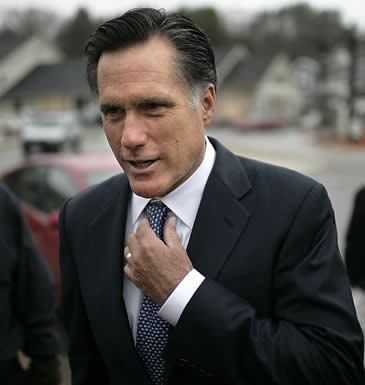
Republican voters in Wisconsin, Maryland and the District of Columbia gave majorities to Mitt Romney today in their primaries. He is now more than halfway to gaining a majority of convention delegates, the number necessary to secure the party’s presidential nomination.

Each state’s results tell a story I’ve written about before; namely, the Republican party, as well as the country as a whole, is deeply divided. Urban and suburban dwellers tend to favor a candidate like Romney, who is fiscally conservative, corporate, almost painfully mainstream. Rural and exurban Republican voters care much more about “values” issues articulated by Rick Santorum and others: same-sex marriage, abortion, creeping “socialism.”

With victories today in these three primaries, the other remaining candidates have fewer realistic opportunities to prevent Romney from winning the nomination outright at the convention – although, they’ll keep trying. There is certainly a Republican constituency that will keep after them to keep trying. The “values” wing of the GOP has never warmed to Romney, thinking him a rich fake, not truly committed to their causes. These voters want the convention deadlocked, all the better to force a back room coup or a compromise candidate who might share their positions on the issues that interest them most (Ready in the wings, Governor Palin?).

Romney may win his party’s nomination but it’s become clear he will never win its complete love.

Shovels and Guns

[Portions of this post were originally written in 2010.]

Stop me if you’ve heard this one before; the storyline is likely to be sadly familiar.

A man with big guns and an even bigger grudge walks into a place of business and starts shooting, first at particular people, later indiscriminately, finally to kill himself. The weapons he used were purposefully designed to throw as many bullets as possible in a short amount of time; in other words, they were built to kill lots of people really fast. That is, of course, why he’d purchased them.

In this particular case, the man used two TEC-9s, like the one in this photo (below).

The man in this particular case, Gian Luigi Ferri, was angry at a law firm located in the 101 California Street building in San Francisco. His first bullets were directed at some lawyers from the firm but after his blood lust was stirred, he went to other floors and shot pretty much randomly.

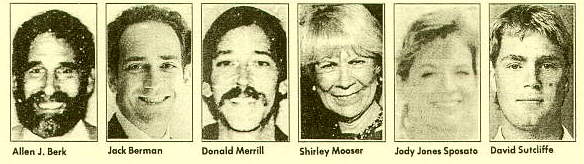
It was on one of these other floors that Ferri shot and killed my friend Mike Merrill. (His first name was actually Donald (see above), but everyone called him Mike.) I’d seen Mike for the final time, as it turned out, a very short while before, at my father’s funeral. After the service, Mike came over to me, fixed me with his bright, intense, crystal-blue eyes and told me what a great guy my dad had been.

Just a few months later, I was at his funeral saying roughly the same thing to his widow.

Following the 101 California Street shootings, and the national media attention it attracted, some gun laws tightened: centralized data bases were established to screen potential buyers, limits were placed on large-capacity magazines, certain models were made unavailable to civilians. None were serious steps, but legislation and regulation were, it seemed, moving in a constructive direction.

In the intervening 20 years, with the passage of time and fading of memory, many of the laws and regulatory schemes created in the wake of this particular tragedy have been loosened or have expired, especially in some states. To some, the problem isn’t the gun but the person using it; regulating gun ownership and use is shooting, as it were, at the wrong target.

I very strongly believe the opposite.

West Churchman, a great mentor of mine, believed that tools were not value-neutral.  You get a shovel to dig with; if you don’t want stuff dug up, you shouldn’t get one.  If the act of digging disturbs what you value – like, for example, a wilderness – then the shovel itself, by virtue of its design and its very reason for being, has an ethical consequence.

West would never have subscribed to the theory that “guns don’t kill people – people kill people.”  Like all other tools, guns were specifically created to perform a certain function, and its particular function has significant moral weight.  In the case of handguns, their purpose is to shoot people, in no way a value-neutral function.  In the case of automatic assault weapons (like Ferri’s MAC-9), their purpose is also to shoot people, but a lot more people and really fast.  Having a handgun or an assault rifle prepares you to kill – purposefully and with designed efficiency.  Not just using one, but also owning one has moral implications.

People have said, if someone wants to kill, a knife works too. True enough, in a single instance. But to kill many people with a knife takes almost unimaginable time, physical strength and proximity. Killing many people with an automatic assault rifle is a physically trivial exercise.

Take away the gun, take away the tool.

Same Old, Same OId

Reflecting, perhaps, a startling (startlingly familiar?) lack of creativity and originality, there are at least 50 Hollywood remakes expected in the coming year. It’s almost as if someone said, “Hey, let’s re-release this really crappy movie in 3-D!” Oh wait, someone actually did that.

Here is an actual for-real list of remakes coming soon to a theater near you (this partial list doesn’t even include sequels or TV series remakes):

Dirty Dancing

Annie

All Quiet on the Western Front

A Star is Born

Barbarella

The Seven Samurai

Scarface

The Wild Bunch

Yellow Submarine

Time Bandits

About Last Night

American Psycho

Creature From the Black Lagoon

Death Wish

Leathal Weapon

Escape From New York

Porky’s

Romancing the Stone

The Bodyguard

Carrie

Robocop

The Birds

and even My Fair Lady, for fuck’s sake

Other than money, what do any of these remakes add? Don’t bother answering, the question is purely rhetorical.

What It’s Made For

I got up early this morning to look online at radar and satellite images, in an attempt, a frustrated and fruitless attempt as it turns out, to see if my son’s baseball team could squeeze in its game before the storm now pelting our house blew across the city.

He was already dressed in his #44 uniform, sitting at the breakfast table, playing with his food. He wanted badly to play. He looked at my eyes as they scanned my computer screen – both of us searching for any possibility of a positive sign. I looked up and smiled at him but we both knew better.

It was raining heavily without a break in sight as we left the house but we drove to the field anyway. We sat in the car, looking skyward for any break in the heavy drumming on the roof of our car – a patch of blue, a let-up in the rain, to no avail. Before long, a man came out to the parking lot to tell us, with cold finality, that the field was closed; there would be no games today. My son’s lips tightened and his eyes moved down to his shoes.

Baseball breaks another heart, which, face it, is something it’s good at, something it’s designed for.

The best baseball players, the very best, only make it on base about half the time. Just a few teams make the playoffs, much less play in the World Series. Errors are made in plain sight, exposing the offender in an embarrassing way other sports might spare players. Baseball’s most famous plays are as likely to be moments of tragedy as triumph. Some of the sport’s most famous and beloved teams are also its biggest losers.

Baseball is a sport designed for tears and heartache, and it relishes that role.

Today it happened to be the rain. Tomorrow, it’ll be something else again.

The Reality of Fog, Considered

FOG

The fog comes

on little cat feet.

It sits looking

over harbor and city

on silent haunches

and then moves on.

– Carl Sandburg

Sweet metaphor, Mr. Sandburg, but you must not have been writing about fog around these parts.

Where I come from, fog isn’t any silent-footed kitty. Fog, here in San Francisco, comes off the wild Pacific Ocean and hits you like a cold, wet sock in the jaw. It leaves you shivering, your clothes and body wet, your bones stiff and sore.

And, just between you and me, it takes its damn time moving on.

I realize that might not make the kind of poem that generations of schoolkids will be forced to memorize but I believe in honesty, especially about something I love so dearly.

Goodbye to a Musician of Note and Gravity

Is it the overproduced crap so many perform these days? The overly-matchy cowboy suits and string ties? The corn-pone turns of phrase? Country musicians are sometimes underestimated musically.

There was no chance of that with Earl Scruggs.

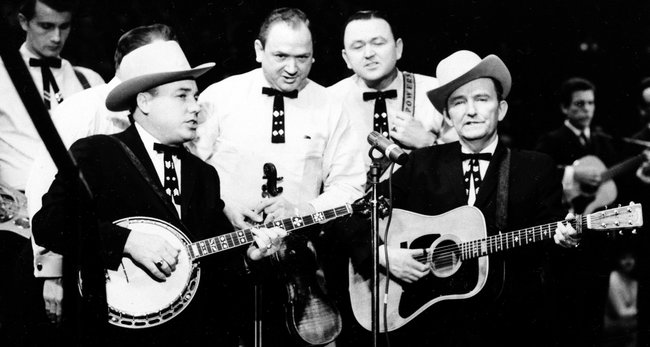
His contributions to bluegrass music are clear, identifiable, lasting and, yes, revolutionary. Even as the junior member of Bill Monroe’s band, the Blue Grass Boys, people were aware of his gifts and the uniqueness of his playing, were aware that Scruggs brought a style to banjo playing that was radical and new. Hear the banjo being played, and understand; there is pre-Scruggs and there is post-Scruggs, there is Scruggs and there are people who want to sound like Scruggs.  His style, developed over years of mastering his instrument, has been imitated by generations of pickers; all are pale echoes of his virtuoso command.

Earl Scruggs died on Wednesday at the age of 88, following a relationship with music that lasted over 80 years. I never had the good fortune of meeting him, but I have met and interviewed some of his musical contemporaries. He was loved and respected and he will be sorely missed.

You can watch the amazing Earl Scruggs, from a 1965 television broadcast, picking on Flatt & Scruggs’ signature tune, Foggy Mountain Breakdown, which became an international hit when it was used throughout the film, Bonnie and Clyde (1967), here.

His New York Times obituary is here.