Not Your Way

My dear brothers and sisters,

For millennia, you have introduced the world to grand aesthetics, philosophy, mathematics, architecture, national heroism and theatrical drama. Through your brave actions in the streets and at the ballot boxes, you continue to demonstrate what direct democracy looks like.

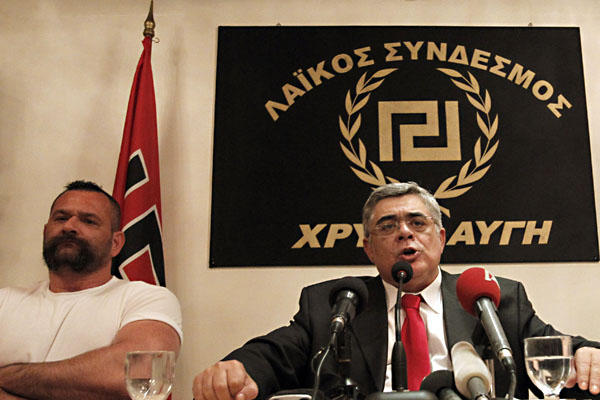
You cannot know the depth of pride with which I hold my Greek heritage. Nor can you know the real pain I have felt lately at your recent suffering. But it was with startled disbelief that I read of the rise of the neo-Nazi Golden Dawn party in this week’s elections.

Seats in your glorious parliament for people who call for “taking the dirt out of the country,” “cleaning up Athens” and planting landmines along the borders to stop illegal immigrants from crossing in? A place in government for black-shirted thugs who violently break up opposition rallies? Votes for those who sit in front of an Hellenic version of the Nazi swastika?

No, my brothers and sisters; it cannot be. Not in the birthplace of democracy.

Please believe that I understand the appeal of dark temptations when things seem at their worst. We have seen troubled times bring out the worst of us, here in America, as well. But this is not the Greek way. This is not our way. Not fascism. Not a dirty echo of Nazism. This is not Greece.
It is time now to show the world what Greek heroes look like.
With support and love,
Your brother

Cocktail Party Chatter: Gesunkenes Kulturgut

When both you and your guests or co-partiers tire of the same old stories told the same old ways, it’s time to dig deep for something new and stimulating.

Purely as a public service, I offer you something to talk about over a cocktail I can virtually guarantee no one at the party has heard about before: Gesunkenes Kulturgut. 

Gesunkenes kulturgut is the idea that folklore is items of past elite culture that have been adapted and popularized in folk culture. Both German Romanticism and British nineteenth-century popular antiquities see folklore as remnants of past culture.

An example: the highest ancient medical wisdom called for leeches to cure blood-borne illnesses. In subsequent generations, leeches continue to be used solely as folk medicine.

Think how smart and witty you’ll appear when you toss gesunkenes kulturgut around. If Dave Kovac is attending the party, however, find another topic of conversation; he’ll be all over it.

A Day for Democracy

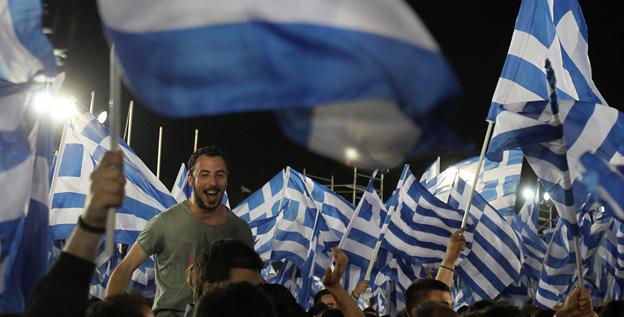
Today, Greeks have demonstrated their national character and identity, as well as their democratic values.

In nationwide parliamentary elections, early exit polls show that both parties who had led Greece for decades and supported the European-led financial bailout of the country, the center-right New Democracy and Socialist PASOK, combined for only around 37% of the vote.

This is seen as a clear repudiation of the European-designed austerity package that was part of last year’s financial bailout. These measures seemed, to many Greeks, to be out of character with the nation’s approach to social services, lifestyle and historic pension schemes.

Could this result lead to Greece abandoning its commitments related to the bailout? Financial markets the world over wait and watch.

This Disaster Averted

Thanks to many articles and posts being shot around the online world by rabid supporters, I’ve read a lot lately about the size of Ron Paul rallies, especially in contrast to the size of Mitt Romney rallies. In light of Romney’s primary successes, many postings posit a coordinated and conscious media and political establishment conspiracy to keep Paul away from his due, which is to say the Republican presidential nomination. (Why do we Americans never seem to tire of conspiracies? Frankly, they exhaust me.) Here’s a YouTube video that makes that case; the Michigan crowd looks particularly large and excited.

If rallies were convention delegates, there might be something to talk about. But, of course, they aren’t, so there isn’t. Michigan, the location of that especially stirring rally shown in the video (above), is an interesting case in point: Paul got a little over 11% of the Michigan vote, Romney a little over 41%. Did bigger rallies really matter? Exactly.

Here’s why I think the Paul 2012 campaign has floundered: his policies would be a complete disaster for America and, thank providence, enough Republican voters were able to recognize it.

Throughout American history, we have balanced the competing impulses of individual liberty and collective responsibility more or less within a sustainable range. Paul would push the balance so far in the direction of personal freedom (as he conceives freedom, that is) it would be nearly impossible to keep this society together.

Some examples:

Income tax: In an interview with The New York Times, Paul said: “I want to abolish the income tax, but I don’t want to replace it with anything…We could eliminate the income tax, replace it with nothing, and still fund the same level of big government we had in the late 1990s. We don’t need to ‘replace’ the income tax at all. I see a consumption tax as being a little better than the personal income tax.”

First, the personal income tax funds over half of federal government operations. Can more than half of what the federal government spends possibly constitute waste or misapplication? Let’s see, that would be, like, Social Security (21%), Medicare and Medicaid (23%) and interest expense (6%). Take those off the books and we could come out where Paul thinks we should be. Do we really want to do without them? Would we or our fellow citizens be better off? Of course, Paul thinks these programs are unconstitutional anyway; he suggests the federal government has no right to collect income tax, and has violated the Constitution by doing so since 1913. Second, the so-called consumption tax is regressive; it hits the poor hardest because a higher percentage, nearly 100%, of poor budgets go to necessary consumption, like food and shelter.

States Rights: Paul believes the Constitution lays out the full responsibilities of the federal government, literally and comprehensively. If it isn’t specifically written in the Constitution, he believes, the right to set policy reverts to the individual states, not the federal government. Voting rights. Contraception. Marriage. Environmental policy. Disabled accommodation. Paul believes there is no federal right to ensure equal protection for all Americans, that it should be up to each individual state to decide. In other words, we’d be doing something vital, like environmental policy, by crazy-quilt.

Voting Rights: The men who actually wrote the Constitution intended and expected only white men to have the right to vote. Sorry to you, women and people of color. Most believe our definitions of personhood and suffrage have evolved since the Constitution was initially written, but not Paul. Paul called the landmark Voting Rights Act of 1964: “a massive violation of private property and contract, which are the bedrocks of a free society,” and said he would have voted against it had he been a member of Congress then.

“Streamlining” Government: Under a Paul administration, the federal government would lose the following agencies and their programs, in favor of allowing “market solutions” to work: the Environmental Protection Agency, the Departments of Education, Energy, Agriculture, Commerce, Health and Human Services, Homeland Security, and Labor. We’re going to depend on market solutions to address environmental issues, education inequities, health challenges, workplace inspection and safety? Seriously? To believe it, one must be dangerously unaware of the true character of modern American life, and/or want to create a radically different society.

Hands Off? Sometimes.: For all his libertarian talk, there are some absolute limits of libertarianism for Paul. While he does advocate legalization of marijuana, cocaine, heroin, and other harmful and addictive drugs, and the abolition of the FBI, the CIA and the IRS (Individual states fighting terrorism?), Paul is much less hands-off when it comes to women’s bodies. As a member of Congress, he introduced legislation that defined life as beginning at conception and granted legal rights to “people” from that moment onward, including the right to be free from harm (a euphemism for abortion, plain and simple). Paul signed the “Personhood Pledge” published by PersonhoodUSA. This pledge says in part: “I stand with President Ronald Reagan in supporting ‘the unalienable personhood of every American, from the moment of conception until natural death,’ and with the Republican Party platform in affirming that I ‘support a human life amendment to the Constitution, and endorse legislation to make clear that the 14th Amendment protections apply to unborn children.” When it comes to women making decisions about their own bodies, Paul believes the government should have a very substantial and active interest indeed.

Yesterday morning, just down the street from my son’s school, I saw the pitch-perfect totem for Paul’s campaign; it was an $78,000 Range Rover with a Ron Paul bumpersticker. Federal government hands off my gas-guzzler!


Thoughts on a Beautiful Day

She Walks in Beauty

     by Lord Byron

She walks in beauty, like the night
   Of cloudless climes and starry skies;
And all that’s best of dark and bright
   Meet in her aspect and her eyes;
Thus mellowed to that tender light
   Which heaven to gaudy day denies.
One shade the more, one ray the less,
   Had half impaired the nameless grace
Which waves in every raven tress,
   Or softly lightens o’er her face;
Where thoughts serenely sweet express,
   How pure, how dear their dwelling-place.
And on that cheek, and o’er that brow,
   So soft, so calm, yet eloquent,
The smiles that win, the tints that glow,
   But tell of days in goodness spent,
A mind at peace with all below,
   A heart whose love is innocent!

Newt or Newt?

[This isn’t a post about substantive policy positions.]

Newt Gingrich, as anyone who might possibly care knows by now, has withdrawn from the race for the Republican presidential nomination or, in current political speak, he has suspended his campaign.

I’ll miss him. Or, to be more accurate, I’ll miss half of him, because Newt Gingrich is really two Newts: there is the grandiose, didactic, more-conservative-than-thou joke who barely made a dent in the campaign, but there was also the old-school politician who visited zoos and shook hands and connected with people in a way his major competitor Mitt Romney can only dream of.

The first Newt acted like he was smarter than everyone else, floated bizarre ideas as if they were normal as walking across the street,  and never fully rose to the challenge of running for president. No one in their right mind would miss that Newt.

I met the second Newt a few years ago and was surprised at how much I liked him. He was friendly and accommodating when he had no self-interested reason to be. He spoke to my son, then 10 years old, about this country and its politics in an engaging way that few adults would have taken the time or energy to do. He was funny in an unstudied and understated way that few people of power and fame are.

As campaigns become more corporate and more directed toward electronic media and mass marketing, I’m sorry to see the old-style, human-scale and humane Newt leave.

Heroes? Please.

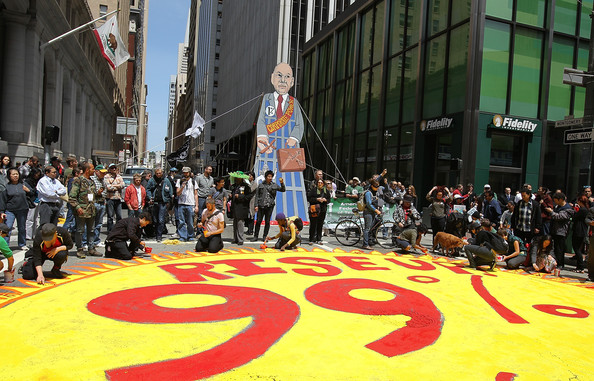
This will be no less than heresy to some of my politically progressive friends who consider them new-era heroes but after watching the protests yesterday, I am now completely convinced the Occupy Movement is an utter failure.

The first responsibility of any political candidate or movement is self-definition, providing answers to the following questions: (1) Who am I? (2) Why am I here? (3) What am I going to do or advocate? (4) By what means?

Examples of movements that did this well? Anti-Apartheid in South Africa, independence in India, Moratorium to end the Vietnam War here in the U.S.

The Occupy movement? Hates corporate capitalism and greed. (Hates greed. Really? How do you feel about sloth? Lust?) Wants to do something or other in pursuit of undefined social and economic “justice.” Camps out in city parks. Performs street theater and drum circles. Wastes precious media time engaging in pointless and fruitless arguments about police tactics, which is not the point of the movement. At least, I don’t think it is.

Occupy’s sole concrete result has been reflected in recent reports that some Wall Street firms are working to refurbish their public images. More work for PR firms; great accomplishment.

That some still consider the people of the Occupy movement heroes of the working class puzzles me.

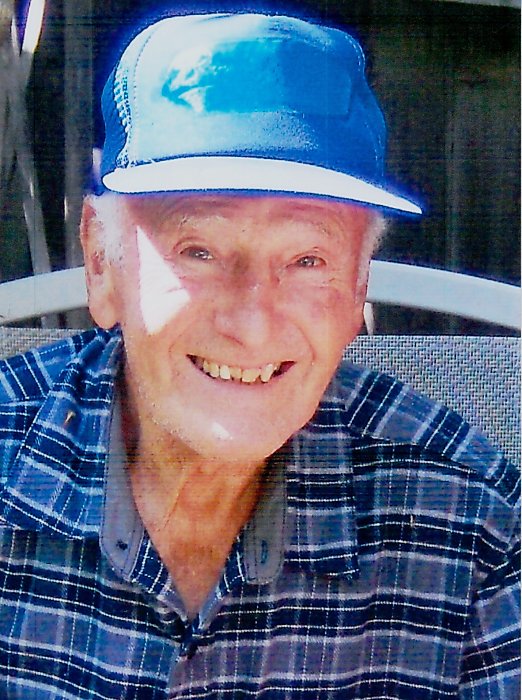
Want to see what a real hero of the working class looks like? This is Jack Balestreri (below), the last living person who worked on building the Golden Gate Bridge, the construction of which cost 11 lives. Balestreri passed away last week at the age of 95. The Occupy movement had plans to shut the bridge down yesterday, in protest of something or other, but decided against it at the specific request of the Bridge’s union workers, preserving, for the moment, the work and sacrifice of real working people, like Jack Balestreri.

A Lesson of History

Many times and from many quarters, we San Franciscans have been derided, sometimes to humorous effect, at other times, less so, for being retrogressive, nostalgic, romantic and overly protective about our past. We can seem to want to slap an historic designation on almost any structure older than a few years, from 1950s diner mascots to winking billboards. We can seem more reverential about some of these pieces of our civic history than the Greeks about their Parthenon.

Recent case in point: the brouhaha over the Gold Dust Lounge, a kitschy bar in the touristy Union Square shopping area. [Disclosure: I love the place and hope it lives forever.] You’d think people were fighting over the fate of the Golden Gate Bridge.

That said, there are a lot of physical places I knew growing up here as a child that no longer exist. The loss of some make me sad and make San Francisco a significantly poorer place, in my opinion. We’re not, in the great scheme of things, a very old place. We don’t have bottomless stores of architectural beauty and history. We should appreciate and preserve the important things we have.

‘Stones make a wall, walls make a house, houses make streets, and streets make a city. A city is stones and a city is people; but it is not a heap of stones, and it is not just a jostle of people.’ – Jacob Bronowski

San Francisco has the character it does because of what’s here and who’s here. And we should all be conscious of that and exercise no little measure of care when we’re considering saying goodbye to either – buildings or people.