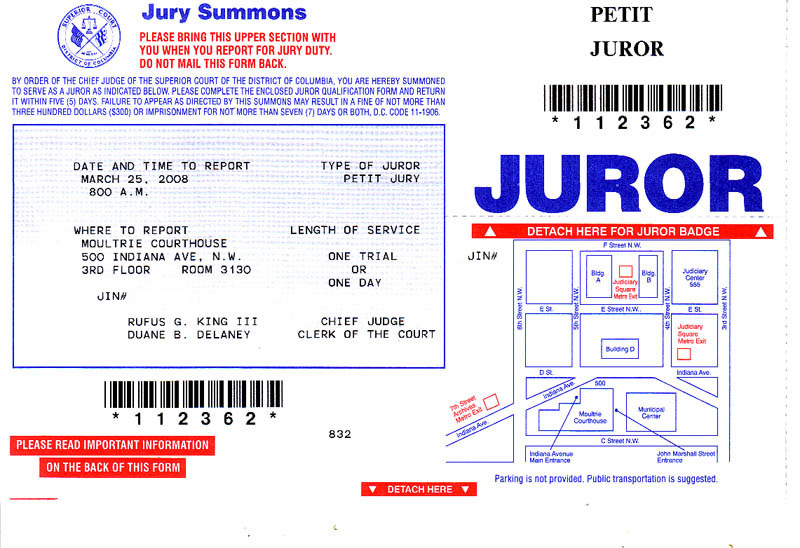
Jury Duty

As you approach, you can feel it. The 1960s-era building oozes pain and discomfort. This is no place of peace. Many walk in; fewer walk out. Eyes are cast downward. Shoulders slumped forward. The pace, hesitant. No one really wants to enter San Francisco’s Hall of Justice. Not the people appearing for trial. Not the police and sheriff’s deputies. Certainly not the people, like myself, who have been ordered to report for jury duty this morning.

There is no real edifice, no welcoming lobby. You enter through swinging doors of smudged and dirty glass and enter the line for security screening. Off come belts, out comes pocket change. Bags pass through X-rays.

And into the elevators. Other potential jurors, defendants, box-toting lawyers, bailiffs with their morning coffees in paper cups. Dim and flickering fluorescent lights. Bumpy and jerky ride to the 3rd floor.

Out and left down a dark corridor. Decades of wear have grooved, rutted and marked the floor’s dingy linoleum. The walls of dark grey marble reflect oddly distorted images of the people walking by.

We line up to check in, and it’s quite a line. From the door to Room 307, down to the end of the hall, back the entire length of the opposite wall clear back to the floor’s elevator lobby. They must be expecting heavy business, I think to myself.

Enter the jury assembly room and be seated among the already packed rows of chairs all facing the door. Everyone facing the same way, with the same glazed expression, creates an odd effect. Noisy and busy with people leafing through magazines and catalogs, reading crappy paperbacks, or squeezing in a few minutes of work between obligatory moments, when such isn’t permitted. Too noisy to really concentrate but not busy enough to be fun people watching.

Quiet, please, for the orientation video. Just as on airplanes during the safety video, more than half the room’s people never look up. They’ll be the ones asking questions later, I bet.

Then, the reading of the rolls. Names mispronounced, garbled, mangled. Groans along with the calls of “here” and “present” and “yes,” just like on the first day at a new school. Scanning the room for familiar faces. I spot a few. No friends, though.

Waiting.

The names read, again, to assign us to courtrooms. Those who’ve been through the process before know this is the truly excruciating part. Maybe 100 potential jurors will go into Department 20 with me. (Why are courtrooms called departments, anyway?) We sit in the audience (not the correct name, I’m told) and wait longer.

The room is poorly lit. The walls are covered with taped-up, handwritten notes. Where not to park. Court holidays. Earthquake plans from the 1980s. Important phone numbers in 8 pt type.

After long inaudible conversations between the judge and the lawyers and, frankly, just about everybody else at the front of the courtroom, the rotund and wheezy bailiff calls us into session. Endless boilerplate about the sanctity of trial by jury, the role of jurors, the process by which a jury is selected. We are told that we cannot read, cannot be on electronic devices, cannot write.

A group of us are brought to the front to be interviewed. The general questions asked all prospective jurors – in what neighborhood do you live, what do you do for a living – at least provide a quick and not uninteresting snapshot of the city.

Then, the judge asks people who feel they cannot serve to identify themselves. A long (And when I say long, I mean looooong.) line forms to talk with the judge about lack of language ability, childcare, financial hardship, various religious exemptions. Some are excused quickly. Others interviewed at length and are sent back, sulking, to rejoin the rest of us. This seems to take forever.

But when the lawyers start to pose more specific questions, the torture begins in earnest.

The same, sometimes very detailed and convoluted questions are asked again and again, literally, hour after hour. And it is clear at once which prospective jurors are trying to make the jury (“Oh, yes, I could be fair to an accused serial murderer of children.”), and which are trying to clear out as quickly as possible (“My second cousin’s high school boyfriend was a cop, so I would be more likely to trust the testimony of a police officer.”).

The process takes forever.

And there is no escape.

Public Works

Outside of our home, here’s what most of my young life looked like: libraries, schools, playgrounds and parks. To be more specific, public libraries, public schools, public playgrounds and public parks.

I grew up about ten blocks from two public libraries. The librarians – there were several – seemed to love having kids around. They took time to show us books, of course, but also how to look, how to use the card catalog (Anyone still remember those?), how to look through magazines and newspapers. There were author programs – a very fine kids’ author, Marilyn Sachs lived in our neighborhood – cultural events, a chess club, reading groups, and many more features that made for a healthy and robust community of young thinkers.

I attended public schools from kindergarten through college. My state was among the top 3 in per student spending for K-12 education when I was of school age. We had many experienced, engaged and talented teachers, books that were ample and new each year, school supplies, enrichment programs, music programs, art programs, school libraries, PE, special events, like spring festivals, up-to-date AV equipment. Once I got to high school, my school offered instruction in French, German, Italian and Spanish. We had several interscholastic athletic teams every season, a school play each semester, frequent musical events. Our science labs were well stocked. I was fortunate to attend my state’s university for a little less than $600 per year in tuition.

I lived across the street from a very well used playground – tennis and basketball courts, athletic equipment, a special play area for littler kids, art classes, a program of day-trips, a professional staff.

A huge urban park was only half a block away. It had a lake with boats for rent, baseball diamonds, a full track, football fields, open meadows, walking trails, horse rentals, a world class fine art museum, a natural history museum, open-air band concerts, a Japanese tea garden, several playgrounds, an animal farm, public art, a working antique carousel.

Almost everything about my experience as a youth told me it meant something special to be a part of my city, my state. I came to understand through that living, breathing, personal experience, then, the very concept of citizenship. I had a clear understanding of what government provided its citizens. I received education, enrichment, socialization, physical fitness, recreation.

Expensive to build and run? Without question. But what did my hometown get in return?

Generations of good, well educated, civic-minded, committed citizens.

When I hear people say they want government out of their lives, I can only assume they haven’t had the same experiences I’ve had. I would hate to think they were self-serving, hypocritical and cynical enough to criticize and even kill the very institutions that gave them such advantage in life.

Karmic Reminders

Why do I have a chronic bad back? Is it the few extra pounds I tend to carry about my middle? Or, rather, is it some sort of cosmic retribution for giving my dad mostly good-natured shit about his bad back when I was a smart-assed kid?

I believe I know the answer. In this world, what goes around, comes around, and payback is hell.

Case in point.

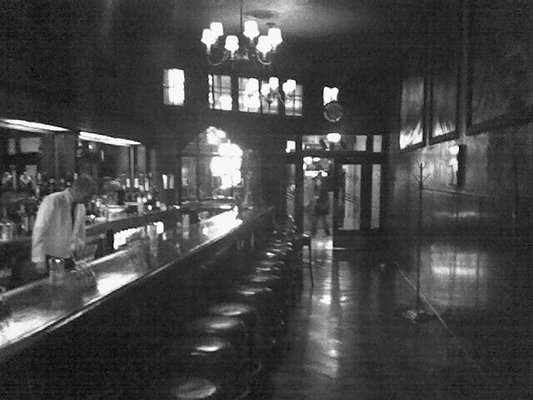
I saw some potentially bad news in yesterday’s paper: The Tosca Cafe, one of the places in San Francisco I love most dearly, may soon close. The reason should be very familiar to anyone paying attention. Landlords want ever-higher rents. Tosca’s North Beach landlord is a strip club that’s already made earning a living very hard for the bar’s owner.

Tosca is the kind of place you see rarely these days. A melting pot and mixing bowl of the city’s very heterogeneous population. A place to go and meet people. A place to go and run into lifelong friends. A place to feel like you’re a part of something special. Here’s the kind of place it is: on one particularly memorable night, I shit you not, my pal Fish and I sat at the bar between supermodel and actress Lauren Hutton and a cabbie named Tim. We listened to opera on the juke box. We joked. We told each other stories. And unless I’m very much mistaken, we all enjoyed each other’s company very much indeed.

Tosca is precisely the kind of place that makes San Francisco what it is.

Tosca’s precarious situation should sound familiar to San Franciscans because so many of the city’s most colorful haunts have been disappearing with increasing frequency. Last year, it was the Gold Dust Lounge, told to vacate in favor of, just what we need more of in the Union Square area, a new national-chain clothing store.

To think of North Beach without Tosca is a sad prospect. To think of it replaced by a Hooters or some other corporate girly club is beyond my comprehension.

My only solace would come from my firm belief in karma. These soulless corporate leeches will get their just payback at some point. You can’t take a place like The Tosca Cafe away from my hometown and not expect some measure of rough justice.

Better sleep with one eye open, leeches. With Tosca gone, the universe will be in no mood for mercy.

Sunday Morning

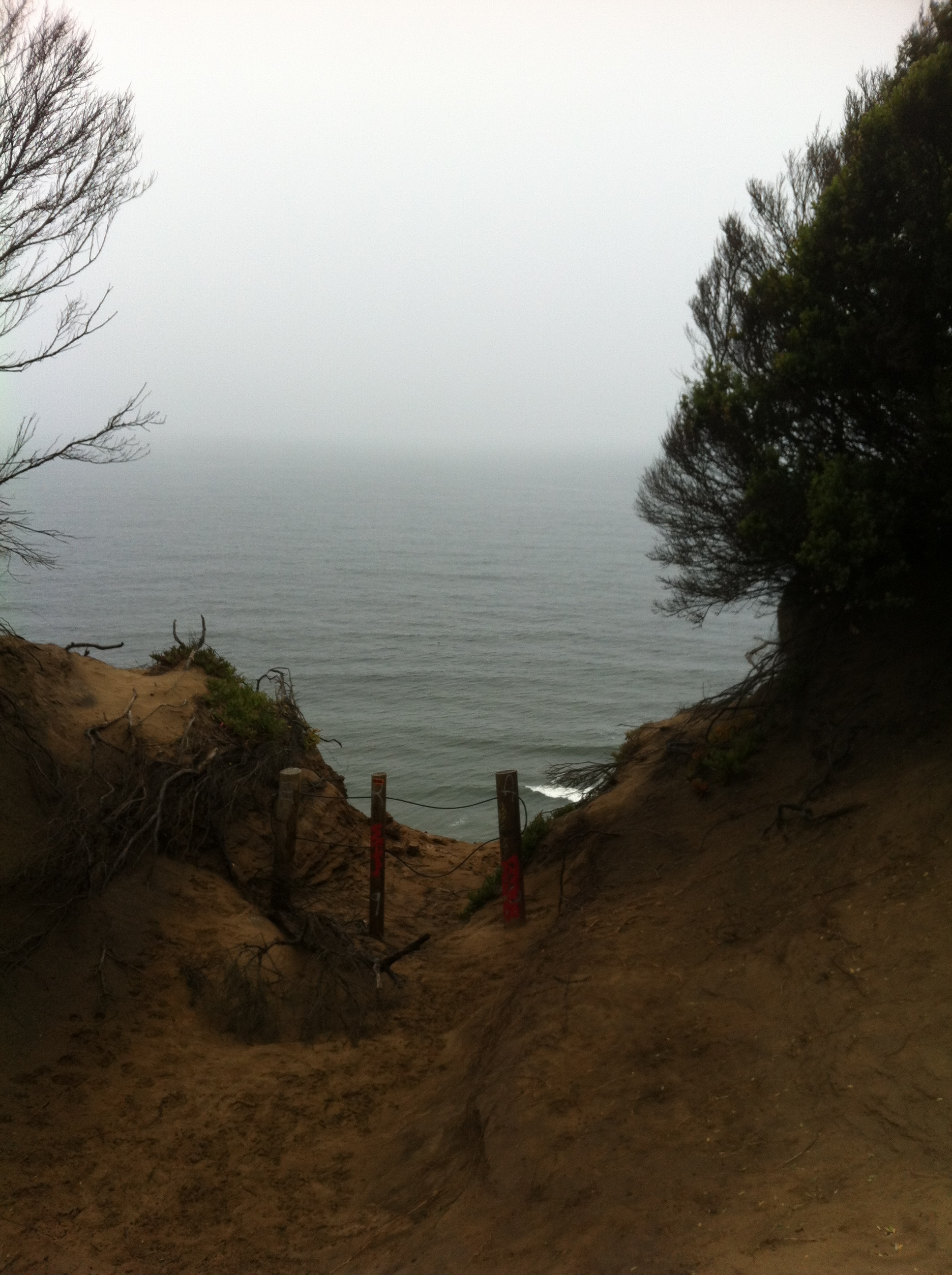
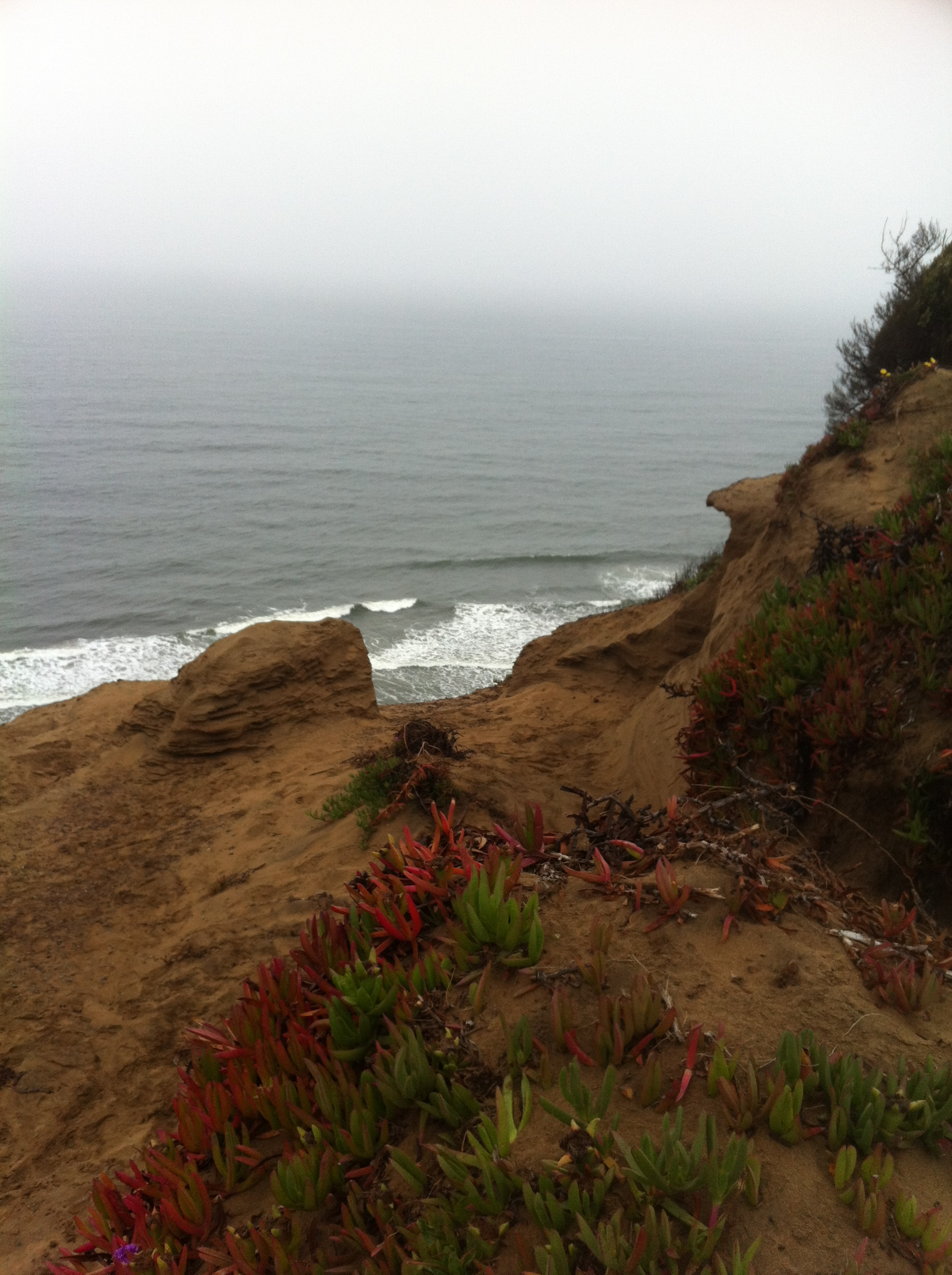
A long walk on the cliffs above the foggy and foamy Pacific. Quiet and cool.

No one to talk with. Just DeeDee and me. Although we walk not three strides apart, both alone, in our own ways, with our thoughts.

Mine have been fierce and jumbled lately. Trying hard to make sense of things that may have no resolution. My hands are thrust deep into the pockets of my shorts. Head down. Eyes on the sand under my feet. Thinking unsettling thoughts.

But then DeeDee and I both look up, hearing the unmistakable whoosh of birds above, just in time to see a ruler-perfect “V” of pelicans gliding past. I can’t take my eyes off them and my feet stop dead.

The sound of the wind and the crashing waves give me a moment of peace. I give a silent thanks for the moment.

Notes on the First Day of Summer

The morning didn’t start auspiciously. Another driver, distracted by a brilliantly beautiful person running down Dolores, turned in front of me with neither look nor signal. I swerved to avoid him but nearly took out a streetsign to do it. When I’m behind the wheel, my spouse calls me Mario (after racing legend Mario Andretti) for a reason.

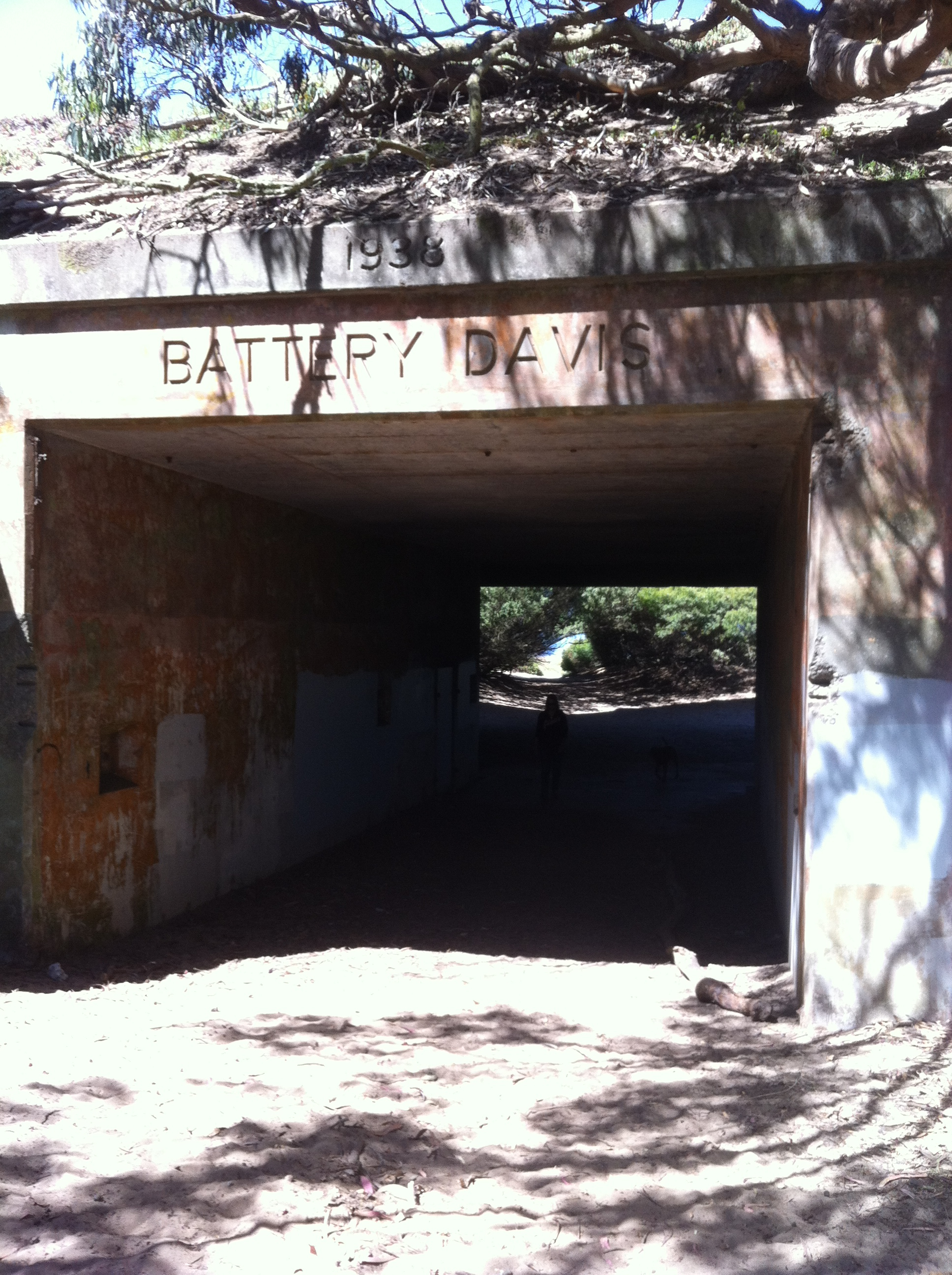
Disaster averted, I took my canine pal, DeeDee, to Fort Funston, built in the late 1930s as an artillery battery to protect San Francisco Bay from Japanese invasion, now a dog park and hang glider takeoff spot. It’s one of the few safe places the city’s dog owners can let their dogs run offleash and free, and a wonderful place to enjoy spectacular views of the Pacific Ocean. [Great ocean views were once critical, I understand, for artillery batteries.]

Not a cloud in the sky, the sun was warm, the breeze off the Pacific refreshing. A glorious first day of summer, the so-called longest day of the year in the Northern Hemisphere.

We, my spouse and I, once visited the Orkneys, islands north of Scotland, during the summer. Even after midnight, it never got truly dark. As I waxed poetic about the islands’ stunning beauty, a native reminded me that, 6 months from then, in the dead of winter, it would never be truly light; the sun doesn’t really rise, the place stays in perpetual twilight.

Yeah, thanks anyway. I believe I’ll just stay right where I am, closer to the Equator.

On the Road Again, Nelson!

I used to drive with the window down, my left arm resting on the door. Never had air conditioning in those days. Summer or winter, the rolled down window was all there was.

Always had a cassette player, though, so I could blast the Doobie Brothers, Jimmy Buffet, the Crusaders, Weather Report, Bonnie Raitt, or whatever else I was listening to at the time and sing along.

I hear your voice everywhere

It’s echoes of love

Making me look back over my shoulder

Echoes of love are started all over.

Something like 30 years ago, I had a teeny, white Renault. Never went very fast, even going downhill. Got blown around a lot by big trucks on the freeway. In their rearview mirrors, I could see the drivers laughing as they passed. I guess they didn’t see many Renaults in North Carolina. Could also have been because I had a license plate that said “SLUG.” Or maybe it was because you didn’t often see big guys like me driving little cars they could barely fit into.

I suppose I should have given them the benefit of the doubt.

One winter night in Philadelphia, I was stopped at a red light. The guy next to me motioned for me to roll down my window. He leaned over and yelled, “Hey, brother, they build that car around you?”

The light turned green and he took off laughing.

It was a honey of a car, though. Still maybe the best I’ve ever had. Reliable. Great gas milage. Easy to work on. Once replaced the gas tank by myself; wouldn’t dream of even trying it with my current car. Couldn’t go fast, but it did make it cross-country more than once, packed floor to ceiling with all my worldly possessions. Truth is, I’d probably still have it if it wasn’t totaled by a drunk driver one night. I saw it for the last time, there amidst the auto ghosts on Pier 40, where they towed it after the accident.

Folded up like a little, white, French accordion, my hand to God.

Know Your Neighbors

I grew up in the 1960s, a typical kid in one of San Francisco’s many typically middle class neighborhoods. Corner grocery stores, kids listening to baseball on the radio, playground sports, dads at work, moms at home.

We knew most of the families in our part of the neighborhood, some by sight, some more intimately. Most of the kids in my neighborhood, and there were lots of kids, went to either our nearby public school or to the local parish school. After 12 years of school together, we got to know those families very well. Neighbors without kids were mostly kept on a friendly “good morning” basis.

We had one neighbor named Anton Lavey. His daughter Karla was a classmate of Mike, my older brother, but because she didn’t play sports with us, we didn’t know her very well. Like a lot of our neighbors, Lavey was fairly quiet, maintained his home fairly well and kept mostly to his own business. Now, there were a few quirks, but that could be said of most of our neighbors. Lavey’s particular quirks, however, were, relative to our other neighbors, somewhat more intense.

For one thing, he had a pet lion. Yes, an actual, grown-up, although trained and domesticated, lion. He’d walk it around on a leash from time to time.

Lavey also had a clean-shaved head in an era when such things weren’t as common as no-fat decaf lattes. His goatee was trimmed and pointy. He always wore black; head-to-toe black. Sometimes, he’d even wear a black cape, lined in crimson red. His house was black, from the walls to the front gate to the window frames.

His picture would be in the newspapers or on local TV every once in a while, as one could imagine any hometown eccentric’s would.

Oh, I guess I forgot to mention that he also founded the Church of Satan. Yeah, that was our neighbor, Anton Lavey, the High Priest of Satan. Before he died, in 1997, he was visited by a very long line of pilgrims who came to his house from across the globe; people from Marilyn Manson to US presidential descendant Chester A. Arthur III.

Anton Lavey, just another guy wandering around my neighborhood, you know, with his pet lion on a leash.

The Poet Among Us

There’s a funny person from around these parts named Zach Houston. I guess all poets are funny in a way, aren’t they? Yes, Houston is a poet. A real, working poet. And he is a jewel.

You may have seen him on the CBS News, or heard him recently on NPR.

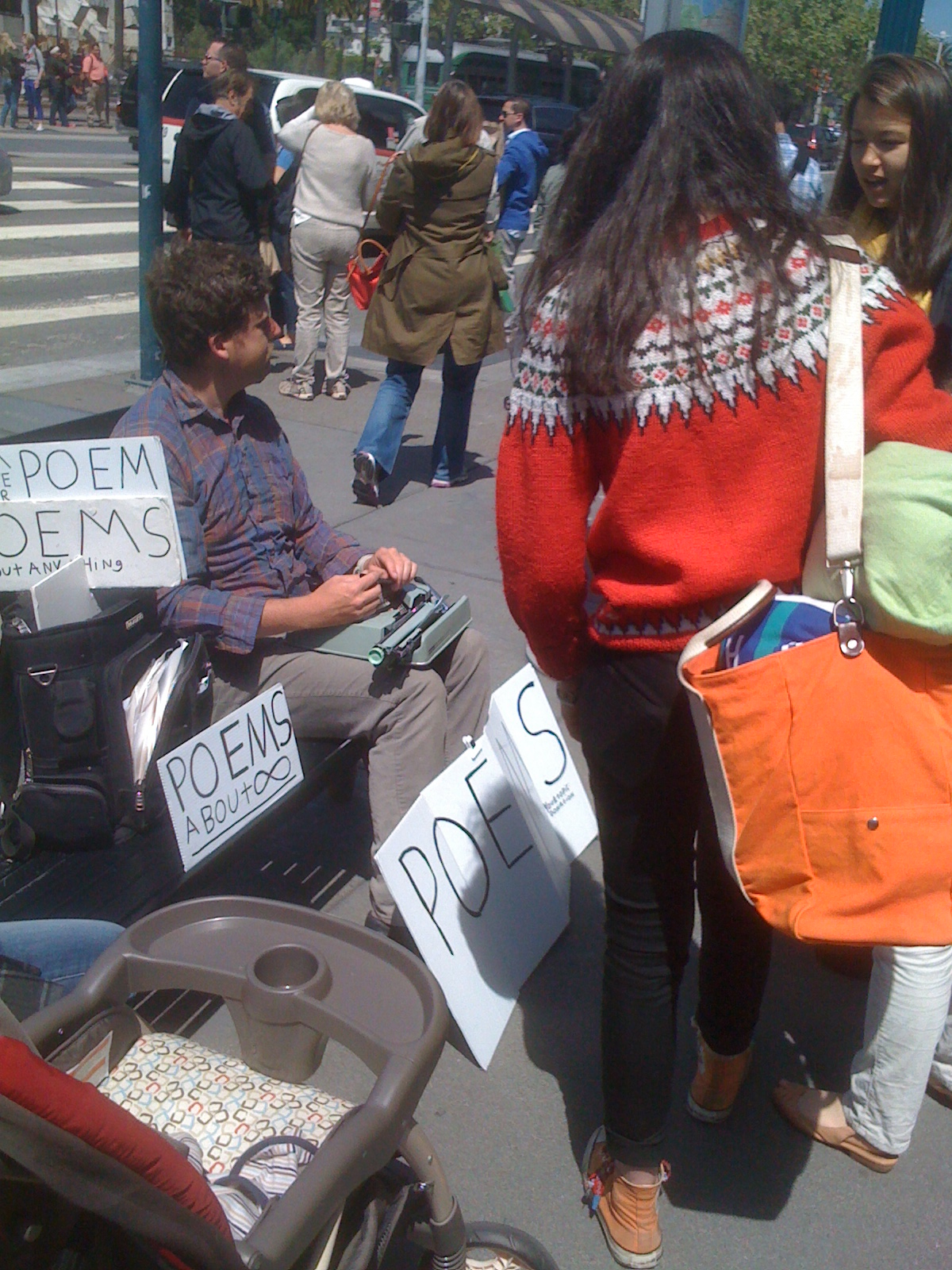
He totes around a manual typewriter. (When was the last time you saw someone use one of those?) He sits somewhere with a fair amount of foot traffic. He sets up one of his signs, and he sits.

For a donation, he will write an original poem. Write it on the spot, banging it out clack-clackity-clack on his typewriter. And he will pull it off the roller, sign it and hand it over.

Remarkably, Houston is not just some ape with a gimmick. He is a talented and thoughtful poet. His words have sound and rhythm. His poems, at least the ones I’ve read and heard, are intriguing. They play on ideas in original ways.

Houston, in short, is as brilliant as he is ballsy.

I saw him the other day at San Francisco’s Ferry Building Farmer’s Market. He wrote something for my daughter and her school pals. I watched him as he chit-chatted with these pretty girls, joking, flirting more than a little. But he was writing all the while. And when I read it, I was more than a little surprised at the high quality of the finished piece.

It’s not every poet who would have the nerve to compete for attention at a place like this, where people come for farm-fresh produce and gourmet food. But probably not every poet feels up to that kind of challenge. Houston, however, is obviously more than equal to the task.

A Son’s Giant Pride

The other day, my 13 year-old son and I happened into the San Francisco Giants’ store at a nearby mall. Okay, honestly, we’re both suckers for hometown team apparel and were looking at this season’s crop of warm jackets.

[As an aside, what you’ve heard is completely true. Unlike almost the entire rest of the country, it really is cold in San Francisco during baseball season.]

After taking complete stock of the store’s inventory of warm things, we stopped by the gift counter and noticed the rings that were created for fans to commemorate the Giants’ 2010 World Series Championship. And my son and I agreed that they’re pretty handsome.

As we talked about which model of ring we preferred (the one without the diamonds, as I recall), another man and his son came over to the case. My son Giggy noticed it first but I did soon after – the man was wearing what looked like a real World Series ring, the kind the players and team officials got. Giggy looked at me with questioning eyes, then whispered to me: “Is it?” It sure looked like it, I said. But I figured I’d remove any doubt, so I asked.

“Excuse me, is that a real World Series ring you’re wearing?”

“Yes, it is. I work in the clubhouse; I do laundry. The team gave me a ring. Isn’t that something?”

“It’s amazing. How great for you.”

“Think other teams would do that? No way.”

“It’s beautiful. Thanks for showing it to us.”

“My pleasure. Thanks for asking.”

Giggy couldn’t take his eyes off the man’s enormous ring but my eyes drifted over to the man’s son. He was looking up at his dad with a huge smile and, what seemed to me, boundless pride in his eyes.

What a lucky man, I thought. Not all of us get that kind of moment to shine in our kids’ eyes.

The Triumph of Light

San Francisco is a city that rewards looking closely, under the surface, behind the closed curtains and doors. It’s so closely associated with its shroud of fog for a reason. This is a mysterious city that defies easy characterization, much less caricature. San Francisco provides the only possible setting for America’s preeminent mystery book, The Maltese Falcon. And the city is mysterious in other ways as well: there are things here that are inexplicably quirky or bizarre, are not obvious, not easy to spot, hidden from view if you don’t know exactly where to look, or here one minute and gone the next.

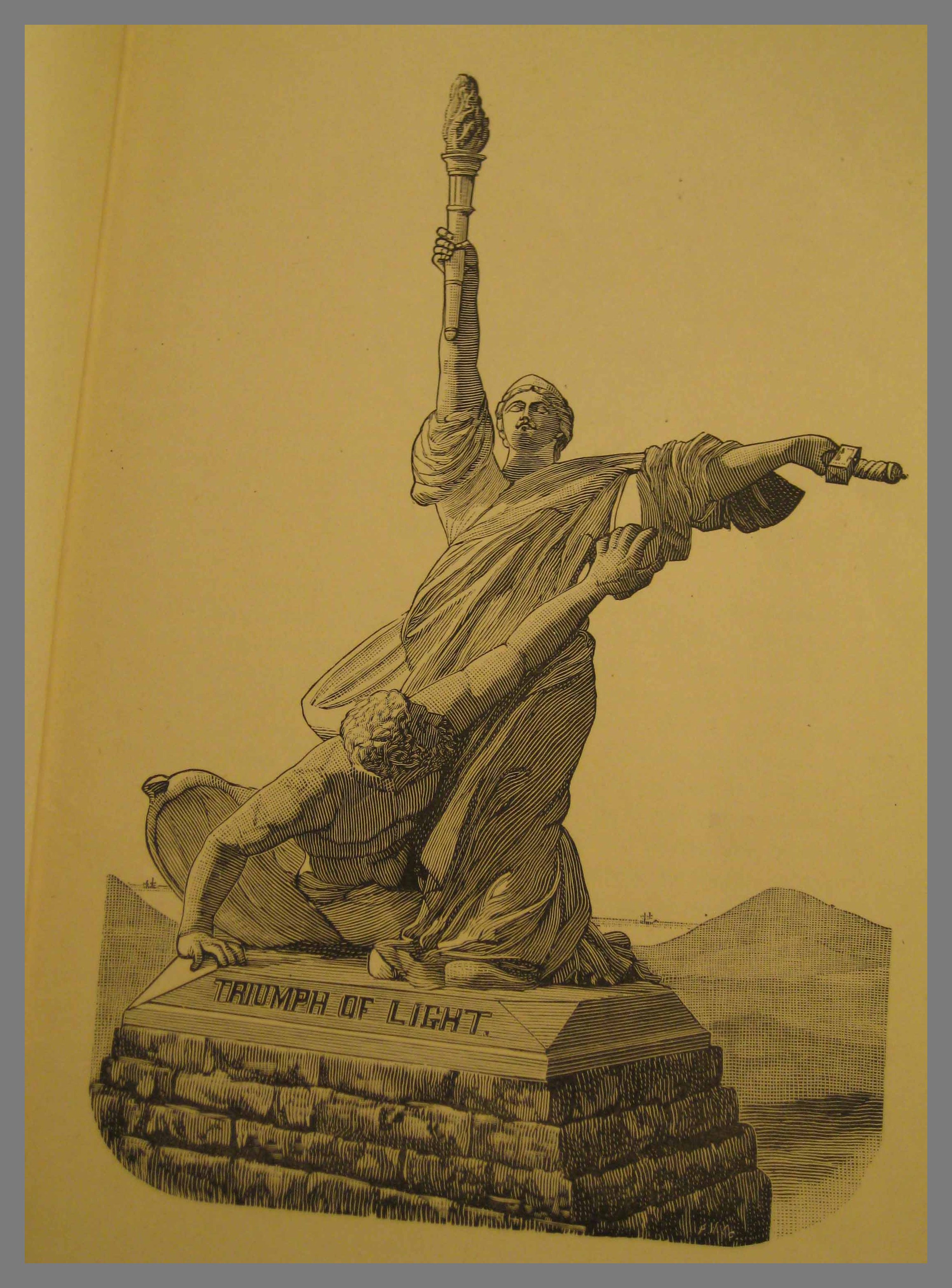
Witness, if you will, The Triumph of Light, a story almost too good to be believed.

In the late 1880s, during the days when such monuments were erected, Adolph Sutro, a silver baron, philanthropist and former mayor who owned the hill at the precise geographic center of the city, decided to commission Belgian artist Atoine Wiertz to build an allegorical piece depicting the victory of liberty, depicted as a torch-carrying lady, over despotism, a cowering muscled hulk. And so it was completed, installed and dedicated on Thanksgiving Day, 1887. At the dedication ceremony, Sutro said: “May the light shine from the torch of the Goddess of Liberty to inspire our citizens to good and noble deeds for the benefit of mankind.”

So, the statue stood, looking over the people of San Francisco, possibly guiding them toward good and noble deeds. And in many other places, that might have been the end of the story but, hey, this is San Francisco and we don’t roll that way.

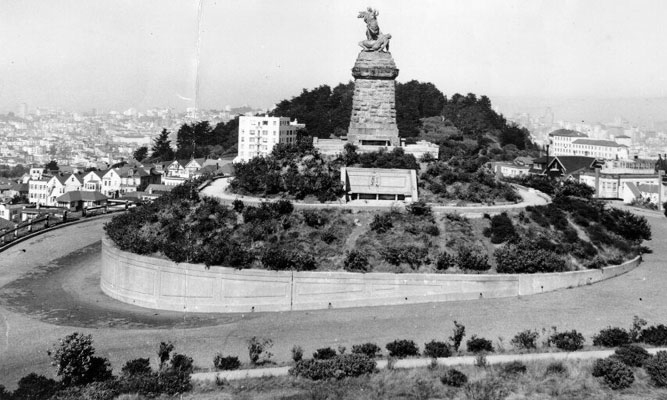
Years passed, and people stopped thinking in the ways Sutro and others thought they ought. Monuments to liberty and other civic virtues were no longer objects of public affection and care. Ugly apartment blocks and condominiums were built around this statue’s site, blocking its commanding view and removing the piece from public view and consciousness. Fewer and fewer San Franciscans, as time passed, even knew of the monument’s existence.

There were natural forces at play too. As it turns out, statues need love and care. Their materials decay and degrade over time. The Triumph of Light was no exception. The San Francisco Arts Commission reported that the statue was in danger and there was serious talk about replacing it with a Bufano sculpture the city had in storage.

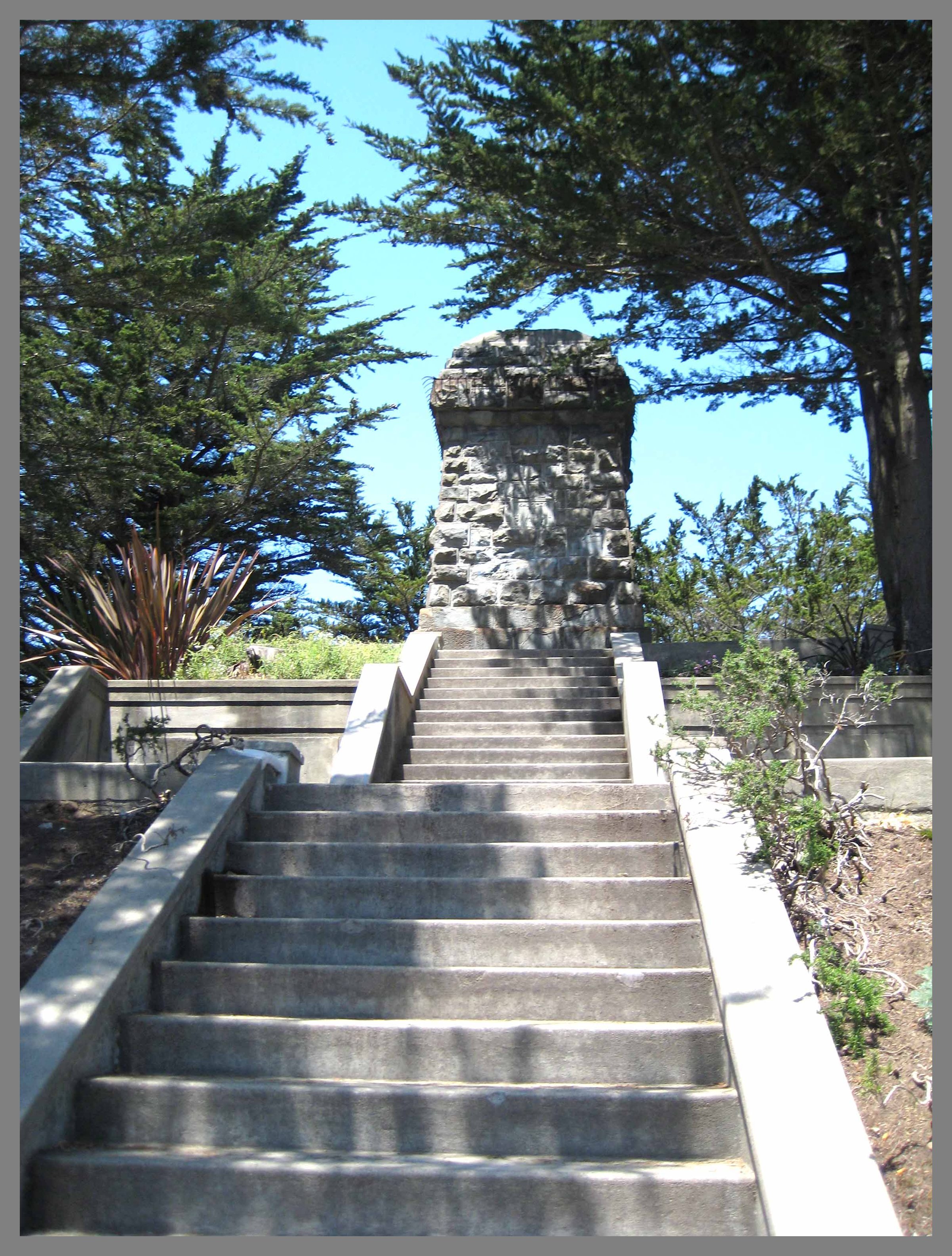
That was the near-final public record of the statue. And then, sometime in the 1950s, poof, The Triumph of Light simply disappeared. No one, not neighbors, not the city government, knows where. What’s left now is the base and the pedestal. Its inscription is worn down to virtually nothing.

Another San Francisco mystery.