Heroes? Please.

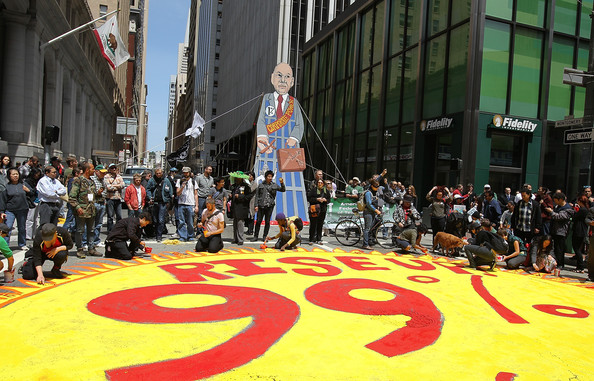
This will be no less than heresy to some of my politically progressive friends who consider them new-era heroes but after watching the protests yesterday, I am now completely convinced the Occupy Movement is an utter failure.

The first responsibility of any political candidate or movement is self-definition, providing answers to the following questions: (1) Who am I? (2) Why am I here? (3) What am I going to do or advocate? (4) By what means?

Examples of movements that did this well? Anti-Apartheid in South Africa, independence in India, Moratorium to end the Vietnam War here in the U.S.

The Occupy movement? Hates corporate capitalism and greed. (Hates greed. Really? How do you feel about sloth? Lust?) Wants to do something or other in pursuit of undefined social and economic “justice.” Camps out in city parks. Performs street theater and drum circles. Wastes precious media time engaging in pointless and fruitless arguments about police tactics, which is not the point of the movement. At least, I don’t think it is.

Occupy’s sole concrete result has been reflected in recent reports that some Wall Street firms are working to refurbish their public images. More work for PR firms; great accomplishment.

That some still consider the people of the Occupy movement heroes of the working class puzzles me.

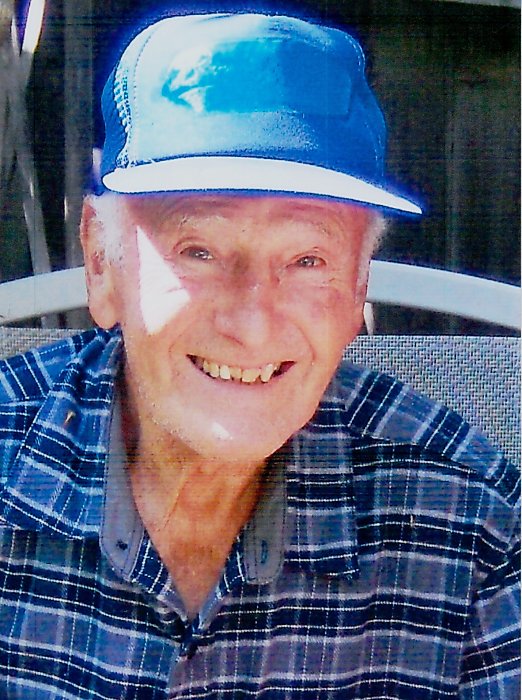
Want to see what a real hero of the working class looks like? This is Jack Balestreri (below), the last living person who worked on building the Golden Gate Bridge, the construction of which cost 11 lives. Balestreri passed away last week at the age of 95. The Occupy movement had plans to shut the bridge down yesterday, in protest of something or other, but decided against it at the specific request of the Bridge’s union workers, preserving, for the moment, the work and sacrifice of real working people, like Jack Balestreri.
A Lesson of History

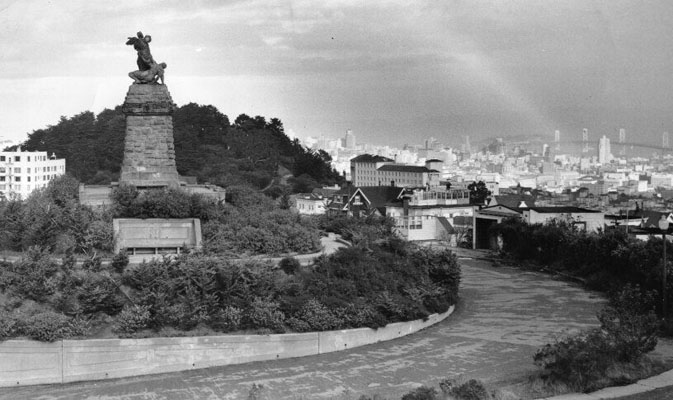
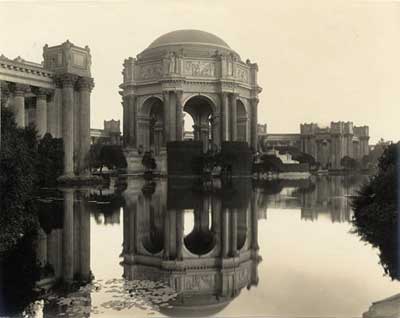
Many times and from many quarters, we San Franciscans have been derided, sometimes to humorous effect, at other times, less so, for being retrogressive, nostalgic, romantic and overly protective about our past. We can seem to want to slap an historic designation on almost any structure older than a few years, from 1950s diner mascots to winking billboards. We can seem more reverential about some of these pieces of our civic history than the Greeks about their Parthenon.

Recent case in point: the brouhaha over the Gold Dust Lounge, a kitschy bar in the touristy Union Square shopping area. [Disclosure: I love the place and hope it lives forever.] You’d think people were fighting over the fate of the Golden Gate Bridge.

That said, there are a lot of physical places I knew growing up here as a child that no longer exist. The loss of some make me sad and make San Francisco a significantly poorer place, in my opinion. We’re not, in the great scheme of things, a very old place. We don’t have bottomless stores of architectural beauty and history. We should appreciate and preserve the important things we have.

‘Stones make a wall, walls make a house, houses make streets, and streets make a city. A city is stones and a city is people; but it is not a heap of stones, and it is not just a jostle of people.’ – Jacob Bronowski

San Francisco has the character it does because of what’s here and who’s here. And we should all be conscious of that and exercise no little measure of care when we’re considering saying goodbye to either – buildings or people.

Fado, Fate

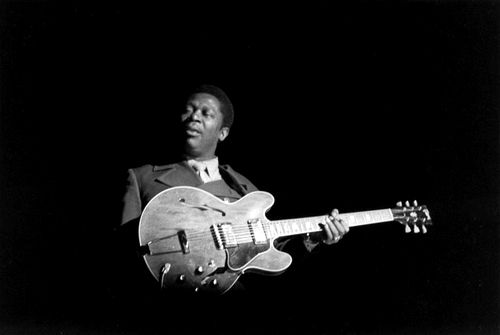
I was 11 or 12 years old in 1969, when I first heard the music I’d later learn was called ‘the blues.’ It was BB King singing ‘The Thrill is Gone.’ I still remember it because I’d had no forewarning of what to expect and no idea King’s voice and guitar would foster a lifelong love of the blues in me. What I did know at a dead certainty was that BB King was unlike any other musician I’d ever seen, his music unlike any other I’d ever heard. Watching him that day blew my young and impressionable mind.

What is it called when you’re introduced to something out of nowhere? And what do you call it when that something unexpected crawls deep inside and stays with you forever?

You might call it fate or, in Portuguese, fado.

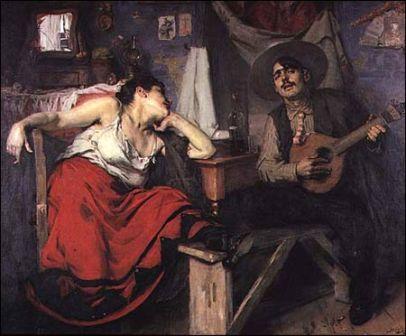
Fado is a Portuguese style of music that goes back at least 200 years. And, like the American ‘blues,’ it often deals with the life of the poor, human emotion, heartbreak and loss. It’s raw. It’s real. It’s music of the people.

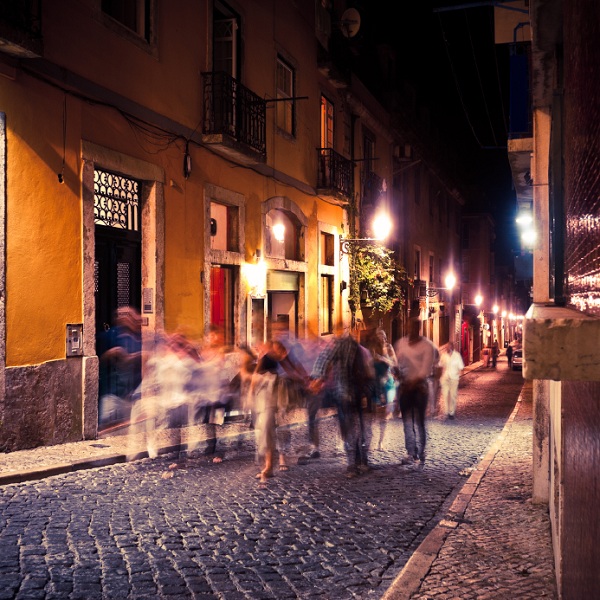
I first stumbled on it being sung by street-corner musicians on a stairway leading up from a well-traveled public square in Lisbon. I still remember being completely transfixed, almost physically unable to break myself away.

Here’s a short video that gives some sense of the experience. But be careful; fado may stay with you a very long time. You’ve been warned.

Theater on the Peloponnese

I first met my great-uncle George, my beloved Yia Yia Zafero’s beloved youngest brother, when he was already well into his 90s. He had her clear blue eyes, thick, white hair and crinkly smile. He moved slowly around the farmhouse, built over a century ago on the banks of the Gulf of Corinth. The land still produced plentiful citrus, olives and vegetables in the fields where my grandmother used to play as a little girl. There was an old, small building on the farm that sheltered an olive press used by growers throughout the region during the pressing season.

George made a point to tell me that his little building was older than my country.

After a lunch of fresh peas and potatoes, homemade wine, and calamari just pulled from the Gulf, George stood. He spoke about his time as an actor in a theater company that traveled the length and breadth of the Peleponnese. He talked about the acting company being a communication lifeline for people in the faraway villages of the peninsula, who lived without radios, newspapers, paved roads, or the resources to use them even if they did, in fact, exist.

After arriving in the next town or village, the company would stir up interest, prepare their venue, sometimes an open field, find food and drink, and only then would the actors perform the great and historic epics of Greek drama, together with their own interpretations of more contemporary works, like Shakespeare, and some musical numbers.

George talked of the faces, of visiting the same villages again and again, year after year. And then, reaching back into the distance of many decades, this quiet old man stood at our luncheon little table, ramrod straight, his eyes firm and fixed, and he began to recite his lines, textbook perfect, line after line, moment after moment, drawing his family in, as he had with his village audiences in times past.

Acting still.

Gift From an Unexpected Source

There used to be a network of raised freeways in San Francisco, just part of an imperial post-war US Army Corps of Engineers’ plan to totally encircle and criss-cross the city. Completing that plan would have cut the city off entirely from the very water that created and nourished it – the San Francisco Bay to the east, the Golden Gate to the north and the Pacific Ocean to the west.

As it was, freeways were built down the Embarcadero, separating the city from its front door to the Bay, and right through the city’s center, casting huge swaths of several neighborhoods into perpetual shade.

Then, in 1989, we had a major earthquake that, among other things, hit these raised freeways hard. And the city brought them down, with the intention of rebuilding newer, safer versions. At least that was the plan. What actually happened was a bit different.

People started spending more time at the waterfront. Businesses sprouted like weeds where cold, dead shade had once been. Neighborhoods, like Hayes Valley, were reborn. The economy in those places grew. A school that had once stood underneath the shadow of the great freeway beast was now warm and light, and became a good and happy place to learn.

And in a clear expression of direct democracy, the people voted that we didn’t want the freeways back, thank you very much. We prefer living in a city that connects to the natural environment of water and sky, even if that means driving across the city takes just a little more time.

Today, thanks to the 1989 Loma Prieta earthquake and as a result of the vote that followed, our waterfront has been reopened, whole neighborhoods have been revitalized, and there are more public parks, with public art, for the people to enjoy.

My Lunch With John

Maybe five or six years ago, a friend who was active in the campaign asked me if I wanted to have lunch with John Edwards. I’d thought highly of Edwards and might have supported him in the election, so I happily accepted the invitation.

It was a small lunch, just some people around a conference table at a local law firm. I had a good opportunity to take measure of the man. Edwards chatted with the people there, mostly donors and potential donors, then made some remarks.

Here’s what I remember:

Edwards talked about the Democratic presidential primary campaign as if winning it were a formality, provided he had adequate resources early (wink, wink). He’d always done well in Iowa, and figured to repeat, due to the fervor of young people. He then thought it likely he’d finish a strong second to Hillary Clinton in New Hampshire, owing to his name recognition. But finishing second there wouldn’t be bad. He assured us, he’d kick ass in South Carolina because, now affecting a comically exaggerated Southern accent, “I’m the only one in the race who talks like this.”  The South Carolina bounce would feed momentum into Super Tuesday, which would guarantee positive coverage in other states, which would blah blah blah, then I win.

Okay, you’re speaking to donors, so you’d better outline a way you will win, but I didn’t sense any awareness on Edwards’ part that, in Hillary Clinton (I didn’t even know Barack Obama was going to be a serious candidate then; it was early in the campaign.), he faced an incredibly able adversary with deeply committed supporters. Further (and this is based on almost 25 years in the speech business),  although I agreed with Edwards on almost all positions of policy, I couldn’t sense his emotional connection to his positions, which is death for candidates.

He smiled real big as his eyes worked the room. But neither his eyes nor his smile had the authentic glee Bill Clinton’s had when I saw him work the same kind of crowd early in his first presidential campaign. Clinton, I thought, always looked happy to be the guest of honor at any party that would invite him. With Edwards, it had seemed more like business than pleasure.

As I look at John Edwards now, facing trial in a North Carolina court, I think back harder on that lunch, trying to remember anything that might have been an indicator of the type of man he actually was, not the type of man I tried to see in him. And I can’t. He was attractive and facile, just like every other political candidate I’ve ever seen.

But as I think back, I think back in anger; John Edwards flew around the country soliciting donations for his campaign at the same time he was having an extra-marital affair and consciously planning to funnel some portion of those funds to his mistress. He asked for my money so he could become President of the United States, knowing he was engaging in behavior that would, in all likelihood, prevent him from ever attaining that office. And he asked for my money knowing that some of it would be used to underwrite the cost of his sexual gratification. [I’m not even going to address his wife, and all the campaign goodwill he harvested from her fight with cancer, and his very visible support of her.]

Like many other people, I was fooled by John Edwards, but I take no small measure of solace in the fact that he is facing the possibility of justice for his actions now.

Rain

Around these parts, we don’t typically get rain in late April. But coming, as it is, after a dry winter, the water is much appreciated.

A deep thought about rain:

“I love the rain…it washes memories off the sidewalk of life.” – Woody Allen

A short poem:

The rain is raining all around,
It falls on field and tree,
It rains on the umbrellas here,
And on the ships at sea. – Robert Louis Stevenson

A song [click link to play video]:

Rainy Night in Georgia” – Brook Benton

Get out in the rain today, if you can. Enjoy the freshness of the air. It’s a gift.

The Issues at Stake

The story of Gary Stein as portrayed in the mainstream media reads this way: an active-duty United States Marine was discharged for criticizing the president on facebook. NBC (via msnbc.com) says:

“The U.S. Marine Corps has decided to discharge a sergeant for criticizing President Barack Obama on Facebook.”

If true, this would represent a gross violation of the rights to self-expression all Americans hold very dear.

Conservative media and activist groups have adopted the proudly conservative Stein as a poster boy, saying he was railroaded because his political views differed from the current president’s. From the website of Oath Keepers, a conservative group:

“This [situation] is all because Sgt. Stein dared to found the Armed Forces Tea Party Facebook page, and because, on a separate Facebook page run by someone else, in a discussion thread conversation with other Marines, Sgt. Stein strongly expressed his opposition to some of Obama’s unconstitutional policies and expressed his intent to refuse unlawful orders.”

Fortunately for our society, not to mention the fabric of our armed forces, (1) the mainstream media has oversimplified the issues involved and gotten this case’s interpretation completely wrong, and (2) the conservative media and its allies have also missed the major point of Stein’s discharge.

Here are three examples of Stein’s publicly available writing:

“Screw Obama…I will not follow all orders from him.” (source: CNN, April 14, 2012)

Sergeant Stein has called the president “the economic and religious enemy.” (source: Christian Science Monitor, April 6, 2012)

Stein called the president a “domestic enemy,” echoing words in the Marine Corps enlistment oath (source: The Hill, April 25, 2012). What Stein seems to miss, ironically, is the rest of the oath. Here it is, in its entirety [my emphasis added in bold]:

“I, [name], do solemnly swear (or affirm) that I will support and defend the Constitution of the United States against all enemies, foreign and domestic; that I will bear true faith and allegiance to the same; and that I will obey the orders of the President of the United States and the orders of the officers appointed over me, according to regulations and the Uniform Code of Military Justice. So help me God.”

So, this is not a matter of an American citizen expressing political opinions, whether on facebook or elsewhere. This is a matter of maintaining our trust in civilian authority over our military. By his writings, Stein has called into question his commitment to fulfilling his sacred oath as a Marine, specifically, his intention to follow the orders of the democratically elected President of the United States, no matter who that president happens to be. Marines don’t get to decide whether or not they’ll follow the president’s orders based on their particular party or political philosophy.

The American electorate gets to make that call.

Death? No, thank you.

Here’s the list, the complete list: Belarus, China, Cuba, Egypt, India, Iran, Iraq, Japan, Malaysia, Mongolia, North Korea, Pakistan, Saudi Arabia, Singapore, South Korea, Taiwan, Tonga, United States, Vietnam.

These are the world’s countries that still employ the savage practice of capital punishment. Proud of being part of that club?

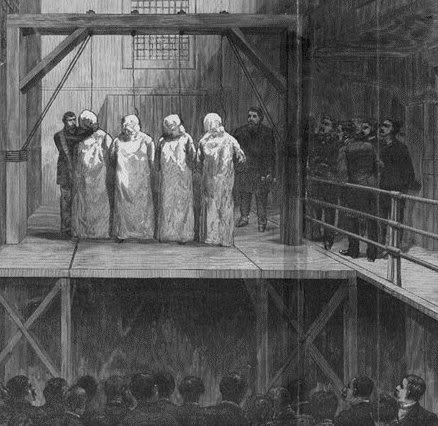
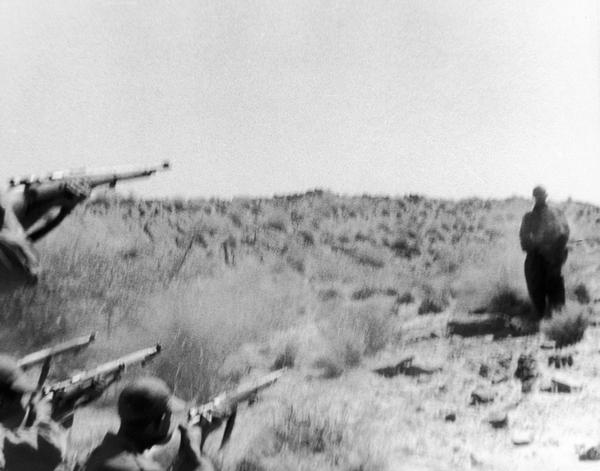
In California, we have our own long and disgusting history of killing people, which started in 1778 when four native Americans were shot for conspiracy to commit murder after conviction by an all-white jury.

When shooting proved too unreliable and expensive, California adopted the gas chamber.

When gas also proved to be too unreliable and expensive, California adopted lethal injection as our tool of choice for state-sanctioned murder.

Nice. Clean. Clinical.

Albert Pierrepoint was the most famous of England’s official hangmen in the 20th century. During his active career as an executioner, which ran from 1931 to 1956, Pierrepoint was thought to have executed somewhere about 450 people and, later in his life, became quite philosophical about his line of work. In his 1974 autobiography, Pierrepoint wrote:

“I have come to the conclusion that executions solve nothing, and are only an antiquated relic of a primitive desire for revenge which takes the easy way and hands over the responsibility for revenge to other people.”

In California, we have the opportunity to say no, to say enough, to say we want to join the other global club, the one of civilized countries who decline to use execution as a tool of control. An initiative to ban the use of the death penalty has qualified for the November ballot.

Here’s our chance to re-join civilized people everywhere. Or we can, you know, just continue on in the direction we’re already headed.

Okay, One More Time From the Top

If we have a lot of crude oil supply, why are gasoline prices so high at the pump? In an article titled ‘Abundant crude supply doesn’t push gas prices down,’ the San Francisco Chronicle’s Eric Nalder goes from Alaska to Oklahoma to walk us through the tortured logic of the wonder that still exists in response to this elementary question.

Crude oil price fluctuations have little effect on short term gasoline prices. Know what has much greater effect? As an economy, America will buy a lot of gas, regardless of price. Our society is structured to virtually guarantee it. Economists call it inelastic demand.

For most normal goods and services, as prices rise, the amount of the good or service will fall. We tend to buy less of relatively expensive stuff. Gasoline, on the other hand, behaves more like goods people are addicted to, like…

Yeah, like cigarettes. Or…

That’s right, illegal drugs. We’re addicted to fossil fuels and no matter the price, we’ll use them, and a lot of them too.

So, let’s get it straight. As long as America, and other industrialized economies, are hooked on oil, prices will go wherever they can, no matter the price of crude, no matter the military or political condition in the Middle East, no matter who’s in the White House.

Got it now?