An Ode to Power

I found myself in the car a lot this past weekend, so I had the opportunity to play some of my music, and play it good and loud. (Those readers with teenaged kids of their own may understand how rare this kind of opportunity is.) And one of the bands that got heavy play on my program was a very old favorite, Oakland’s own, Tower of Power.

[Quick note here: I became a die-hard Tower of Power fan when, in 1972, they played in my high school’s cavernous auditorium. Seen them several times since. Generally better sound.]

Tower was ubiquitous on Bay Area radio when I was a young man, their horns popping, their lead vocals soaring, their rhythms hot and funky. They were unlike other bands of the time. Originals. Real musicians.

And, unlike some of the other bands I lived and died with at the time, they stand careful and repeated play still.

Start with the horns, because they are the soul of the band. The arrangements aren’t complex and fancy. They’re punches in the gut. They’re meant to be. The play is direct and precise. The musicianship is extraordinary. The horns often carry the melody, harmonies and rhythm, all at the same time. The players are craftsmen. They don’t flip and fly through scales. They aren’t trying to impress you; they’re experts and they know it. They let the songs and their play do the talking.

Read liner notes and see how often other bands and artists used the Tower horns on their own recordings. There are none better.

In addition to playing, the horn players often function as a Greek chorus in counterpoint to the lead singer. Listen, especially, to ‘What Is Hip’ and “You’re Still a Young Man,’ Tower mega-hits, to get a sense of these bandmates functioning as interrogators.

Lead vocals carry on the funk tradition of, say, James Brown. You get the feeling that, while some lyrics were penned a priori, what was actually sung was what was felt during recording sessions. A listen to Tower’s live albums pretty much confirms this. Written lyrics seem more like guidelines than laws. It takes a particularly strong voice to sing with horns as the main accompaniment and Tower always had lead vocalists who could do the heavy lifting.

Tower’s drummer was always the timekeeper. Good. Necessary. Never the dynamo some bands had. Same, I feel, with the bass and guitar. Tower of Power isn’t a string band, after all; it’s all about the horns.

Here, the message is in the metal.

Riotous Pussy

A rock band (named Pussy Riot) that dared to play a song in a Russian cathedral, as a protest against Vladimir Putin and the close ties between the Kremlin and the Russian Orthodox church, was sentenced yesterday to 2 additional years in prison for ‘hooliganism.’ The three band members have been in jail since their arrest in February.

This was, of course, not intended as a joke (hardassed reactions to protests by repressive governments never are), but how can one react to something like this other than joking derision. The defendants, it was reported by NBC News, “…reacted with giggles and one rolled her eyes when the judge issued the sentences after reading the guilty verdict for almost three hours.”

The bald truth is, Putin cannot, will not, tolerate dissent of any kind, not even a little performance by an all-girl punk band.

We all applauded the implosion of the Soviet Union and the collapse of the Communist bloc in Europe but are the Russian people any better off under the government of criminals, thugs and tyrants they have now? Are any of us?

This Post Is Not (Just) About Sports

If you know or care anything about baseball, professional sports, or the San Francisco Giants, if you’ve watched the news or read a newspaper in the last day, if you pay attention to issues like the use of performance enhancing drugs, you already know about Melky Cabrera.

For those who don’t, here’s the 30-second version:

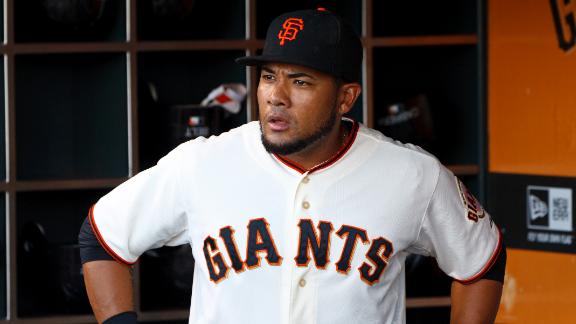
Melky Cabrera is a professional baseball player for the San Francisco Giants. He was having a stellar year, leading the National League in hits and being selected the Most Valuable Player in professional baseball’s all-star game earlier this summer. Yesterday, the league suspended him for taking performance enhancing drugs, a clear violation of league policy. As a result, during a particularly critical moment in the season, his team will be without his services.

Simple, right? Cabrera cheated, got caught, pays the consequences.

Not so simple, as it turns out.

His teammates pay a pretty steep price for trusting him. They go into their final drive for the pennant (trying to win their league’s championship) without a big piece of their team. In interviews with other Giants, you could see the betrayal on their faces, in their words and halting speech.

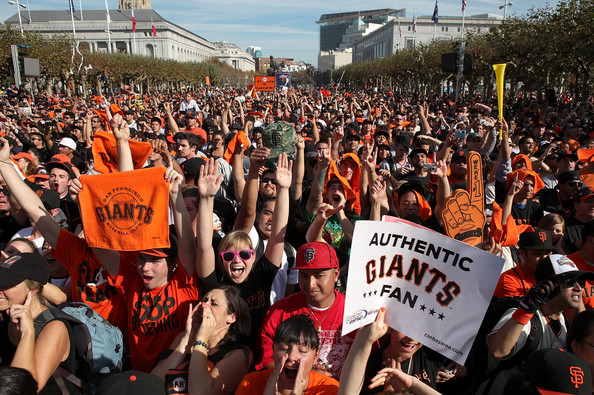
Fans, too, have every right to their anger and disappointment. The team itself? Sure. Vendors, stores selling Giants merchandise, restaurants and bars around the park? Yes, them too.

Turns out, Cabrera’s decision to use banned drugs was anything but personal. His deliberate cheating affected a great many people.

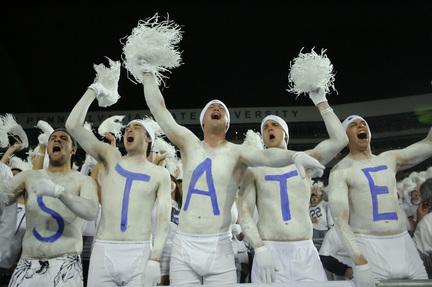
And here’s why this is not (just) a sports story. We have, in recent times, seen many examples of public figures choosing to engage in self-damaging behavior that causes widespread ‘collateral damage’ as well. Sandusky/Paterno/Penn State is simply the latest and best known example in a very long and very sad history.

My professional life involves helping people and institutions in moments like these. I have seen firsthand the damage people can leave in their wakes, sometimes quite blithely. Melky Cabrera is a successful professional athlete, so we can watch the pain he’s inflicted on others in the newspapers, on television and playing fields.

Other cheaters do their damage in darker, quieter places.

Overpass Prayers

The other day, a little after lunchtime, I happened to stop by the interstate near my house, just to make a couple of phone calls and send off a few emails. As usual, traffic was heavy, loud and fast. It was all I could do to concentrate for all the engine noise and honking.

Out of the corner of my eye, I saw a man with a yoga mat rolled under his arm walking down the grassy strip that outlined the freeway off ramp. He went down a ways then stopped abruptly. He unrolled his mat and turned to face the noisy traffic below.

Then, and I recognized the characteristic movements at once, he began to pray. He was an observant Muslim and it was time for the daily Zuhr prayer. He had oriented himself more or less facing east, interstate traffic be damned.

I watched until he concluded, rolled his mat, walked back up the ramp and out of my view.  Seeing him creating his own sacred space in the midst of our society’s secular noise reminded me very much of the many business-suited people I’d see walking the labyrinth at lunch hour when I was on the staff of San Francisco’s Grace Cathedral.

No matter which particular traditions of practice we follow, if any at all, it would be a much different (i.e., better) world if we all set a few moments aside in our busy, hectic and noisy days for prayer, meditation, or even just conscious self-reflection.

Not What I Heard

The soundtrack of my young life went something like this: my mother played classical pieces on the living room piano, my dad played Sinatra and Johnny Cash on the Hi-Fi, my brother played the Beatles and the Rolling Stones on his transistor radio.

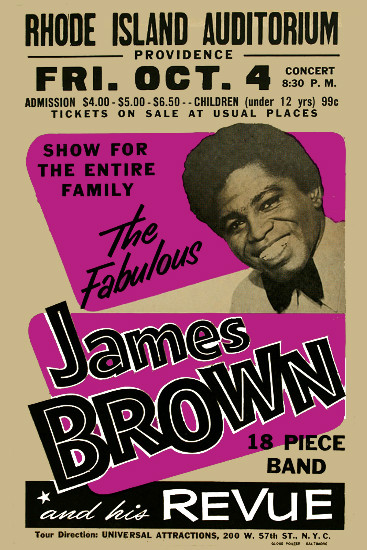
I try to remember that personal context thinking of the day (I was around 10 years old) when my friend Anthony brought a new album to the clubhouse of our neighborhood playground. He said to me, in dead earnest, “I know this isn’t what you listen to at home but you have to hear it.” And with that titillating introduction, he pulled James Brown’s ‘Cold Sweat’ out of the sleeve, itself looking strange and unfamiliar to me, and placed it on the playground’s antique record player.

What happened next isn’t entirely clear to me now, many years later, but when the ungodly-long (it was over 7 minutes) song ended, I knew something buried deep inside me had been released. I thought I knew music before hearing James Brown but this was something I’d never heard before; I’d never ever heard anything remotely like it. My wee 10-year-old brain was well and duly blown, and blown for good. When, sometime later, I finally saw Brown perform in ‘The T.A.M.I. Show,’ a concert film, a true happening of cosmic scale, I sat slack-jawed throughout. Not only was his music completely different than anything I’d heard before, he moved in ways I’d never seen.

My family recently gave me ‘The One,’ a brilliant biography of James Brown by RJ Smith and I inhaled it practically overnight. The New York Times review is here. It made me remember what I felt when I first heard his music and it made me appreciate or, more properly, re-appreciate just how revolutionary a figure he was. And to say I loved the book is in no way to sugar-coat Brown’s street-tough life, personal inadequacies, or thorny personality.

James Brown lived hard and righteously pissed off nearly every single person he ever met. That said and understood, he laid a foundation for all that followed him. If you don’t know James Brown, his music and performance, do yourself a favor and discover him now. If you do know him, get Smith’s book; it will be a revelation.

You’re welcome.

Another Pilgrim

The other night, along with many thousands of other visitors, we found ourselves on the Mall in Washington, DC.

It had been a sweltering day in the capital and many, I assume, were outside to escape the heat in cramped apartments and hotel rooms. But most, myself included, were there for other, more site-specific reasons.

The Vietnam Memorial, a black granite gash carved into the cool grass of the mall, attracted quite a lot of visitors for that late hour.  Most displayed that singular combination of excitement, appreciation and respect I’ve seen there all the many times I’ve visited.

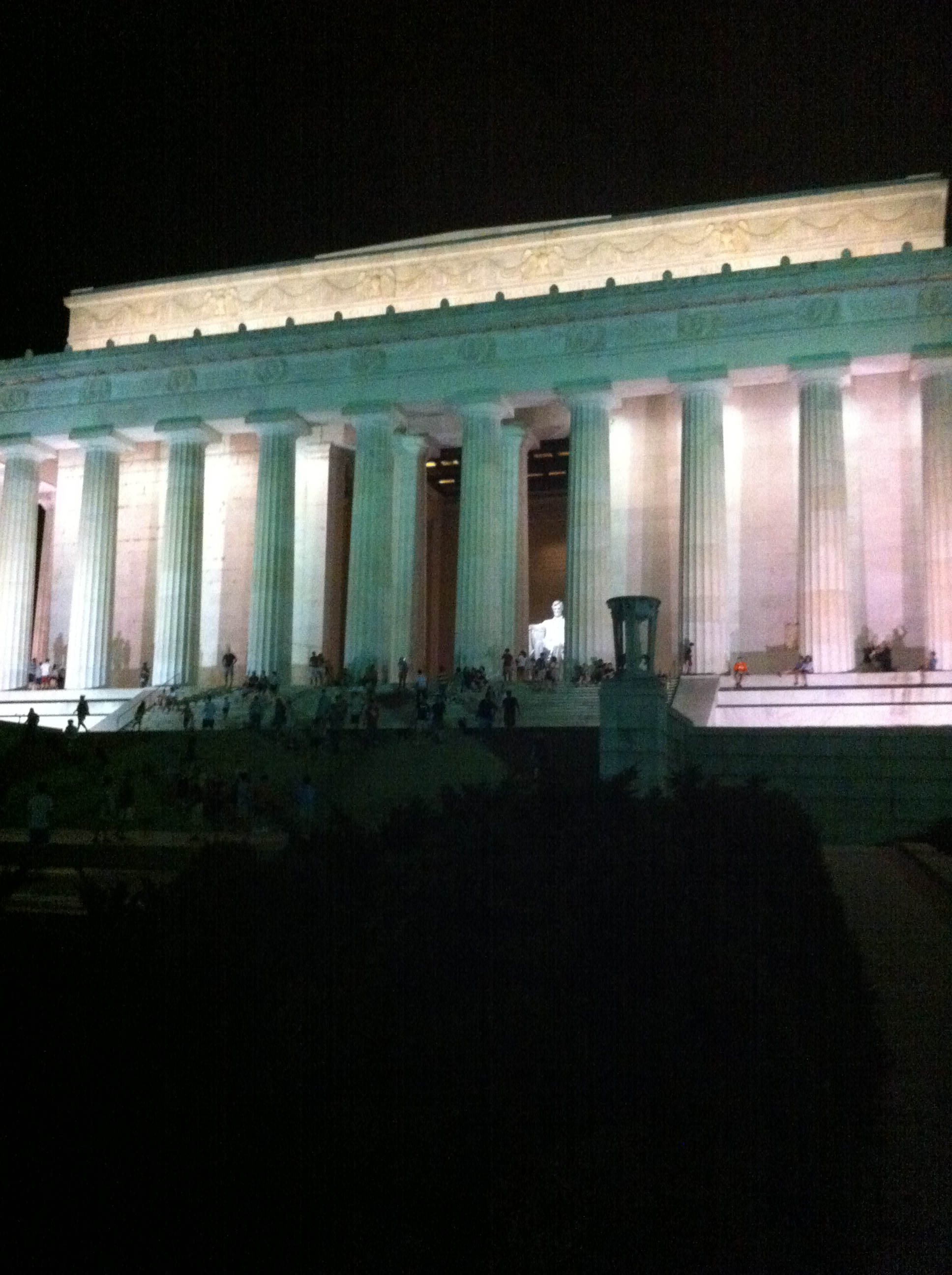
But it was the Lincoln Memorial that had, by far, the largest crowds. The enormous white statue of the martyred president sits alone, with the exception of his own words, high in a neo-classically Greek temple, itself perched atop many many stairs. The path upward to see Lincoln is extraordinary, the view of Washington from his feet, amazing. His face looks down at his visitors, not with fatherly kindness, nor happiness, but stern judgment.

There is no mistaking the intended effect: awe. We are showing near-sacred reverence for someone we placed in deliberately shaky control of our nation’s future during a time of unprecedented challenge. And then, just at the moment of the Union’s and his victory, one of our fellow citizens murdered him. Along with the battlefield at Gettysburg, the Lincoln Memorial may be our secular nation’s only great temple.

Few leaders anywhere in the world have such memorials.

Up those many steps, I saw the climb of individuals, families, other groups, large and small. I heard voices speaking in many languages; some I understood, some I recognized, others were completely foreign to me. No matter the language, on the faces and in the gestures, I could read the respect of pilgrims to the site.

People come from all over the earth with deep and sincere appreciation to visit this place of tribute to the man who preserved the union during our greatest crisis.

Is it at all possible to find, to recognize, to appreciate that level of greatness in our country today? Are we all pilgrims to dead American characteristics? Are we all visiting Lincoln’s memorial like schoolkids looking at reconstructions of the dinosaurs?

Some Time in the World

I will be completely off electronic/digital/social media for the next few weeks.

“Doing what?,” you might ask. Well, a number of things: writing, participating in a few events, talking with some interesting people, spending some precious time with my family and old friends.

When I return, I’ll have some stories to share.

In the meanwhile, please explore my writing and, if you’re so inclined, let me know what you think.

Enjoy your summer.

No More Like Her

Despite the hits, the 60-plus year career touring as the “Queen of Country Music,” the omnnipresence on stage and TV, what I most vividly remember about Kitty Wells is my mind’s image of her sitting at her kitchen counter sipping a cup of coffee, smiling that beautiful smile, engaging a perfect stranger, a stranger she’d warmly invited to her home, in happy conversation about her life in country music.

I was not a fan of country music when I first moved to the South in the 1980s. Of course, at that point I’d only heard the overproduced junk that was most popular during that period. I knew little, if anything, about the hard-edged, truth-telling, straightforward country music of earlier eras. Lucky for me, every Saturday night, my local PBS station played old films from the Grand Ole Opry.

I watched, reluctantly at first, eventually as a die-hard, never-miss fan. My biggest “discovery,” without question, was Kitty Wells. Her music blew me away. It was everything contemporary country music wasn’t. It was raw, honest, stripped-down, real. And Wells’ on-screen presence was phenomenal. Her eyes burned through the TV right into my brain. If you don’t already know her music, I encourage you to find it and listen for yourself.

Sorry to sound cliche, but they just don’t make music like that anymore.

Wells blazed the trail that was followed by other country music giants, like Pasty Cline and Loretta Lynn.

When, years later, I had the chance to interview Wells and her husband, Johnnie Wright, half of the country duo Johnnie and Jack, I jumped at it. The couple invited me to their home, insisted we’d all be more comfortable there than at some office or hotel. And so we were. I was greeted as an honored guest and treated like an old friend. They were gracious and generous to a fault, not only engaging and bottomless sources of history and information but singular hosts and warm human beings who, incidentally, showed great affection for each other.

As I think back on the music of Kitty Wells, I’ll remember listening to “I Don’t Claim to Be An Angel,” for the first time, questioning everything I’d assumed about country singers. You can watch Kitty sing it here. Even without the music, the lyrics jump off the page with searingly painful regret, are current and fresh still:

I don’t claim to be an angel my life’s been full of sin
But when I met you darling that all came to an end
Never doubt my love dear whatever you may do
I don’t claim to be an angel but my love for you is true.

You’ll hear talk around town of things I used to do
Some will try to poison your mind that my love can’t be true
Many nights I lay awake dear hoping our love will last
Wondering if your love is strong enough to forget about my past.
I don’t claim to be an angel…

I never knew what real love was till you came along
You changed my outlook on life made me regret my wrongs
Why should my past keep haunting me all through the years
I paid for each mistake with millions of bitter tears.
I don’t claim to be an angel…

I sincerely mourn the passing of Miss Kitty Wells. May she rest in eternal peace.

Onward State (GO!)

[Note: I’ve written about the Penn State sexual abuse case several times previously, first here, about Joe Paterno and later here, about the deeper institutional problems associated with sexual abuse.]

The report from the inquiry into the Penn State sexual abuse case has just been released. The New York Times’ coverage is here.

In my professional life as a communications consultant, I’ve dealt with numerous cases of sexual abuse; I have hard-earned insights about this heinous crime.

Here’s one: while individuals are and must be held responsible for their own actions, institutions, through selective attention (i.e., looking the other way), misplaced priorities (i.e., considering athletic success of paramount importance) and enabling (i.e., providing opportunity), create the conditions necessary for abuse to occur. Unless and until institutions are willing and able to address these conditions, abuse can continue.

This was certainly the case at Penn State (That’s what the inquiry’s report found.) and I’ve found it to be the case elsewhere.

So, Jerry Sandusky is in jail. Penn State and its football program will forever be linked with sexual abuse. Good but not enough, not nearly enough.

People like Sandusky can’t hurt kids without lots of help.

Tortured Or Obedient?

My father, a veteran of the Second World War, spoke very infrequently about his experiences in the war. The engine room of a ship in combat was simply a place I don’t believe he much wanted to revisit. Memories of one of his stories, however, still gives me chills.

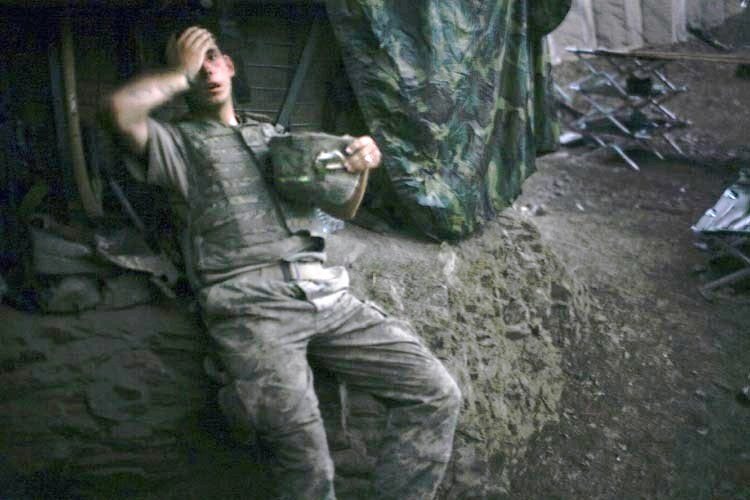
His ship was assigned to pick up surviving Marines after the horrific battle for the South Pacific island of Peleliu. My dad described the Marines as, in his own words, living ghosts: withdrawn and disconnected, starving and thirsty, filthy, wandering aimlessly about the ship, unable to speak, shaking, staring blankly into the air.

It didn’t help that Peleliu was a complete disaster: a ‘victory’ that came with a very high cost in lives and, as it happens, no real military value.

I’m reminded of my dad’s story whenever I think about our nation’s recent military actions in Afghanistan, a mission that is literally bleeding away our nation’s resources, cannot hope to succeed (whatever that would even mean in this context) and is of dubious military value in any event.

It doesn’t help, of course, that Afghanistan has been repelling and outlasting invaders for millennia. Most recently before our arrival, Afghans bled the army of the Soviet Union to near-death during its 10-year occupation. Today, Afghans are already preparing for the day American forces depart by arming themselves and their militias to the teeth and setting up militia-led and, in some cases, Taliban-led de facto local and regional governments. In many cases, according to recent reports, these governments are more accepted and more efficient at providing services than the elected Afghan national government.

Over the long term then, what, exactly, have we accomplished through our sacrifice of blood?

Understand, I’m not in any way criticizing the men and women of America’s armed forces. The problem lies considerably higher in the chain of command. Our soldiers, sailors and Marines were put into an untenable and dangerous situation because our leaders lacked firm goals and adequate knowledge and understandings of the context. Further, they continue to be sacrificed because our leaders are more concerned with their own egos than the lives of our service men and women.

Those in our armed forces pay the price, sometimes the ultimate price, for the stupidity, fecklessness and ego of their masters.

As he contemplated the cost of war, author and scientist Jacob Bronowski mused:

‘There are two parts to the human dilemma. One is the belief that the end justifies the means. That push-button philosophy, that deliberate deafness to suffering, has become the monster in the war machine. The other is the betrayal of the human spirit: the assertion of dogma that closes the mind, and turns a nation, a civilization, into a regiment of ghosts – obedient ghosts, or tortured ghosts.’

Just like their predecessors on Peleliu, the men and women in our armed forces are being turned into ghosts, whether obedient or tortured, for nothing of real value.

Our leaders should be ashamed.