Love, Reconsidered

A few days ago, I posted about the character of love. And, in the manner of the wiseass I sometimes am, I answered by listing ten songs that examine love in slightly off-center ways – recordings from David Bowie to Chris Isaak, Bonnie Raitt to Rickie Lee Jones.

More than a few people have asked me, with no little seriousness, if the songs I posted are what I really think love is about. The truthful answer is, yes and no.

I did pick songs I feel an honest connection to, even though they might be unusual or surprising, and definitely aren’t typical romantic love ballads. There’s something that’s both creepy and honest to me in Chris Isaak’s “Wicked Game,” a look at a painful love you want desperately to but may never be able to escape.  It isn’t hard to imagine being so in love with someone you’re willing to do anything, like the singer of “Love Has No Pride,” by Bonnie Raitt. Likewise, Rickie Lee Jones’ “We Belong Together” might remind several listeners of times spent trying to convince a reticent partner that you’re absolutely made for each other.

These songs weren’t chosen ironically. I think that they’re good and that they represent common human experience.

The truth is, as everyone knows, there are many kinds of love. There’s no single answer or perspective.

But one thing I know at a dead certainty: love is the faith to leap, the trust to jump, the belief that, even though you don’t know what’s going to happen, you know there’s someone or something that’s going to make it alright.

And I thank my family for reminding me of this truth every single day of my life.

Batteries, Today

There was a time when Americans seriously prepared for a Japanese invasion of the West Coast. We can look back at that time with a sort of ironic amusement, I guess, but the truth is our war planners weren’t being completely paranoid; as we discovered many years after the Second World War, Japan did have plans for military action against California and did, in fact attack American Alaska.

So, starting in the late 1930s, the War Department constructed a series of artillery bases on the coast, several clustered around the Golden Gate: Battery Townsley, Battery Chamberlin, Battery Davis, and so on.

Here’s Battery Chamberlin, above what is now Baker Beach.

Battery Davis, during its working life:

And Battery Davis as it looks today:

Long since decommissioned and allowed to fall into disrepair, the artillery batteries that ring the entrance to the Golden Gate are now just crumbling curiosities. People mostly visit Fort Funston, the location of Battery Davis, to walk their dogs off-leash in a beautiful, open natural setting. Most visitors have no idea what these decrepit tunnels were originally constructed for, nor the enormous (but now welded-shut) underground vaults near them.

Probably just as well. These are now places to walk with best friends, smell the ocean (or occasional beach bonfire), appreciate the views, get some fresh air and quiet away from the city’s tumult, not to watch and wait for invasions. Thank God.

I hope you get some peaceful time with your best friend soon.

Don’t You Dare Miss It

Great places to visit, things to see and events to attend and be a part of – as Americans, we should be proud of the great diversity. Music. Food. Celebration. Parties. You could never see all of them but here’s a list of place-particular (and mostly annual) events I think you might want to put on your list before they’re sold to the highest corporate bidder or completely gone.

10. SXSW – Austin, Texas

People who’ve been going since the very first South-by-Southwest (SXSW) Festival might tell you it’s a shadow of its former self, but this event still brings together music, technology and social thinkers in original and fun ways.

9. Oregon Shakespeare Festival – Ashland, Oregon

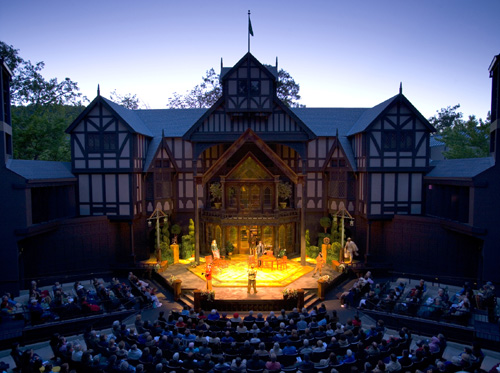
What’s the best part of this festival? The plays? The production values? The acting? The naturally beautiful setting? The theater itself? All of the above. The audience is an exciting mix too.
8. College Basketball Final Four – Location varies

A good friend went to a final four years ago and still talks about the insanity of an arena filled with high-volume and high-energy bands, fans squeezed into replica team jerseys, plastic pig-heads and other totems of the teams playing.

7. Taste of Chicago – Chicago 

Chicago is an uncommonly beautiful city, especially during summer. Everyone who can is outside for as often and as long as they can be. Imagine a gorgeous lakeside park literally filled with the city’s best food and bands ranging from native blues to nasty hip hop.

6. Fleet Week – New York and San Francisco

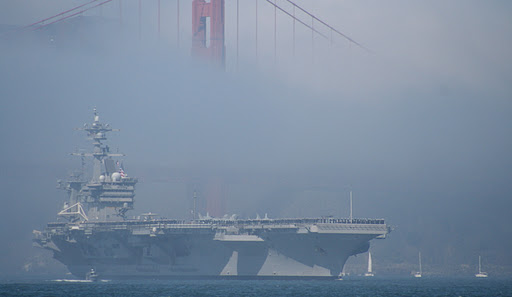
I find it hard to completely describe the feelings Fleet Week stirs in me. My grandfather and father both went to sea, following a long family tradition, and I do feel somewhat at home on the water. The sailors who visit port during fleet week are young, smart, engaged and knowledgable – a delight to meet, and a source of pride for our country. The vessels themselves are of singular scale, gliding grey behemoths. And then, there are the insane flyovers by the Blue Angels.
5. Pride Parade – San Francisco

This parade stirs pride of a different sort. Since its wild Gold Rush days, San Francisco has  tended to make people of all stripes feel welcome. As a result, the city has always attracted people who have felt less than accepted, appreciated or loved elsewhere. “Come here,” San Francisco says, “and be yourself, completely. We’ll celebrate that together.”

4. Mummers Parade – Philadelphia 

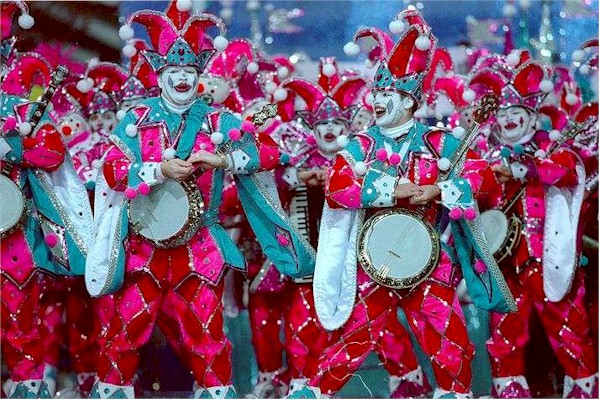
Philadelphia may be known for a sort of button-down personality, but this is anything but. Insane, is what it is. Troops of men, painted in silver, clothed in wild color, carrying banjos, playing old tunes like “Golden Slippers,” marching down ice-cold winter streets of downtown.
3. Presidential Inauguration – Washington, DC

The particular identity of the person being inaugurated doesn’t matter. The party doesn’t matter. A million citizens come to the mall in our capital every four years to bear witness to the orderly transfer of power, one citizen to another, the result of an open, fair and free election, without force or coercion.

2. Mardi Gras – New Orleans

Famous and infamous. Superb music, insanely inventive floats, free-flowing drinks, a city full of people who just want to have an amazing time. What is there left to say about this month-long party in America’s party, music and booze capital? Laissez les bontemps roulez (let the good times roll, for non-francophones).

1. 4th of July – Boston 

The Pops come out to bring the enormous outdoor crowd to a frenzy of patriotism, even before the real fireworks begin. There are July 4th celebrations everywhere, but Boston gets it. Wicked.

Just Don’t

More than a few times, I’ve been the guy at the other end of the phone at 3 in the morning.

In my professional life, I’ve helped people and institutions get through crises – allegations of price fixing, financial impropriety, illicit drug manufacture, sale and use, sexual abuse, homicide, accidental death, miscellaneous criminal behavior, armed conflicts, environmental issues, industrial accidents, failures of judgment, natural disasters…

You get the idea.

I have seen a great many people when they’re not at their best – when they’re scared, angry, anxious, worried, embarrassed, ashamed, or all of the above.

And more than a few wished they could have done something differently, made a different decision, not done something they did, taken back an inopportune or inappropriate comment, done something instead of nothing, been more courageous, been less sexist, been more engaged in something they’ve ignored, been at a different place or time. Truthfully, though, once a thing is done, it’s done. You can’t unfire a gun.

Of course, some people are simply upset because they were caught, but I’ve often enough seen the pain of real human regret, and that can change a person; it can make you think about the things you’ve done that may have hurt or caused damage to things you hold dear.

So, I encourage you to take advantage of my hard-earned wisdom. If you’re thinking of cutting corners – be they legal, ethical, financial, or otherwise – think again. Trust me, the extra money isn’t worth it. Neither is the sex, the political power, or the potential advantage you think you’re going to bring to yourself or your company. At some point, someone, somewhere will ask you to defend what you did – maybe even publicly – and you won’t be able to. Then you’ll call me at 3 in the morning really upset, and I won’t be able to either. And then you’ll be in some really deep shit.

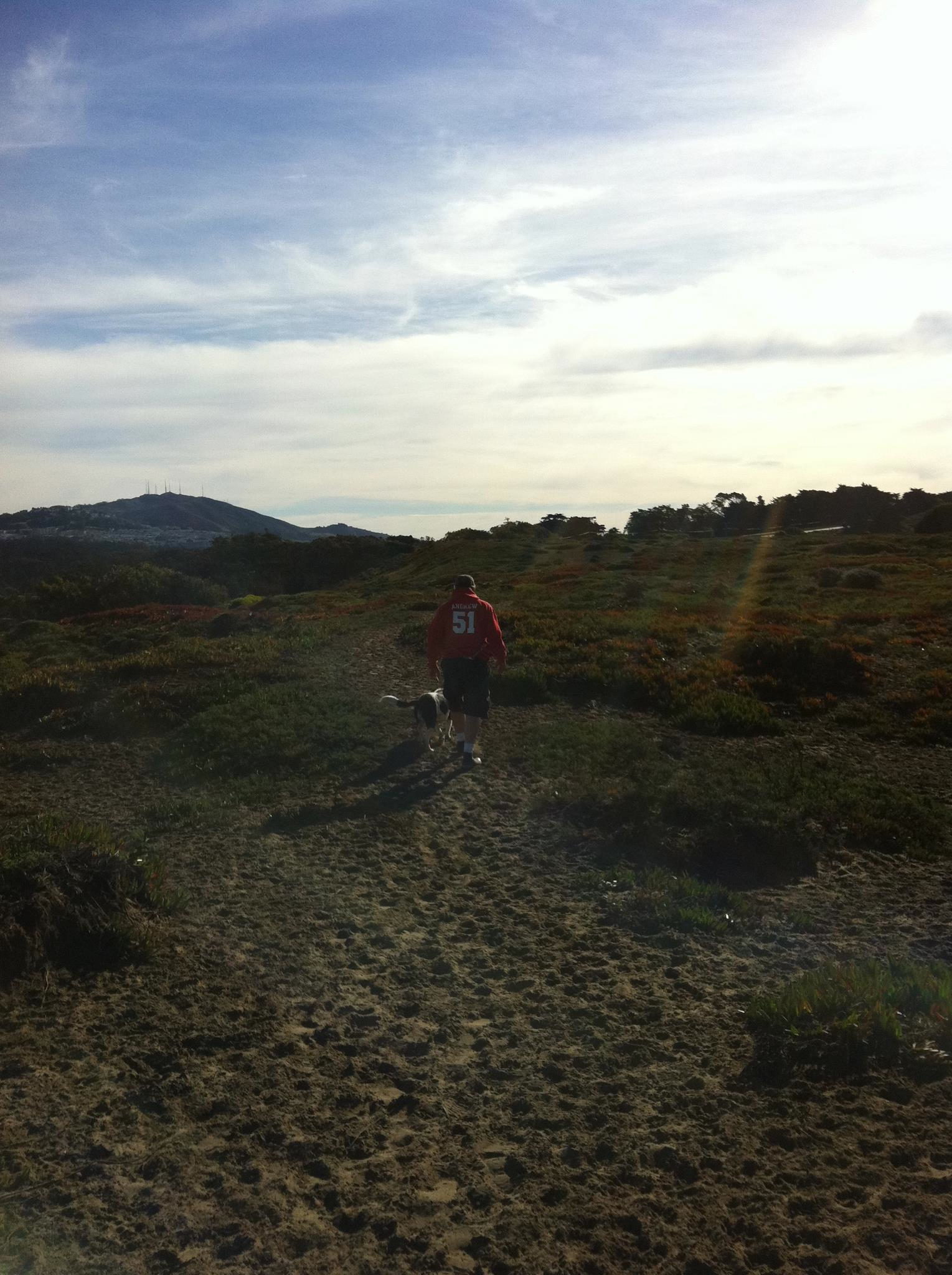
Now, I’d normally charge a great deal of money for advice like that, but my morning walk with DeeDee at Fort Funston put me in a giving and charitable mood.

You’re welcome.

BP’s Victims Get Day in Court, Perhaps

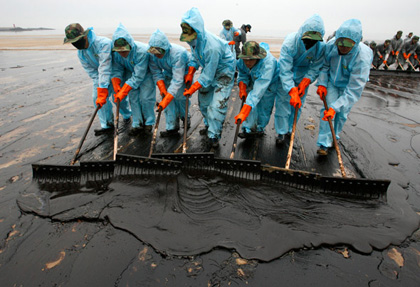
When the BP/Gulf oil spill case goes to trial in open court later this month, if it ever does, billions of dollars will be at stake, and not just for BP. The rig operator, Transocean, and the rig construction contractor, Halliburton, are also at significant financial risk. And signs don’t look good for them.

Several government probes have castigated BP, rig operator Transocean and Halliburton – which was responsible for the runaway well’s faulty cement job – for cutting corners and missing warning signs that could have prevented the disaster. – Economic Times, 2/15/12

Here are some uncertainties:

  • What portion of responsibility goes to which firm? Obviously, BP owned the facility, but key functions were performed by consultants, contractors and partners.
  • How will the court assess future potential losses which have yet to be specifically claimed? Effects on fisheries, for example, might take years or generations to present themselves.
  • Will this case ever get to actual trial and, if so, will it ever come to a decision? Many observers contend it won’t; they believe a settlement will be reached well before the public gets a full and public accounting of the worst oil disaster in US history.

Transocean and Halliburton have little contact with the general public, but BP has actual customers. Therefore, it has much more at stake from a public relations standpoint in these proceedings; and it has already proven itself less than able in that realm.

Whatever the case, many stakeholders are waiting for their day in court.

Real Insanity

I take back everything I said.

Mitt Romney is not a lock to win the Republican nomination for president. According to many polls, including this one from The New York Times, he and Rick Santorum are now in a statistical tie for first place in the campaign to be the GOP’s standard-bearer against Barack Obama.

Now, this may be a temporary blip. Public opinion polls are notoriously time-sensitive. They accurately capture attitudes and opinions for a very brief window of time. It may be that Mr. Santorum enjoys this time at or near the top among Republican voters for a short period, then sinks to join Bachmann, Perry, Cain, Gingrich and the others.

But it may signal a disturbing and longer-lasting trend for one of America’s great political parties. Remember, Republicans have, in the past, elected Abraham Lincoln, Theodore Roosevelt and Dwight Eisenhower to the presidency and Robert La Follette, Nelson Rockefeller and George Romney (Mitt’s dad) to governorships. We may be watching the Republican party permanently evolving away from its Main Street, corporate, fiscal conservative roots, into the exclusive party of socially authoritarian, evangelical Christians.

[Sorry, I guess “evolving” was an inappropriate word to use in the previous sentence; after all, this new style of Republican doesn’t believe in evolution.]

Here’s Santorum, talking about the necessary (not advisable, not preferable, not ethically important, but necessary) connection between his understanding of God’s law and American civil law.

This is what Republicans want their political party to be about, to stand for? They must be insane.

What Is Love, Anyway?

It’s a question as old as human beings – what is love? Something that gives us strength? Something that lasts, that brings out the best in us? An obsession? Warmth? Companionship? Pain?

Answers here, some more unusual than others, in song.

Howard Jones, What is Love? (1983)

David Bowie, Heroes (1977)

Willie Nelson, Always on My Mind (1982)

Mink DeVille, Mixed Up Shook Up Girl (1977)

Bruce Springsteen, Tunnel of Love (1988)

Chris Isaak, Wicked Game (1989)

Bonnie Raitt, Love Has No Pride (1976)

Rickie Lee Jones, We Belong Together (1981)

Billy Joel, You’re My Home (1973)

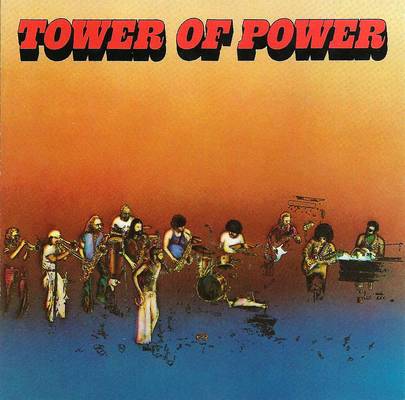
Tower of Power, So Very Hard to Go (1972)

Reality Check

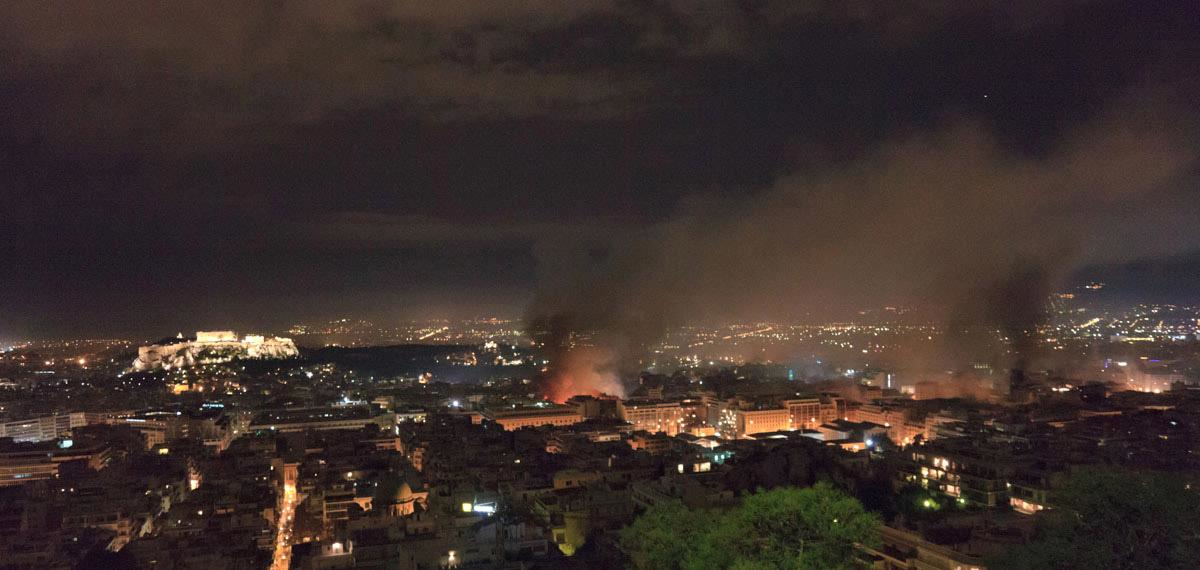
Athens is ablaze.

Many Greeks are consumed with anger over the terms necessary to avail themselves of the financial bailout offered by the deities of the European community and have taken to the streets in protest. The changes, protesters claim,  amount to a significant and unacceptable change in Greek life, in Greek society, in what it means at its core to be Greek.

This is a precarious moment. Failure of the Greek government to deliver on these terms (and get the bailout funds) would result in serious consequences for Greece, and for the rest of Europe. Together with other developments, it may signal the end of European financial union – no more single currency, open trading relationships, free flow of people across historic national boundaries.

Care to watch a complete meltdown of the European community economy? Care to consider for just a moment what that might mean to the rest of the world? War? Complete world economic collapse?

The scale of this issue is, I realize, hard to fathom, even, perhaps, harder to take. So, I understand my fellow Americans wanting ready distraction – professional golf, the “tragic” death of a pop music princess, Oscars, baseball’s spring training, March Madness, etc.

All well and good; I enjoy diversions too. But our media is splashed with every angle possible on Whitney Houston, God rest her soul, and not a sentence for events that could shape our world for the rest of our lifetimes.

Time for a good strong dose of reality.

It’s Life’s Illusions, I Recall

When I was younger (lots younger) practically every teenaged girl I knew sang this Joni Mitchell song by heart. And they sang it, sometimes tearfully, often to each other, whenever their hearts were broken.
Bows and flows of angel hair and ice cream castles in the air
And feather canyons everywhere, i’ve looked at cloud that way.
But now they only block the sun, they rain and snow on everyone.
So many things i would have done but clouds got in my way.
I’ve looked at clouds from both sides now,
From up and down, and still somehow
It’s cloud illusions i recall.
I really don’t know clouds at all…
I’ve looked at life from both sides now,
From win and lose, and still somehow
It’s life’s illusions i recall.
I really don’t know life at all. – Joni MItchell
Micthell’s Both Sides Now tells the story of a person whose illusions of youth – romantic notions about the world, love and life – are shattered by disappointment and lead, very literally, to disillusion.The song’s singer, now a somewhat embittered cynic, looks back both at her earlier, more romantic, understandings and her later, dark ones and concludes  she has achieved no real, deep understandings, indeed, that such understandings are likely impossible.
It’s a song that encourages and validates the despair that’s sometimes too common in heartbroken teens.
Contrast Mitchell with Episcopal Bishop Steven Charleston, who sees losing illusions about life, not as a function of loss, disappointment and despair, but of replacing one lens, one perspective for another by virtue of greater and perhaps more mature understanding. In other words, personal growth. And as a result of this change, Charleston posits we can see things (in his example, the Bible) in new and more enlightened ways.
We walk on water. As a child I did not understand and took the story for magic. But now I see that the boat is the illusion and the truth is waves beneath my feet. I do not know where my next step will take me. I have no certain ground that life will guarantee. With the weight of pride in mind, stones of judgment in hand, heart heavy in anger: I could so easily sink into the dark. But if I trust, if I forgive, if I love as I am loved, then my soul stands feather light, no matter the path I take. We walk on water every day. The challenge is to reach the shore. – Steven Charleston

Here, the child’s understanding of the Bible as a series of magic tricks is replaced by an adult’s understanding of it as an outline of an expansive and different way to live. How rich is this way to break through life’s illusions, how rich, too, it makes the Bible – a source of ways to live, instead of, as many would have it, a book of literal stories.

As a way to break through the illusions of life, I believe there’s much more value in Charleston’s approach than Mitchell’s.

Where’s the Market Now?

There are lots of things, apparently, I do not understand about the economics of pharmaceuticals.

Here is a story from The New York Times about the American dwindling supplies of an anti-cancer drug for kids (We may run out completely in a matter of weeks, according to the article.).

A crucial medicine to treat childhood leukemia is in such short supply that hospitals across the country may exhaust their stores within the next two weeks, leaving hundreds and perhaps thousands of children at risk of dying from a largely curable disease, federal officials and cancer doctors say.

The drugs are wildly popular because, well, they seem to work. Their price has increased in some quarters “eightyfold.” Shouldn’t market forces dictate that such a drug would be amply produced and available to help children fight cancer?