A Lesson of History

Many times and from many quarters, we San Franciscans have been derided, sometimes to humorous effect, at other times, less so, for being retrogressive, nostalgic, romantic and overly protective about our past. We can seem to want to slap an historic designation on almost any structure older than a few years, from 1950s diner mascots to winking billboards. We can seem more reverential about some of these pieces of our civic history than the Greeks about their Parthenon.

Recent case in point: the brouhaha over the Gold Dust Lounge, a kitschy bar in the touristy Union Square shopping area. [Disclosure: I love the place and hope it lives forever.] You’d think people were fighting over the fate of the Golden Gate Bridge.

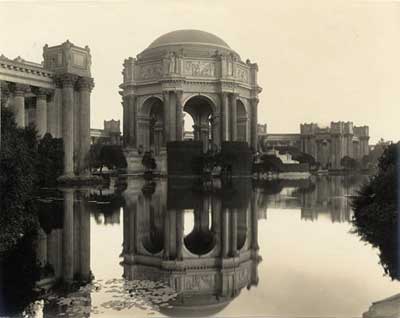
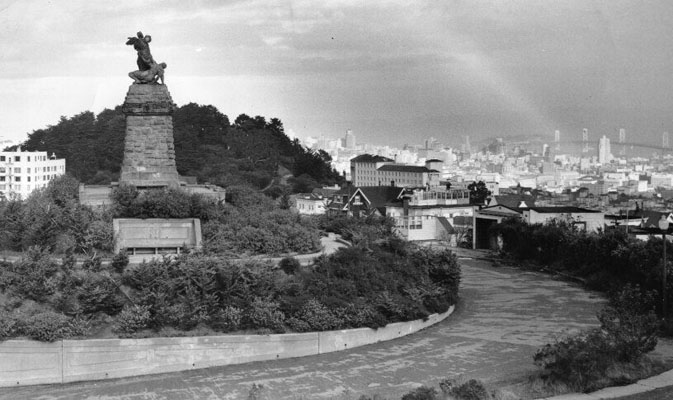
That said, there are a lot of physical places I knew growing up here as a child that no longer exist. The loss of some make me sad and make San Francisco a significantly poorer place, in my opinion. We’re not, in the great scheme of things, a very old place. We don’t have bottomless stores of architectural beauty and history. We should appreciate and preserve the important things we have.

‘Stones make a wall, walls make a house, houses make streets, and streets make a city. A city is stones and a city is people; but it is not a heap of stones, and it is not just a jostle of people.’ – Jacob Bronowski

San Francisco has the character it does because of what’s here and who’s here. And we should all be conscious of that and exercise no little measure of care when we’re considering saying goodbye to either – buildings or people.

Gift From an Unexpected Source

There used to be a network of raised freeways in San Francisco, just part of an imperial post-war US Army Corps of Engineers’ plan to totally encircle and criss-cross the city. Completing that plan would have cut the city off entirely from the very water that created and nourished it – the San Francisco Bay to the east, the Golden Gate to the north and the Pacific Ocean to the west.

As it was, freeways were built down the Embarcadero, separating the city from its front door to the Bay, and right through the city’s center, casting huge swaths of several neighborhoods into perpetual shade.

Then, in 1989, we had a major earthquake that, among other things, hit these raised freeways hard. And the city brought them down, with the intention of rebuilding newer, safer versions. At least that was the plan. What actually happened was a bit different.

People started spending more time at the waterfront. Businesses sprouted like weeds where cold, dead shade had once been. Neighborhoods, like Hayes Valley, were reborn. The economy in those places grew. A school that had once stood underneath the shadow of the great freeway beast was now warm and light, and became a good and happy place to learn.

And in a clear expression of direct democracy, the people voted that we didn’t want the freeways back, thank you very much. We prefer living in a city that connects to the natural environment of water and sky, even if that means driving across the city takes just a little more time.

Today, thanks to the 1989 Loma Prieta earthquake and as a result of the vote that followed, our waterfront has been reopened, whole neighborhoods have been revitalized, and there are more public parks, with public art, for the people to enjoy.

Shovels and Guns

[Portions of this post were originally written in 2010.]

Stop me if you’ve heard this one before; the storyline is likely to be sadly familiar.

A man with big guns and an even bigger grudge walks into a place of business and starts shooting, first at particular people, later indiscriminately, finally to kill himself. The weapons he used were purposefully designed to throw as many bullets as possible in a short amount of time; in other words, they were built to kill lots of people really fast. That is, of course, why he’d purchased them.

In this particular case, the man used two TEC-9s, like the one in this photo (below).

The man in this particular case, Gian Luigi Ferri, was angry at a law firm located in the 101 California Street building in San Francisco. His first bullets were directed at some lawyers from the firm but after his blood lust was stirred, he went to other floors and shot pretty much randomly.

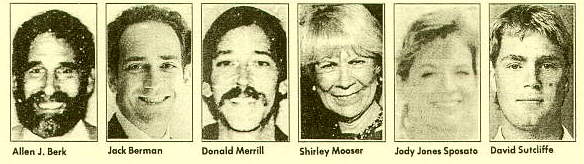
It was on one of these other floors that Ferri shot and killed my friend Mike Merrill. (His first name was actually Donald (see above), but everyone called him Mike.) I’d seen Mike for the final time, as it turned out, a very short while before, at my father’s funeral. After the service, Mike came over to me, fixed me with his bright, intense, crystal-blue eyes and told me what a great guy my dad had been.

Just a few months later, I was at his funeral saying roughly the same thing to his widow.

Following the 101 California Street shootings, and the national media attention it attracted, some gun laws tightened: centralized data bases were established to screen potential buyers, limits were placed on large-capacity magazines, certain models were made unavailable to civilians. None were serious steps, but legislation and regulation were, it seemed, moving in a constructive direction.

In the intervening 20 years, with the passage of time and fading of memory, many of the laws and regulatory schemes created in the wake of this particular tragedy have been loosened or have expired, especially in some states. To some, the problem isn’t the gun but the person using it; regulating gun ownership and use is shooting, as it were, at the wrong target.

I very strongly believe the opposite.

West Churchman, a great mentor of mine, believed that tools were not value-neutral.  You get a shovel to dig with; if you don’t want stuff dug up, you shouldn’t get one.  If the act of digging disturbs what you value – like, for example, a wilderness – then the shovel itself, by virtue of its design and its very reason for being, has an ethical consequence.

West would never have subscribed to the theory that “guns don’t kill people – people kill people.”  Like all other tools, guns were specifically created to perform a certain function, and its particular function has significant moral weight.  In the case of handguns, their purpose is to shoot people, in no way a value-neutral function.  In the case of automatic assault weapons (like Ferri’s MAC-9), their purpose is also to shoot people, but a lot more people and really fast.  Having a handgun or an assault rifle prepares you to kill – purposefully and with designed efficiency.  Not just using one, but also owning one has moral implications.

People have said, if someone wants to kill, a knife works too. True enough, in a single instance. But to kill many people with a knife takes almost unimaginable time, physical strength and proximity. Killing many people with an automatic assault rifle is a physically trivial exercise.

Take away the gun, take away the tool.

What It’s Made For

I got up early this morning to look online at radar and satellite images, in an attempt, a frustrated and fruitless attempt as it turns out, to see if my son’s baseball team could squeeze in its game before the storm now pelting our house blew across the city.

He was already dressed in his #44 uniform, sitting at the breakfast table, playing with his food. He wanted badly to play. He looked at my eyes as they scanned my computer screen – both of us searching for any possibility of a positive sign. I looked up and smiled at him but we both knew better.

It was raining heavily without a break in sight as we left the house but we drove to the field anyway. We sat in the car, looking skyward for any break in the heavy drumming on the roof of our car – a patch of blue, a let-up in the rain, to no avail. Before long, a man came out to the parking lot to tell us, with cold finality, that the field was closed; there would be no games today. My son’s lips tightened and his eyes moved down to his shoes.

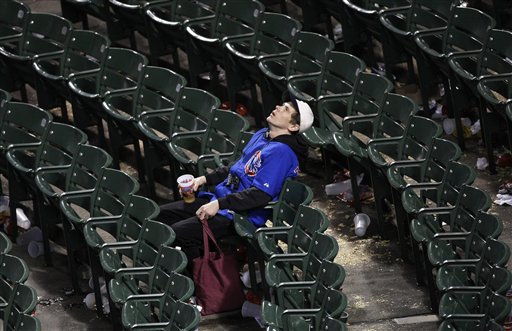
Baseball breaks another heart, which, face it, is something it’s good at, something it’s designed for.

The best baseball players, the very best, only make it on base about half the time. Just a few teams make the playoffs, much less play in the World Series. Errors are made in plain sight, exposing the offender in an embarrassing way other sports might spare players. Baseball’s most famous plays are as likely to be moments of tragedy as triumph. Some of the sport’s most famous and beloved teams are also its biggest losers.

Baseball is a sport designed for tears and heartache, and it relishes that role.

Today it happened to be the rain. Tomorrow, it’ll be something else again.

The Reality of Fog, Considered

FOG

The fog comes

on little cat feet.

It sits looking

over harbor and city

on silent haunches

and then moves on.

– Carl Sandburg

Sweet metaphor, Mr. Sandburg, but you must not have been writing about fog around these parts.

Where I come from, fog isn’t any silent-footed kitty. Fog, here in San Francisco, comes off the wild Pacific Ocean and hits you like a cold, wet sock in the jaw. It leaves you shivering, your clothes and body wet, your bones stiff and sore.

And, just between you and me, it takes its damn time moving on.

I realize that might not make the kind of poem that generations of schoolkids will be forced to memorize but I believe in honesty, especially about something I love so dearly.

5 Things to Do on This Rainy Saturday

You planned on baseball but the weather’s not cooperating. No big deal. There are plenty of things to do on a rainy San Francisco Saturday. Here are a few suggestions (I have no personal or commercial interest in any of these places, by the way.).

Musee Mechanique

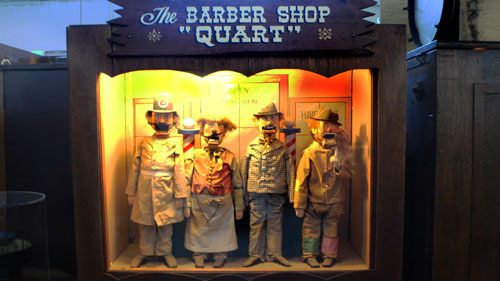
One of the world’s largest privately owned collections of (over 300) mechanically operated musical instruments, antique arcade machines, orchestrions, coin operated pianos, antique slot machines, animations. Go in. Play some. Waiting for you at Pier 45.

Morning Due Cafe

On the corner of 17th Street and Church. Wonderful coffee and great food. An absolutely beautiful family owns and runs the place. Great music (I often swing to Sinatra when I’m there.). Diverse crowd. Great vibe.

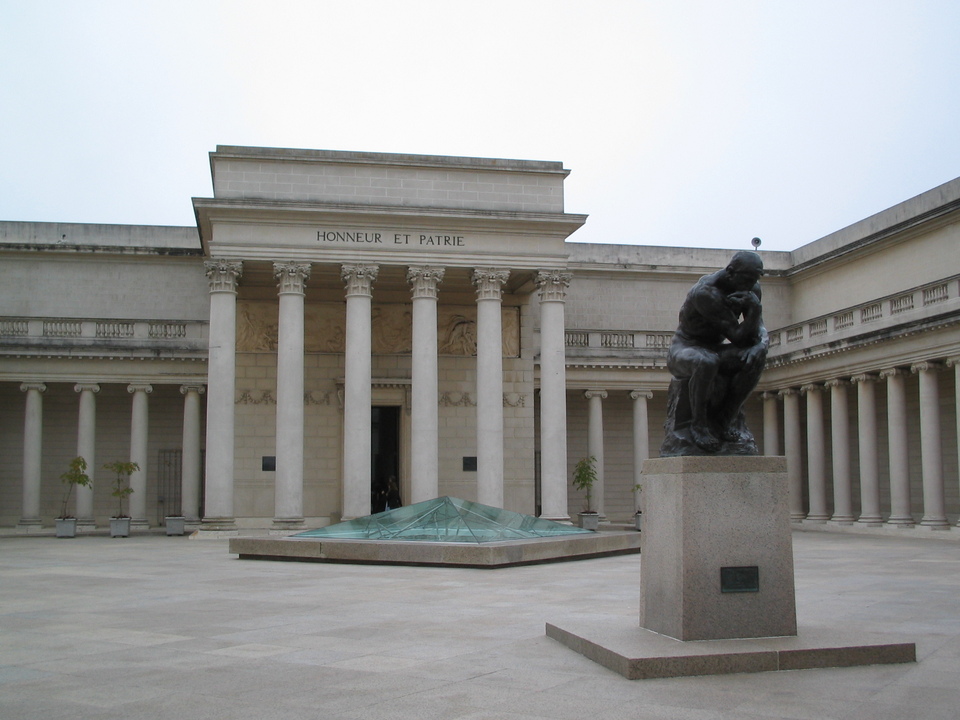
Palace of the Legion of Honor

One of the Fine Arts Museums of San Francisco. A glorious natural setting that’s a treat in any weather but especially compelling in the rain, I think. Beautiful whether or not you’re a francophile. I highly recommend a current exhibition, The Cult of Beauty: The Victorian Avant-Garde, 1860-1900.

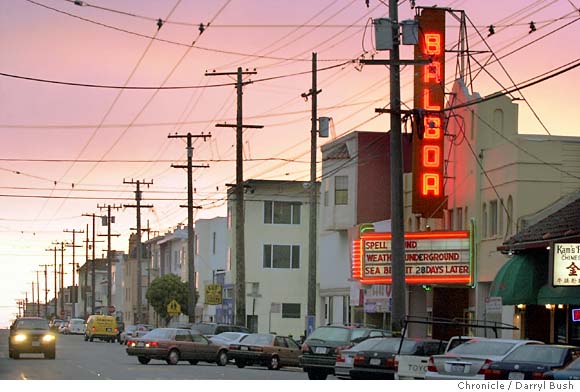
Balboa Theater

Not everyone remembers neighborhood movie theaters, so let me educate you. Most comfortable theater you’ve ever been in? Nope. Greatest variety of offerings? Not even close. Latest mega-hit? Possibly. What do you get at the Balboa? It’s run by people who LOVE movies. They program with fans in mind. Today, as is typical, they’re showing a mix of current and quirky: Hunger Games, Lorax, Iron Lady and a film of the Bolshoi Ballet. And, really, what’s better than a movie on a rainy afternoon?

Gold Dust Lounge

A singular place to meet visitors and locals sitting cheek-by-jowl. Landlords have issued eviction papers to make room for yet another national-chain retail clothing store – just what Union Square needs. Go while you can.

Places of Another Time

When San Francisco went from sleepy Spanish outpost at the far-distant end of the American continent to the West’s first megalopolis, following the 1849 Gold Rush, the population skewed male, as demographers would say. Boarding houses rented beds, or portions of beds, and centrally-served, plentiful and simple meals to a diverse crowd of sailors, miners (and miner wannabes), soldiers, salesmen, bankers, cops, politicians.

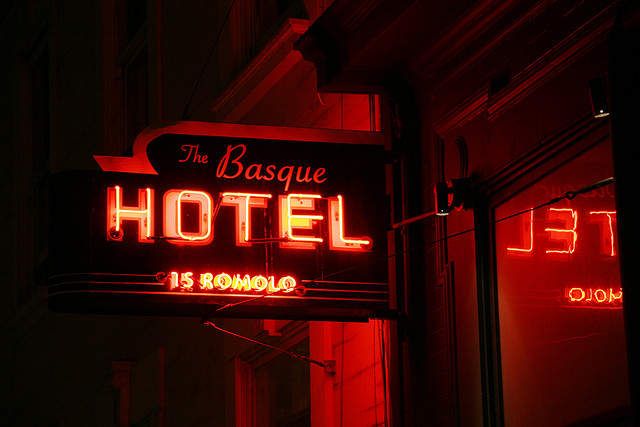
Few still exist, or do so in name only, like the Basque Hotel, formerly an actual hotel with large dining room, now only a restaurant.

Thus began a San Francisco tradition of restaurants that served generous, family-style food. And now, some 150 years later, that tradition maybe breathing its last. Many places have disappeared and the few that remain do not appear to be long for this world.

Perhaps the king of this style of restaurant in San Francisco was the Gold Spike, which closed about six years ago, after a run of 86 years.

It was a meeting place, watering hole, feedbag, diner, neighborhood hall, party venue, lonely hearts club, museum of San Francisco history, and so much more.

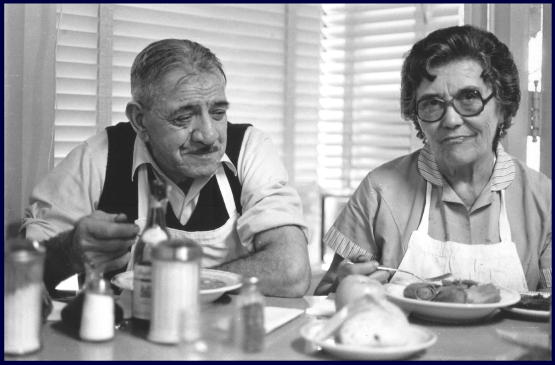
My dinners at the Gold Spike were all memorable affairs. I never left without meeting people – visitors and natives alike – hoisting a few drinks, maybe sharing a dinner table. As I understand it, the Spike was unceremoniously tossed out by its landlords, so there was little time for proper goodbyes and thank yous. I do wonder if I’ll ever see those wonderful old photos again, feel the same warmth of welcome, or sit amongst the same oddly diverse crowd.

Another place I loved that has disappeared was La Pantera. The sign is, bizarrely, still there, but the place has long since departed, leaving North Beach a somewhat poorer place.

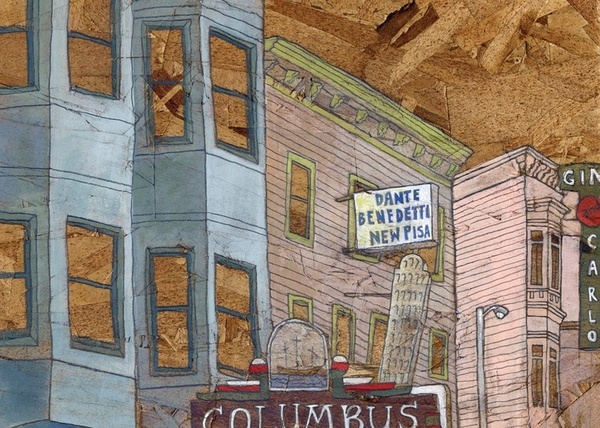
Also gone is Dante Benedetti’s New Pisa, where I had my bachelor party dinner. The New Pisa, as one reviewer suggested, “…brings to mind the essence of all that North Beach was when ‘Jolting Joe DiMaggio’ was a young man working in his family’s better known restaurant closer to the Wharf.” It was also a place where a young student could get spaghetti dinner for $5, plus a buck for a jelly-jar glass of cheap Italian red.

Two places I’m fond of carry on the tradition, Capp’s Corner and the US Restaurant.

Capp’s food can be up and down, but the atmosphere is always noisy and fun; much of the credit due to its proximity to Club Fugazi’s Beach Blanket Babylon. Pre and post show crowds keep Capp’s fun and lively.

The US Restaurant (US doesn’t stand for United States, by the way) has good food and a great family feeling, reminiscent of the best old Italian restaurants in San Francisco but isn’t really family style. Still, it does my heart good to see it busily occupying its latest spot on Columbus. It is still a great place to meet new friends and take in the smells and atmosphere of the San Francisco that was.

If you try very hard, it is still possible to find original, quirky, happy places to eat in what once was an eater’s heaven-on-earth.

Looking for Real

What may seem like a short detour…

There’s one historic bar in the Union Square district of San Francisco (actually, there are hundreds, but I’m talking about one historic bar in particular), called The Gold Dust Lounge, that’s served drinks to a quintessential only-in-San Francisco crowd of sailors, businesspeople, visitors and neighbors for generations.  Its landlords have recently announced a plan to kick it out in favor of a national chain clothing store.

Now, The Gold Dust Lounge hasn’t been the city’s most popular bar for ages, but the plan pissed a lot of people off, resulting in petitions, protests, online and social media tempests, etc. The question is, why did all these people suddenly get interested in a bar few had ever been to, fewer still had been to in years?

I believe it’s because we’re in a state of national authenticity deficit. Everything we buy, eat, watch, or otherwise consume comes from some centralized corporate authority. Our cities are all filled with the same national chain stores and restaurants. We watch non-locally produced entertainment on movie and TV screens. Even amateur-generated online clips are seen by so many people and follow so few memes, they seem mass-produced.

We’re in a search for the authentic, for the real, wherever we can find it – and it seems downright offensive to shutter a real, honest-to-goodness bar so yet another national chain store that sells the same old jeans can move in.

Think about baseball – America’s self-declared pastime – for a second.

Attendance for Major League Baseball has declined for three straight years, while attendance at Spring Training has grown over the same period.

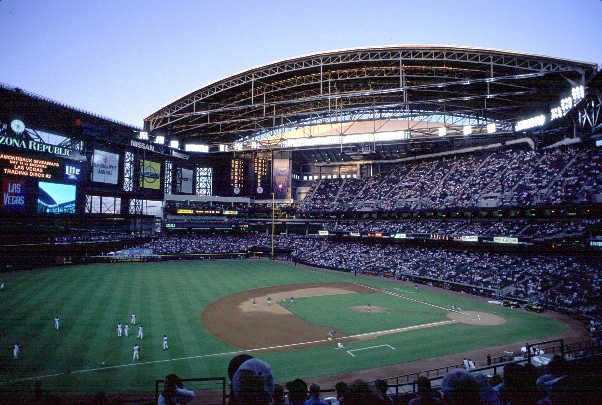
Those big, corporate-namesake stadiums, filled with untouchable millionaires, are drawing fewer of our fellow Americans.

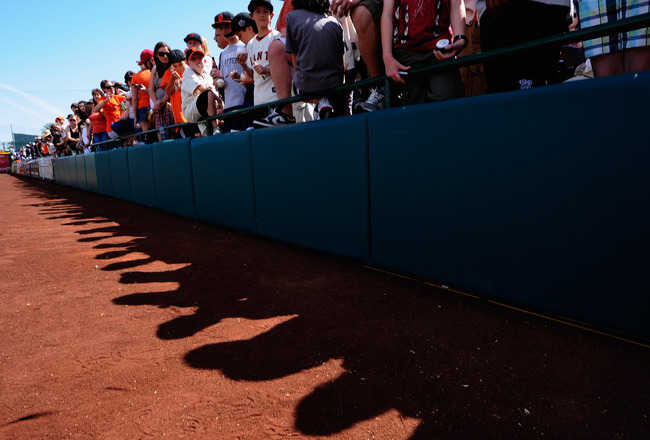
At the same time, more people are going to Spring Training games, where a bit of baseball’s old vibe still exists. At Spring Training, it’s still possible to get close to players, talk with them before and after games, shake their hands, see them up close – the way fans used to in the majors but aren’t able to anymore.

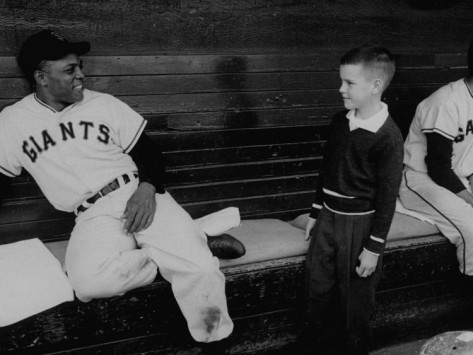
It used to be that ballplayers would live in the town they played in. They’d be seen and known around the neighborhood. They’d stay with a team a long time. They’d be part of team (and town) identity. Whether playing at the Polo Grounds (or later, at Candlestick Park), or stickball with neighborhood kids in the street, Willie Mays was a real Giant.

If I were to advise baseball, or landlords for that matter, about growing a market in these times, I’d say, keep it real. Not that they’ve asked.

Another Day, Another World

Yesterday, San Francisco was brilliantly, extraordinarily sunny and mild; it brought out the happiest and best in us. You can read all about it here.

Today? Somewhat different story.

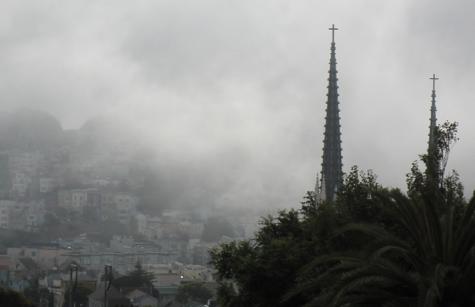
Fog, thick and moist, obscuring neighboring houses, not just the city’s landmarks, is blowing in from the great and mighty Pacific. Car headlights are on, for all the good they do. Kids bundled tight, fighting the cold and wet wind on their way to school.

The dog and I will brave the cliffs overlooking the ocean for our walk. I’ve decided on four layers – cotton, cotton, fleece, windbreaker; it will still likely be a fruitless attempt at staying warm. Once the moisture finds an opening, you’re done for.
Oh, and then there was this morning’s little earthquake. Yes, we’re all fine here. Thank you for asking. To be honest, a 4.3 earthquake, as my friend King Kaufman said earlier, doesn’t even get us out of bed.

As much as it was right to give thanks yesterday for the sun, I give thanks today for the fog, just another expression of life’s beauty. Earthquakes, not so much.

Things I Miss: Playland-at-the-Beach

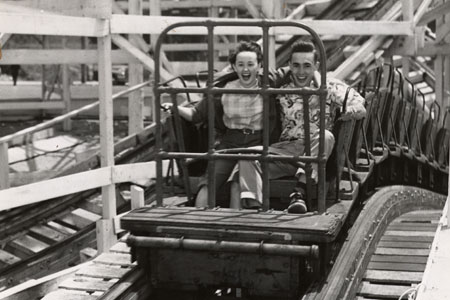
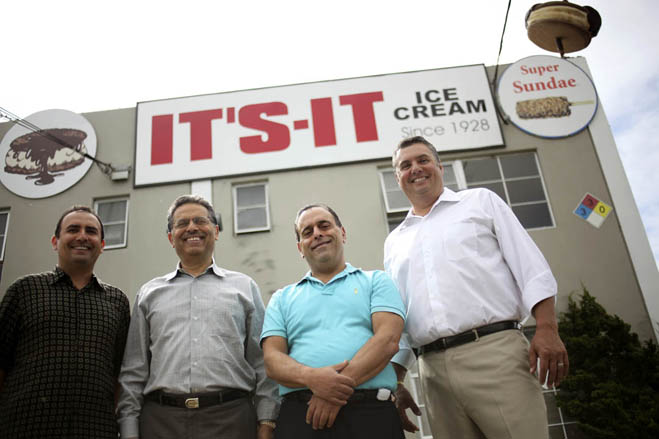
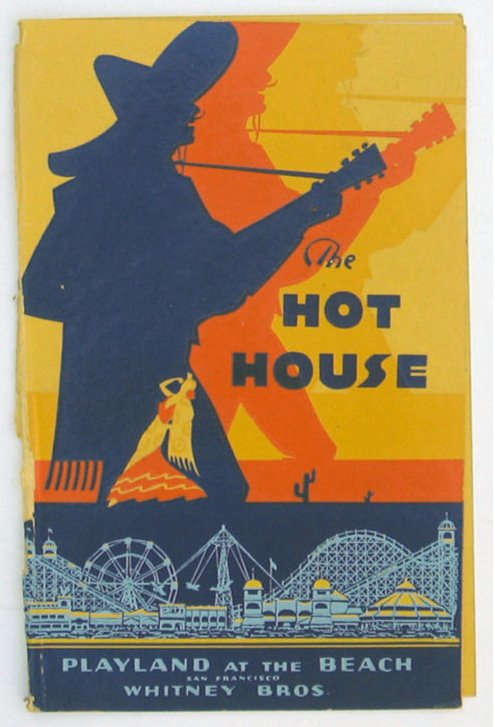
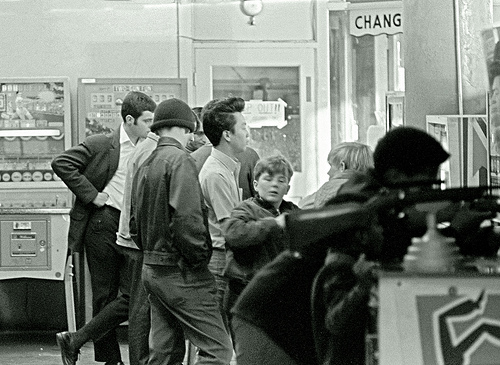
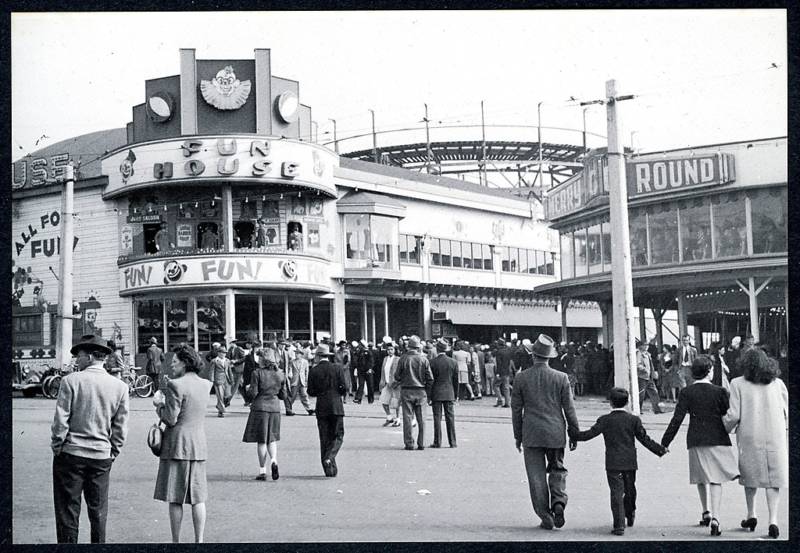
At Playland, on San Francisco’s Ocean Beach, you could be a king for a dollar. You could hear the latest music. You could play ancient arcade games. You could ride a rotting old wooden roller coaster, take a ride in a diving bell, visit a creepy-wild fun house. You could eat things you couldn’t find anywhere else – It’s Its, for example, two oatmeal cookies pressed on either side of a slab of vanilla ice cream and dipped in chocolate (the ones you get these days in stores simply don’t compare). Or Mexican food at The Hot House. Later, after Playland fell, The Hot House moved to Balboa Street. Never the same.

All kinds of people went there. All kinds. Every time I went to Playland, every single time, and I must have gone there a thousand times, mind you, my mom told me to watch out for myself.

In the summer, my dad used to come home from work when it was still light out. He’d grab my brother and me, and a cigar or two, and out we’d go to Playland, just ten blocks west of our house. We’d always run into guys he’d known growing up. They’d be cops now, or bus drivers, or short-order cooks, but in the old days, they would’ve been my pop’s running buddies. Learned a lot about the old days in the city (and about who my dad had been as a kid) from listening to their stories.

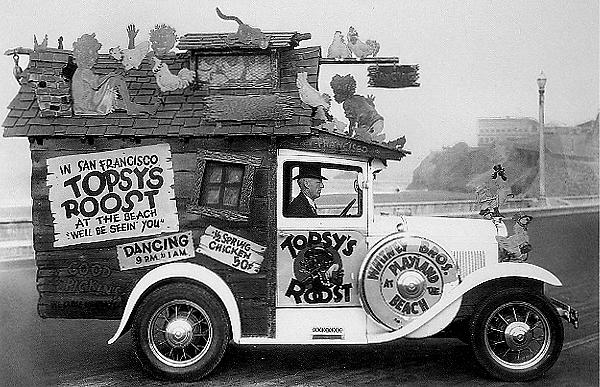
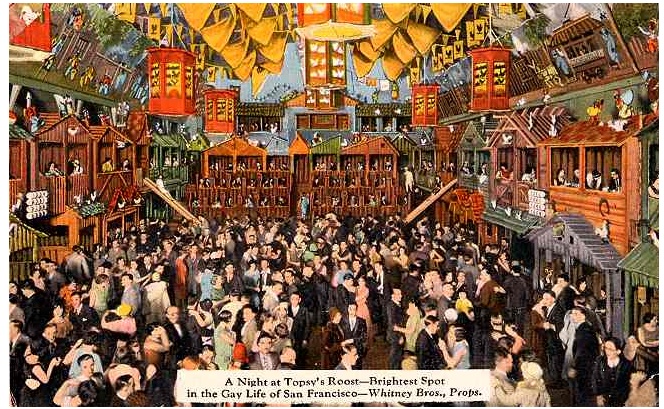
In the really old days, way before I was even born, Playland had a wild nightlife, including a place called Topsy’s Roost, a sort of mash-up of chicken coop and big band club. Think you could find something like that these days? Don’t bother trying. You can’t.

People would go out to Playland as a quick escape, a hit of fresh sea air, a few laughs, a little fun, maybe forget their troubles for a little while. During the Great Depression, not the little-assed depression we’re having now, I’ve heard Playland kept a lot of people going when they were down at their lowest; I believe it.

It closed forever in 1972 to make room for condos, because that’s what our city needed, alright, was more condos. Here’s the plaque, beloved and irreplaceable Playland’s headstone.

There aren’t places like it anymore. I wish there were; we’d all be happier and better off. Damn condos are ugly as hell, by the way.