Top Five Things You Don’t Want to Hear Your Pilot Say

[Courtesy of Captain Clayton Osbon, JetBlue.]

5. ‘Let me in! Let me in!’ while pounding on the other side of the cockpit door.

4. ‘They’re going to take us down! They’re taking us down! They’re going to take us down!’

3. ‘Say the Lord’s prayer! Say the Lord’s prayer!’

2. ‘I’m not responsible for this plane crashing.’

1. Anything to do with al-Qaeda, Iran, Iraq, Afghanistan or bombs.

Treyvon’s Real Killer

I grew up in a middle class neighborhood, the same one my dad did, went to its public schools, hung out on its corners and in its soda fountains and movie theaters. Almost all my friends did too.

More than a few of my old pals and classmates joined law enforcement – the police and sheriff’s department, mostly – just as my dad’s pals and classmates had, in the generation before.  Some of my cop classmates, I remember as smart, stable and together people. Others, less so. A few times, I’ve run into former goofballs, people who did the stupidest things you could possibly imagine, now wearing badges and guns, and all I could do was shake my head and laugh to myself.

But at least, I figured, in exchange for the burden of carrying deadly force, they have received intensive training on weapons and codes of conduct. They have clear responsibilities and consequences.

In Florida, it seems, civilians, without this training and clearly outlined responsibility, can carry firearms and use them – not only if their homes are invaded, not only if their lives are threatened, but if they believe they are in peril. No training. No code of conduct. No responsibility. For a good explanation of Florida’s so-called “stand your ground” law, click here.

I don’t know George Zimmerman, the man who allegedly killed Treyvon Martin, but I must ask why a member of a civilian neighborhood watch carries a gun at all. I keep an eye out on my neighbors’ homes too – I’m looking at a few of them right this minute – but I don’t carry a gun and go on patrol. If I saw anything suspicious, I wouldn’t shoot anyone (or get myself into a situation where I might have to). I’d call 911.

We all know who pulled the trigger, but the insanity of “stand your ground” and other laws like it led to this situation in the first place. Civilians don’t need to carry firearms in public. Not doing neighborhood watch. Not ever.

If we don’t change that, we’ll have more Trayvons. Many more.

Lesson 1: Learn Your Lines

I listen as often as I can to Fresh Air, the superb radio program with host Terry Gross. On one program, she interviewed actor Charles Grodin, also a personal favorite. She asked if it was any different working with younger actors. Grodin said yes, they don’t learn their lines. As a consequence, he continued, it was not only more difficult working with them, it was also more difficult for them to find their character and the meaning in their words.

In a scene from Hearts of Darkness, the documentary about the making of Apocalypse Now, actor Dennis Hopper defends as his purposeful artistic process not learning his lines so he can keep greater degrees of artistic freedom in his portrayal. The film’s director, Francis Ford Coppola, reminds him that he needs to know his lines first for him to have even the barest glimmer of hope of exploring the character’s full intention and place in the story.

In my professional life, I’ve worked with many leaders to help them communicate more effectively. Many have been giving talks and presentations for years and express to me a sincere desire to branch out, get more creative, be more physically demonstrative. All well and good, I frequently respond, but first, know your material.

It’s only by having the confidence of being the complete master of content that a speaker can fully realize their potential connection to an audience.

5 Things to Do on This Rainy Saturday

You planned on baseball but the weather’s not cooperating. No big deal. There are plenty of things to do on a rainy San Francisco Saturday. Here are a few suggestions (I have no personal or commercial interest in any of these places, by the way.).

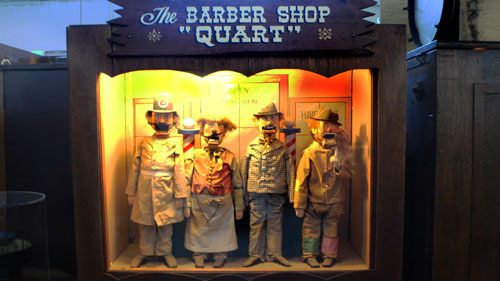
Musee Mechanique

One of the world’s largest privately owned collections of (over 300) mechanically operated musical instruments, antique arcade machines, orchestrions, coin operated pianos, antique slot machines, animations. Go in. Play some. Waiting for you at Pier 45.

Morning Due Cafe

On the corner of 17th Street and Church. Wonderful coffee and great food. An absolutely beautiful family owns and runs the place. Great music (I often swing to Sinatra when I’m there.). Diverse crowd. Great vibe.

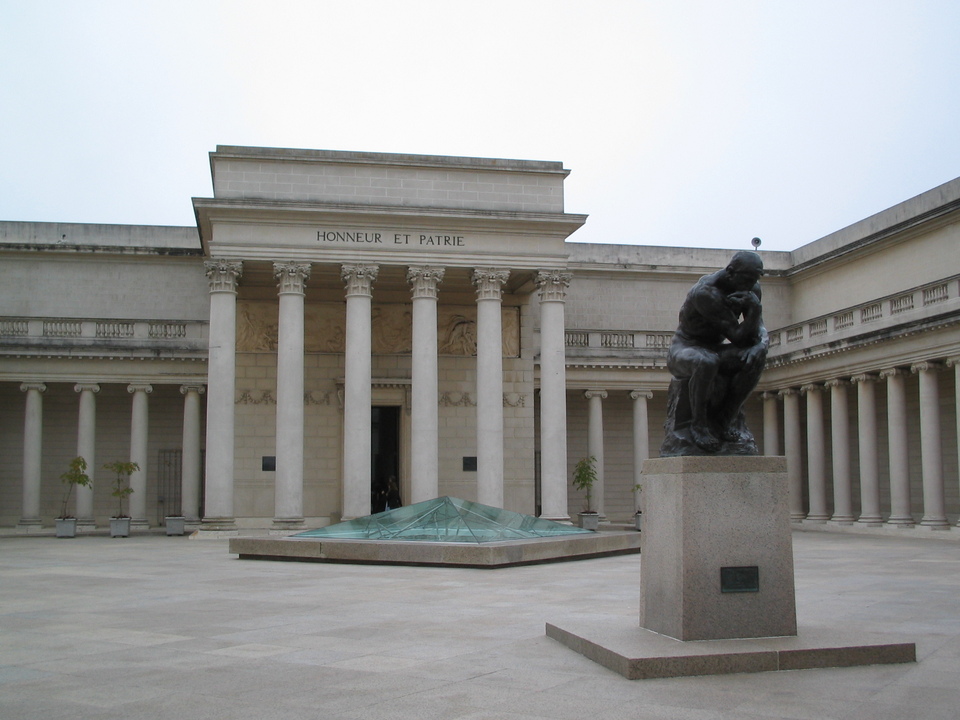
Palace of the Legion of Honor

One of the Fine Arts Museums of San Francisco. A glorious natural setting that’s a treat in any weather but especially compelling in the rain, I think. Beautiful whether or not you’re a francophile. I highly recommend a current exhibition, The Cult of Beauty: The Victorian Avant-Garde, 1860-1900.

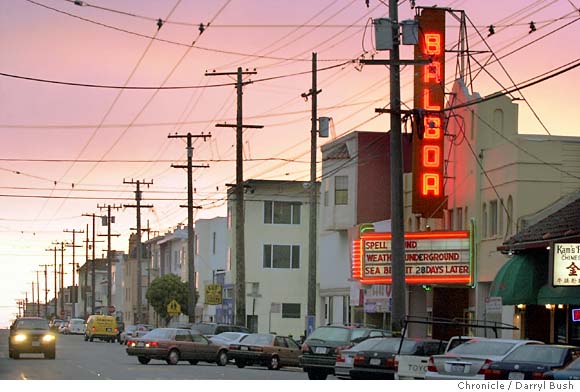
Balboa Theater

Not everyone remembers neighborhood movie theaters, so let me educate you. Most comfortable theater you’ve ever been in? Nope. Greatest variety of offerings? Not even close. Latest mega-hit? Possibly. What do you get at the Balboa? It’s run by people who LOVE movies. They program with fans in mind. Today, as is typical, they’re showing a mix of current and quirky: Hunger Games, Lorax, Iron Lady and a film of the Bolshoi Ballet. And, really, what’s better than a movie on a rainy afternoon?

Gold Dust Lounge

A singular place to meet visitors and locals sitting cheek-by-jowl. Landlords have issued eviction papers to make room for yet another national-chain retail clothing store – just what Union Square needs. Go while you can.

To Church

I’ve thought long and hard about spirituality and faith. I grew up in a family that identified itself as part of a particular religious tradition, I studied religion under some amazing scholars and mentors, have tried practice in various traditions, have worked in professional capacities for a few religious institutions.

There is a particular way I conceive of the divine – its characteristics, its role in my life, the way in which I maintain a relationship, etc. There is a name I use when I think or speak about it. There is a set of rituals I observe, places I go or think about going particular to experiencing the divine. There are specific texts I believe tell stories and give guidance about the human relationship to the divine and about appropriate human behavior.

In those texts, in the rituals, in the place and amongst the people that make up my spiritual context, some things strike me as more meaningful, more important, more reasonable than others. With respect to all that, I believe a great many people are in the same or similar situation.

Other people have different traditions, different texts, different names for the divine. Some believe the divine is fiction. Their ‘sacred’ texts may be books of science, or theater, or fine art. There are many spiritual paths in our society; I believe that diversity of belief is a characteristic of a strong society and it gives me great personal joy to discover and learn to appreciate the philosophies and practices of other people.

But here’s one thing that living in a purposefully diverse society means: we must show respect for people who believe different things.

There are people who believe that marriage can only be a union between one man and one woman. There are people who believe contraception by artificial means is evil and believe the active termination of pregnancy is murder. There are people who believe priests must exclusively be celibate men.

Just because I may not believe any of that doesn’t mean I should compel or coerce those who do to comply with my vision of the good. Further, if I’m a member of an institution that follows principles or practice I find unacceptable and I want to continue being part of a spiritual or faith community, it is my personal responsibility to find myself a different institution.

Let’s get a little concrete.

Some people who work for Catholic-based organizations or attend Catholic-affiliated colleges are upset because the church doesn’t want to provide financial support for reproductive health services it feels goes against its core principles. In this case, I don’t believe the correct approach is either legal or legislative. I believe the appropriate approach is for employees to find another employer and students to find another school if they find church-imposed regulations to be both significant and onerous.

If you’re called to the priesthood and also called to be married, or if you’re called to the priesthood and are a woman, find a church that ordains people in relationships and/or women. If you wish to be married to someone of the same gender in the context of a religious ceremony, find a religious institution that exercises marriage equality in that particular way. It is not, to my mind, right to insist that a particular religious institution conform to a set of beliefs around those issues that goes against its core principles.

And it is incumbent on religious institutions to “practice what they preach” in this regard – state explicitly what they believe and follow through in practice. Too many religious institutions give lip service to high-minded doctrine, (e.g., marriage equality) then capitulate to pressure when push comes to shove. This serves the interests of no one.

All that said, there is another side of the equation, however, and it goes like this: for some students, having reproductive health coverage is really important; consequently, they may choose not go to Catholic-affiliated schools. As a result, the volume of applications and enrollments to Catholic-affiliated schools might fall. A lot of women who are called to be priests will take their ministries elsewhere, so the Catholic church may find itself without an adequate number of priests. Church membership may decline if too many disagree too strongly with too many matters of church doctrine.

For me, the bottom line is that strongly-held beliefs should be respected, which is, of course, not to say they are costless.

What Kinda Country Is This, Anyway?

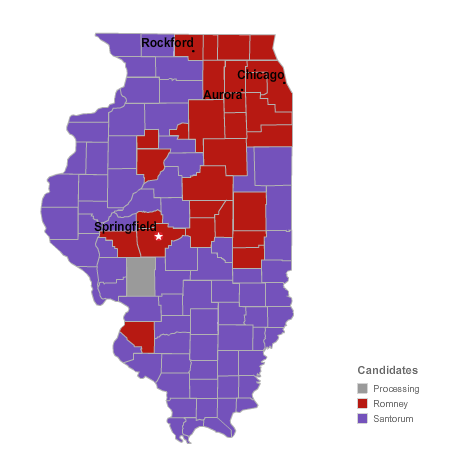
The results from this week’s Illinois GOP primary tell a story. The one major candidate who has campaigned primarily on economic and policy issues, Mitt Romney, won majorities in areas of high and dense population. The other, Rick Santorum, who campaigns primarily on his Christian fundamentalism and social conservatism, won in areas of less dense and lower population.

In other words, Romney won cities and suburbs and Santorum won farms and exurbs. Here’s the map; it’s especially illuminating if you know Illinois but even if you don’t, the pattern is pretty obvious.

As much attention as so-called ‘values-voters’ are getting in the media these days, demographics and history indicate they will continue to recede in electoral importance. Over 80 percent of Americans live in urban areas now, and the percentage continues to grow.

The GOP’s Illinois primary is a story of the entire country, writ small.  All the campaign talk about self-reliance, and ‘taking our country back,’ and fighting socialism, and same-sex marriage, and banning abortion, and basing national policy on literal interpretations of the Bible are salient to a smaller and smaller proportion of our citizens.

Where the American people live in increasing proportion, how our neighbors choose to live their lives is something of very little relative electoral concern.

Lessons From the Rock

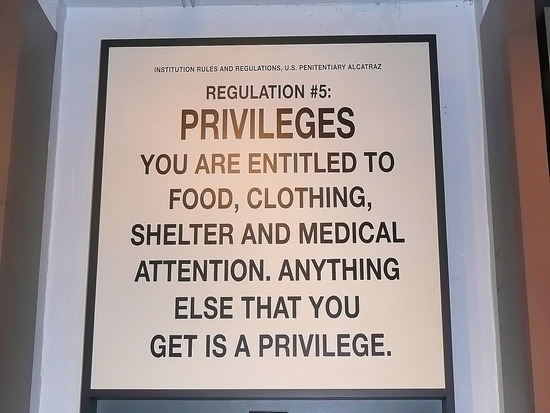
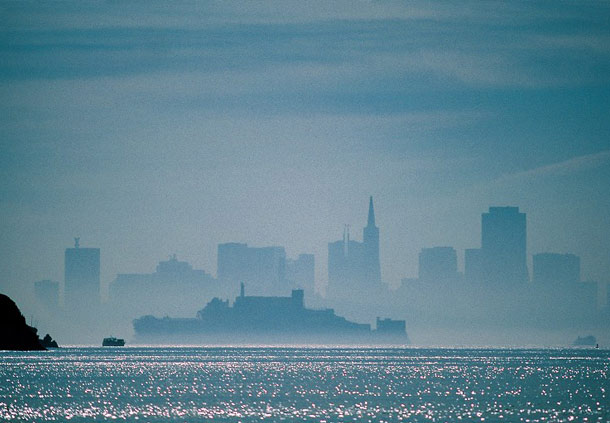
Alcatraz, an island sitting in San Francisco Bay, may be America’s most legendary prison.

The Federal prison on Alcatraz was closed on this date in 1963. It’s now part of the Golden Gate National Recreation Area, a national park. About 500 visitors a day take the short ferry ride from San Francisco to see it.

I’ve been myself a few times; visiting Alcatraz never fails to stir up very strong feelings, especially when I’ve taken the audio tour. The tour is not an overproduced marketing piece narrated by some generic announcer-voice. You hear real stories in the actual voices of former Alcatraz inmates.

The result is immediate, emotional, honest, raw and real. At times, the stories are downright heartbreaking.

I can’t forget the story one former inmate told. It was New Year’s Eve. The prisoners had been locked in for the night and the lights turned out. Because of the proximity of the prison to San Francisco itself (it really is quite close, as the seagull flies) and the particular acoustic properties of fog (it reflects sound), the inmates, sitting in the cold darkness of their cramped cells, could hear the music, laughter and noise of the city’s many parties.

By locking convicted offenders in a prison within earshot and sight of civilized society, we send them a potentially constructive message: you have done something that makes you unfit (perhaps temporarily, perhaps permanently) to be part of this society. We continue on with our lives but you do not. Behave according to our society’s laws, customs and mutual agreements and you may again join our society.

Until then, watch and listen from a distance to that which you have lost.

The Best I’ve Ever Seen

This is something I’ve been thinking about lately. I have selected the one person I believe to be the best ever at their position. Why create this list? Because I’m a huge baseball fan and I’m getting excited about the start of the season. My basic rule going in: I have only picked players I have seen with my own eyes, meaning in person.

If you think other players are better, say so. There’s a comment section at the bottom of this post. So, use it.

Here we go…

Pitcher (Starting): Tom Seaver, New York Mets, Cincinnati Reds, Chicago White Sox, Boston Red Sox (1967-1986)

Strength, stamina, brains. Tom Seaver was an absolute warhorse on the mound. The singularly dominant force of his era, as he would have been in any era. Still remembered and loved. And a great ambassador for the game.

Pitcher (Reliever): Mariano Rivera, New York Yankees (1995-present)

At his peak, Rivera was as close to an automatic shut-down as is possible in baseball. Total command of his pitches and any situation in which he found himself. Definition of a ‘closer.’ Call him in from the bullpen and it’s over, baby. Fierce. Close seconds? Dennis Eckersley, Rollie Fingers (points for the ‘stache), Brian Wilson (at his best, he’s fearsome).

Catcher: Johnny Bench, Cincinnati Reds (1967-1983)

As great at the plate as he was behind it. A huge part of the storied ‘Big Red Machine.’ Better, to my mind, than Piazza, Fisk, Carter. Had I seen Berra play in person, we might have had a contest.

1st Base: Albert Pujols, St. Louis Cardinals, Los Angeles Angels of Anaheim (2001-present)

Pujols, still an active player, is a force to be reckoned with. He closely beats out the universally-beloved Willie McCovey.

2nd Base: Joe Morgan, Cincinnati Reds, Houston Astros, San Francisco Giants, Philadelphia Phillies, Oakland A’s (1963-1984)

Morgan earns this spot over Jeff Kent, although Kent was better at the plate, because of his brains, his fielding and his leadership.

3rd Base: George Brett, Kansas City Royals (1973-1993)
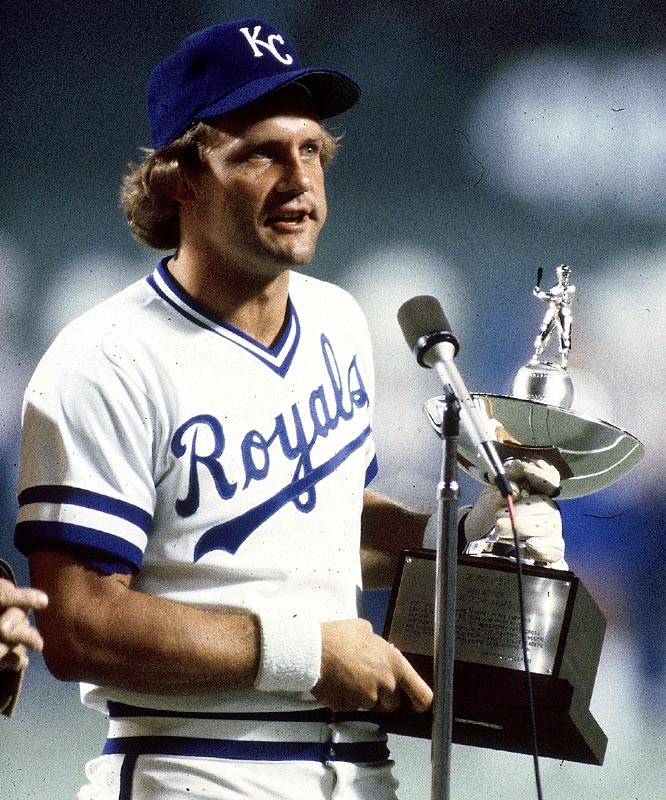
Tough competition here. Brett takes this position over Mike Schmidt mostly because I had the chance to drink with Brett once (in Chicago) and never did with Schmidt.

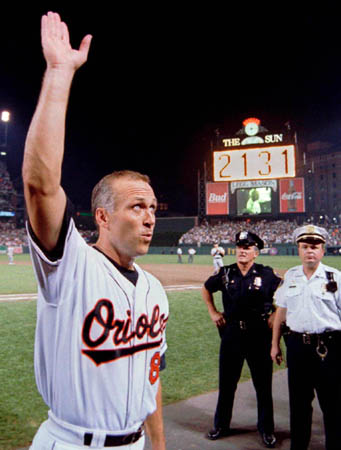
Shortstop: Cal Ripken, Jr. Baltimore Orioles (1981-2001)

Ripken’s longevity amazes still. His leadership, steadiness and abilities were something special. What’s that, Ozzie Smith was a defensive wizard? Sure. A-Rod? Jeter? Why don’t you just make your own list?

Left Field: Carl Yastrzemski, Boston Red Sox (1961-1983)

Only one generation removed from the legendary Ted Williams; had I seen Williams play in person, he’d be on this list. Playing his entire career in the shadow of the Green Monster, Yaz earned this spot. And, before anyone asks, Barry Bonds was a far distant second.

Center Field: Willie Mays, New York and San Francisco Giants, New York Mets (1951-1973)

What superlatives can you use? Which do you need? Mays was not only the greatest person I’ve ever seen play center field, not only the greatest person I’ve ever seen play baseball. Willie Mays was the greatest athlete I’ve ever seen play anything. No contest.

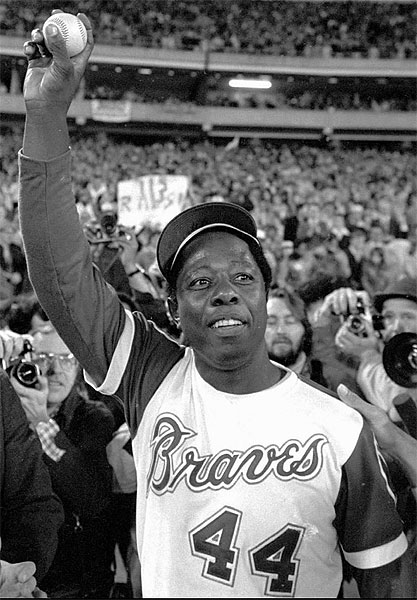
Right Field: Hank Aaron, Milwaukee and Atlanta Braves, Milwaukee Brewers (1954-1976)

Aaron was the first person to break Babe Ruth’s home run record (without even the hint of performance-enhancing drugs) and was an All-Star every single year between 1955 and 1975. Speedy (in his earlier years) and powerful. Class act.


What’s Important

Reflecting the GOP’s current plunge from major political force to laughingstock, there are essentially now only two ‘serious’ active candidates for the Republican Party’s presidential nomination, Mitt Romney and Rick Santorum. They are, at this moment, shooting at each other in baldly personal ways, trying to capture for themselves the position of most-high arch-conservative national overseer of faith, while simultaneously plotting for the increasing likelihood of a party convention that finds itself unable to select a presidential nominee in the usual fashion.

The prospect of a brokered Republican Party convention is something that should cause paralyzing fear in the hearts of all good Americans. What as-yet-unspoken attacks might be unleashed? Who might emerge as the compromise candidate to break an electoral stalemate? What promises might be made to whom in order to secure enough votes to win? How low can these people go in their pursuit of our nation’s highest office?

You don’t want to know.

Or maybe you’ve seen HBO’s ‘Game Change‘ and you already do.

‘Game Change’ is the story of Sarah Palin’s selection as John McCain’s running mate and her preparation for and participation in the campaign. A couple of things become obvious fairly early in the film. First, McCain was headed to certain defeat without a dramatic choice of running mate; he had become almost irrelevant to the presidential election. Second, Palin was a completely irresponsible choice for Vice President (Only one 72-year-old heartbeat away from the presidency, one wag says in the film.); she was totally unprepared for the job and jaw-droppingly ignorant of governance, diplomacy, finance, or really anything about the nation she sought to govern. Furthermore, Palin was both proudly and willfully ignorant; she was deliberately deaf to experts who were brought in to help her prepare.

All this is, of course, old news. What’s most striking about the film is the fact that McCain’s campaign people knew Palin was a bad choice on so many levels, but kept working to elect her anyway because, hey, that’s the job. John McCain’s presidential campaign communications director, Steve Schmidt, said in a recent interview about the film, “When you have to do things necessary to win…” shit happens, or words to that effect.

So Schmidt and the rest of McCain’s campaign team would have put Sarah Palin in the next chair from the president despite the fact that they knew she would have been a complete disaster for our country. They even had the nerve to wrap their work in the star spangled banner of patriotism, much as today’s generation of Republican candidates continue to do.

Why should we fear backroom deals at the GOP convention? Here’s one reason: Schmidt et al. are still around and still pursuing their ‘profession.’

Why California Swings Too

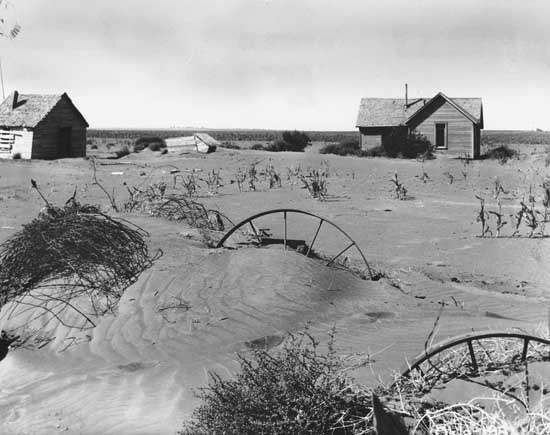
The Dust Bowl of the 1930s was the perfect combination of man-made and natural disasters, the term perfect, not connoting excellence, of course, but perfect in the sense that these two factors built and grew upon each other to reach almost boundless levels of devastation in the Midwest and Great Plains states.

The damage was not solely physical.  Families which had depended on farming the now-buried land were humbled, uprooted, reduced to abject poverty. Foreclosed upon by banks, they began a westward migration of unprecedented size and scope, looking for any sort of work that might be available.

Many of these so-called ‘Okies’ landed in California, pursuing jobs in the growing oil business or in the vast agricultural lands of the state’s valleys; both settings were sadly familiar.

Knowing they’d likely never see their old farms again, the migrants brought all they could carry on the journey – beds, family photos, pots and pans, chairs, quite literally everything. And they brought something else as well, their music.

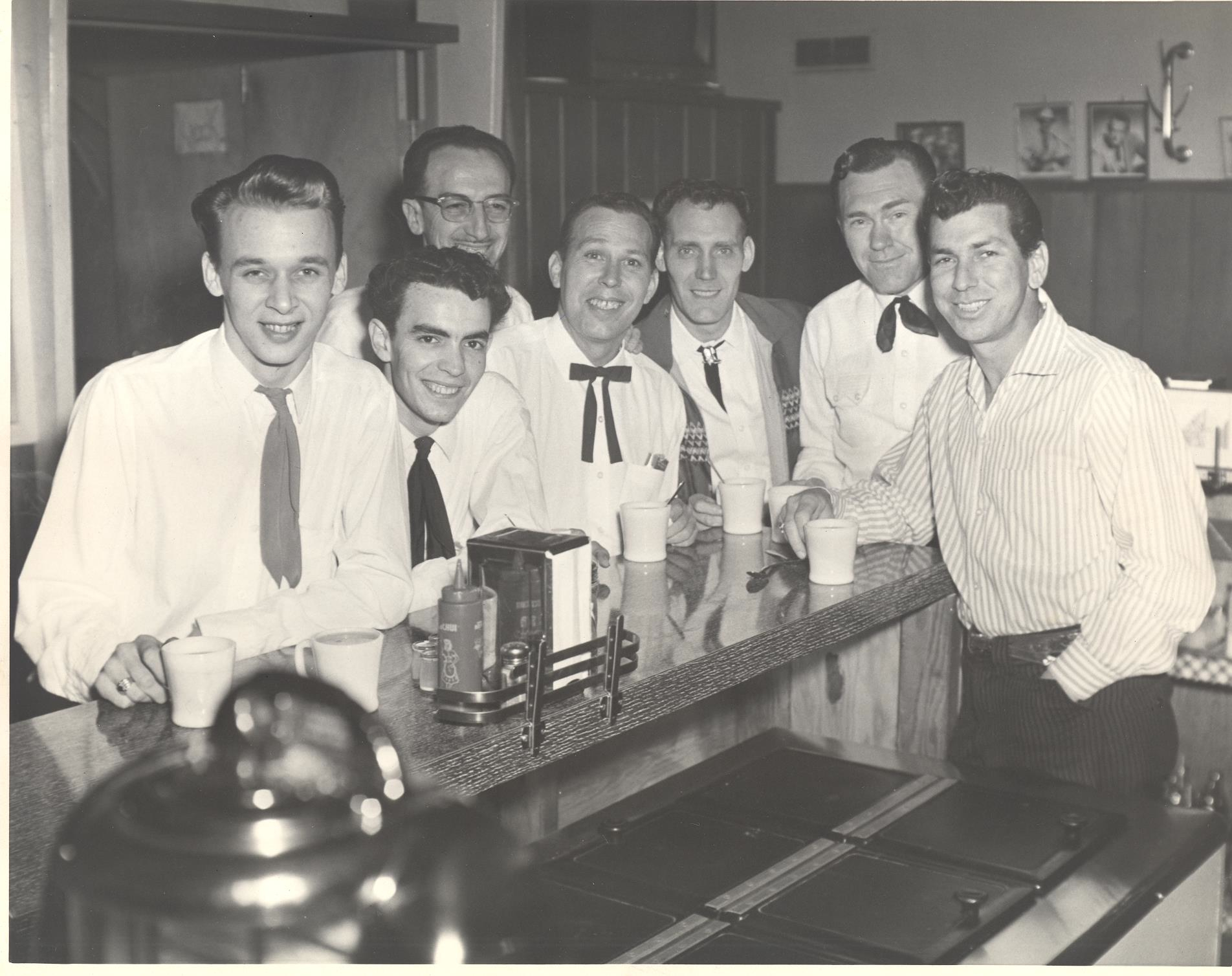
Thus, Texas (or Western) Swing came to California. And like the cotton and artichokes and tomatoes they toiled over, the Okies’ swing music took root here in California and grew and lasted.

From Bakersfield to Brisbane, clubs opened and attracted headline acts and large crowds of displaced fans of Texas Swing. These amply-muscled oil rig workers and farmhands would wait all week to get paid so they could go down to the local club, meet women, release some pent-up frustration. At Brisbane’s 23 Club, musician Jimmie Rivers recalled, “The music started at 9, fights started at 10.”

Since that time, California has been both home and destination to countless swing bands and artists: Bob Wills, Merle Haggard, ‘Spade’ Cooley, Big Sandy, and many more. Here’s Big Sandy’s version of ‘Tequila Calling.’ We owe a great cultural debt to the migrants who brought their music here.

Swing on, California; swing on.