Money Matters

I’ll say it flat-out: Randy Newman is a treasure. His music weaves the ancient motifs of American popular and folk with brilliantly sarcastic (some would say caustic) lyrics to convey, I think, the essentially dual nature of our national character.

Polite but mean. Happy but depressed. Erudite but dumb as dirt. Self-satisfied but never sated.

As I hear the overheated (but, I believe, completely beside the point) campaign rhetoric about which candidate has raised more than which other candidate for president, my mind keeps coming back to one of Newman’s masterpieces, ‘It’s Money That Matters.’ You can watch the video here. Some lyrics follow (below).

Of all of the people that I used to know
Most never adjusted to the great big world
I see them lurking in book stores
Working for the Public Radio
Carrying their babies around in a sack on their back
Moving careful and slow

It’s money that matters
Hear what I say
It’s money that matters
In the USA.

All of these people are much brighter than I
In any fair system they would flourish and thrive
But they barely survive
They eke out a living and they barely survive…

It’s money that matters in the USA
It’s money that matters
Now you know that it’s true
It’s money that matters whatever you do.”

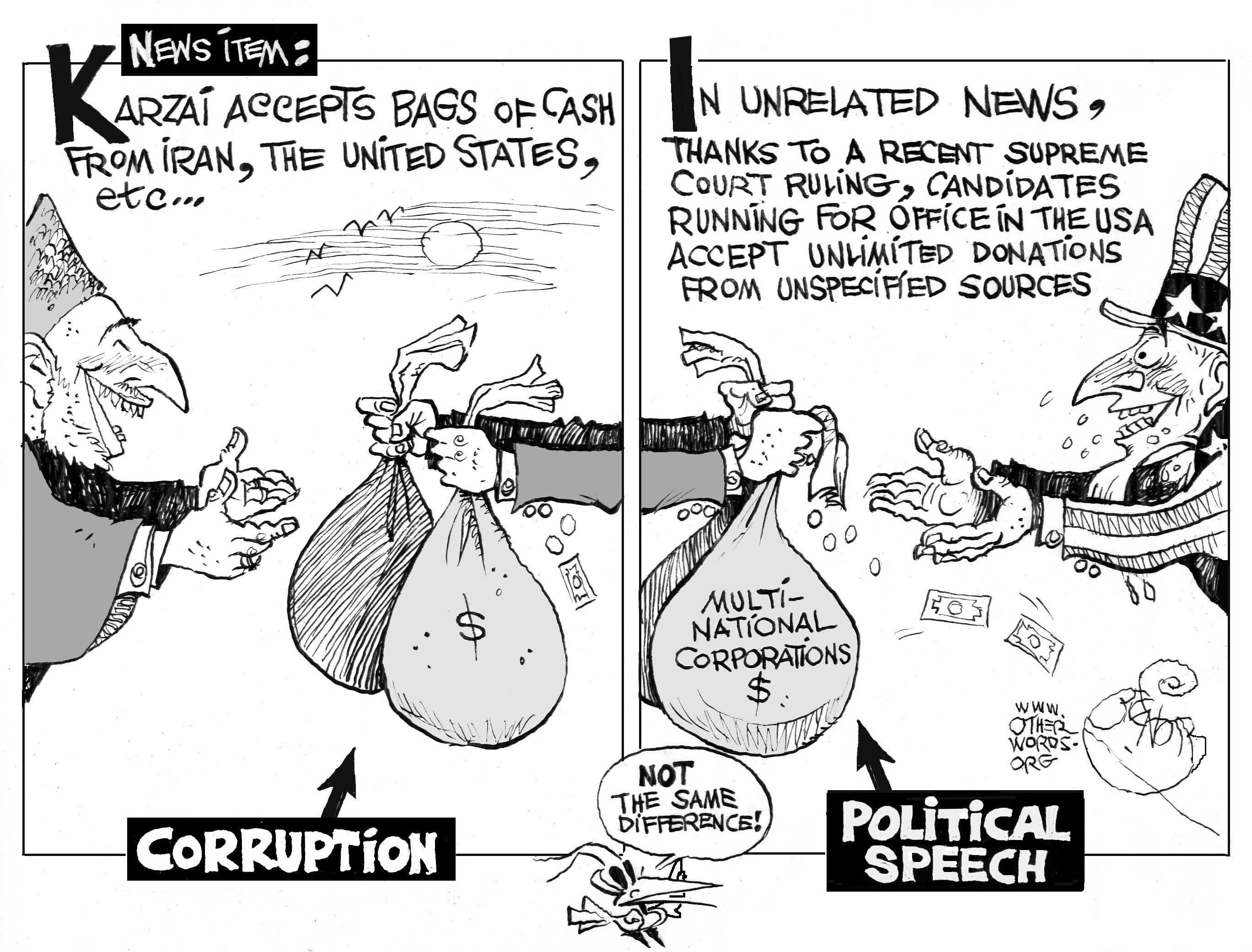
I don’t want to see infusions of un-Godly big pots of money unduly influencing elections but I also don’t want money, and how much of it gets raised, to be either (a) used by our news media as a tool to distract the electorate from the real issues facing our country at this moment in history, or (b) an excuse used to explain why an extremely electable candidate eventually loses.

Money does matter but issues, including policy positions, matter more. One problem, I believe, is that those in our news media (especially cable and broadcast media) have shown themselves ill-prepared to discuss the substance of policy and issues. Therefore, they concentrate their coverage almost exclusively on three relatively unimportant sideshows: (1) the horserace, polls, who’s falling, who’s gaining, delegate counts; (2) gaffes, blunders and bloopers, embarrassing personal disclosures; and (3) easy to obtain and understand data, like campaign contributions.

But part of the blame also rightly belongs to the campaigns themselves. I’ve been surprised (not in a good way) by the amateurishness of even national-level campaigns this year. Lack of depth. Lack of candidate preparation for events. Lack of ‘brand’ awareness and adherence.

Money does, of course, matter in politics, in the sense that the public conversation can be seeded with advertising and so forth. But let’s be honest. Campaign contributions aren’t in any way a surrogate measure for popular support, as is frequently posited by media pundits and analysts. The truth is, rich people, including the candidates themselves, and corporations spend a lot of money on campaigns because they have vested interests in certain candidates winning.

Nothing more or less than that.

Americans aren’t complete dumb-asses; we’re just treated that way.

Maybe Randy could write us a song about it.

So Long, Ernie

When you see the photo of an actor of a certain age on the front page of The New York Times, you come to know exactly what to expect.

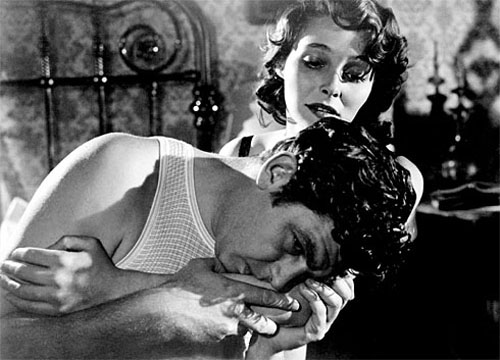
I’d spent the weekend in the mountains with my family, sequestered from pretty much all news media, so I didn’t hear until we got back to San Francisco and I logged on. There was a publicity still from ‘Marty.’ So, in pretty short order, I knew that actor Ernest Borgnine had passed away.

Ernest Borgnine provides a sort of demographic litmus test. For most people my son’s age, he is best known as the voice of Mermaid Man to Tim Conway’s Barnacle Boy on the animated TV series SpongeBob Squarepants. For those my age, he was the fun-loving, wise-cracking, Navy commander Quinton McHale on TV’s ‘McHale’s Navy.’ To those of his own generation, Borgnine would always be the Oscar-winner who portrayed Marty the New York bachelor butcher.

He was, of course, so much more.

As an actor, Borgnine inhabited a dizzying array of roles in singular films like ‘From Here to Eternity,’ ‘The Wild Bunch’ and ‘Bad Day at Black Rock.’ He more than held his own with co-stars who were legends of film acting and entertainment, such as Frank Sinatra, Burt Lancaster, WIlliam Holden and Spencer Tracy. Even when he portrayed a tough guy or bad man, which was a lot of the time, he was often the person in the cast the audience most closely identified with. Some called him an everyman but he was really more like the man everyone wanted to either be or have around to watch your back.

Borgnine’s best and most beloved characters were, without exception, normal working stiffs. Sometimes they were put in situations over their heads and sometimes they put themselves there but they were always normal working stiffs. Marty Piletti, perhaps his all-time most beloved character was, after all, a simple butcher. Not, as populate so many films today, people of means (e.g., doctors, lawyers, architects, superstar athletes or entertainers, or just plain old rich guys) who can afford just about anything they want. Ernie played working stiffs.

They had to cut corners to make ends meet. They knew the price, by God, of a cut of beef and a quart of milk. Some were abused as kids. Some had been roughed up. In truth, all had, in one way or another. They took the bus and the subway. They lived in little apartments they felt lucky to have. They didn’t have professionally decorated summer homes in the Hamptons. They didn’t run the precious latest-thing bakery in Santa Barbara.

No, by God, Ernest Borgnine was playing quintessential hard-working Americans back when that concept didn’t seem like an anachronism on TV and in films.

What actor takes on that kind of role today? Exactly.

Ernest Borgnine was 95 when he died; he’d led a full and exciting life (He’d been married to Ethel Merman, which was the source of some hysterical stories I’d heard him tell one time.) and I bet we’re going to miss him a hell of a lot more than he’s going to miss us.

Ernest Borgnine was an actor who played the best of what we Americans used to value most in ourselves and each other.

Plastic Owls – An Allegory

In the full warm sun, pigeons covered the supermarket roof, making it seem alive. Each slip, peck and adjustment led to waves of responses; cascading movements and flutters. Minute after minute, more birds came. Few left.

I watched the birds for quite some time before I saw the other figures, the large, threatening-looking, evil-eyed plastic owls mounted on the roof, staring blankly at the pigeons circling around them. Some pigeons even bumped up against the owls. Were the pigeons showing disdain, mocking the owls’ very existence, or did it just seem that way to me?

We’ve all, our course, seen these owls in hardware stores and wondered if they fulfill the package marketing promises. It would seem the people running this particular grocery store should by now have ample evidence of the utility or, in this case, disutility of using plastic owls to repel bird invaders.

And yet, they remain deployed.

We, too, have set out impotent sentries long past the time when, if we were paying attention and were objective in our understandings, we would have realized they provide no protection from our demons. We are like the cathedral builders of old who installed gargoyles, realizing full well they truly served only aesthetic purposes.

Long after they have lost their meaning and power, the icons of our empire remain.

Andy’s Gravity

A very sad day.

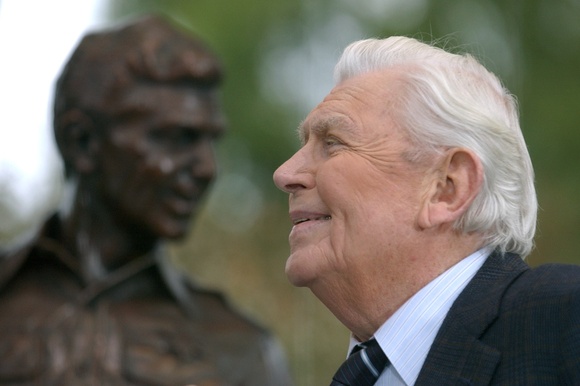
The three men who represent the best of the modern South to me are a politician and two humorists: Terry Sanford, Justin Wilson and Andy Griffith. With Andy’s passing yesterday, the final member of this trio has departed, leaving the South and the entire nation richer for their time with us but profoundly poorer and sadder for their departure.

Terry Sanford was a man who devoted his entire adult life to public service. By his contemporary writings we can see that he was struck during his service in the Second World War by the horror he’d seen visited on specifically-targeted minorities. He recognized the behavior, of course, and he returned dedicated to establishing fairness and equality in his native North Carolina.  He became a socially active lawyer, then one of the South’s young ‘Civil Rights Governors’ and even ran for the presidency in 1964 on that platform. His career moved the needle on the nation’s and the South’s attitudes toward civil rights and race relations. He served as the president of North Carolina’s Duke University, where I came to meet him, then became the US Senator representing the state.  He was warm, hospitable, humorous, humane and gracious, even in challenging moments.  Duke students, during his tenure as president, fondly called him ‘Uncle Terry’ without even the slightest hint of mocking humor. He was exactly that, a kindly but firm uncle to all of us.

Justin Wilson was a humorist and chef who introduced America to Cajun culture and food. He knew of what he spoke and cooked. His father had been Louisiana’s agricultural commissioner. He knew everyone, every nook and cranny of the state, every farming family, their crops and special seasonal foods. He peppered his stories and recipes with his unique turns of phrase, maybe those he’d heard from others; they aren’t well served on the page but must be heard. His cooking was easy, generous, neighborly, his portions ample to a fault. His humorous recordings aren’t often fall-down funny. They’re meant, like his food, to be slowly savored, shared with friends, part of a fully social experience. You don’t eat Justin Wilson’s food take-away. You sit at a picnic table with your family and friends; in any event, his portions would literally kill you if you tried to eat by yourself. You best enjoy Wilson’s dishes in the Southern manner, in a big group of drinking, talking and laughing fellows. That’s the way to fully appreciate his stories of Cajun life too.

And now, to Andy.

When I lived in his beloved North Carolina, a local TV station aired two back-to-back episodes of ‘The Andy Griffith Show’ every single day. More days than not, during my years in Durham, I watched. When I had the early shift, I’d even put it on in the college bar where I worked. I came to appreciate the show’s humor, humanity and even its glacial pace, but came to appreciate Andy Griffith even more. His character was compelling, of course. After all, who wouldn’t want a town sheriff, a neighbor, a dad like Andy? Surprisingly smart. Generally happy. Pleasant. Musically talented. Gentle and kind. Charming. Dedicated to his town, family and friends. But I came to understand the character was only part of the package. Andy himself, that’s Andy Griffith not Andy Taylor, had real chops as an actor. Over time, I searched for and found some of his film work. I loved the high-energy, goofy, almost innocent barracks humor of ‘No Time For Sergeants’ but was completely unprepared for and blown away by his folksy yet sinister and purposefully manipulative turn in Elia Kazan’s ‘Face in the Crowd.’ A lesser actor couldn’t have pulled it off, couldn’t have gotten close. Yet, even after ‘Face,’ he was rarely appreciated for his acting talent. Andy Griffith wasn’t afraid to show the dark side of the South’s famous warmth and charm. Turning on the fake 100-Watt smile at will. Two-faced asides. Conscious betrayals of friends. Greed. Lust. Alcoholism.

And, in the process, he left us a cautionary tale about trusting the authenticity of populist political movements, a lesson we’d be very wise to heed today.

Goodbye, Andy. Together with Terry and Justin, you will be sorely missed.

Let’s Grow Up

In a nutshell, here’s the pathetic state of political rhetoric in America. We’re good, others are evil. Obama is the new Hitler. We Democrats are at war with Republicans. I’m the only true believer. I’m the only fair one. Presidents control gasoline prices. The right man in the White House could prevent Iran from developing nuclear weapons.

Judging by the emptiness and stupidity of our political speech, candidates and their highly-paid consultants must think the American electorate is made up almost entirely of know-nothings and simpletons.

Some examples, by no means the most egregious, follow.

Mitt Romney, GOP presidential candidate and former governor of Massachusetts:

“I believe America is an exceptional and unique nation. President Obama feels that we’re going to be a nation which has multipolar balancing militaries. I believe that American military superiority is the right course. President Obama says that we have people throughout the world with common interests. I just don’t agree with him. I think there are people in the world that want to oppress other people, that are evil.”

Anti-Obama website:

“Barack Obama, the first black president, proved to millions this year that he is either trying his best to lead the nation during the worst economic crisis since the Great Depression, or he is the modern-day incarnation of Adolph Hitler pushing his Socialistic agenda. One of the two.

In 2010, Barack Obama made a number of political compromises while still trying to pursue many of the reforms laid out during his 2008 campaign. Also, he was a totalitarian monster comparable to the perpetrator of one of the worst genocides in history…Barack is either a president who passed a comprehensive health care measure despite staunch opposition from powerful private interests, or a radical-Islamist sympathizer bent on systematically dismantling American democracy and eradicating all human liberty.”

James Hoffa, president of the International Brotherhood of Teamsters:

“Everybody here has a vote…If we go back and we keep the eye on the prize, let’s take these sons of bitches out and give America back to America where we belong…We didn’t declare war on them, they declared war on us. We’re fighting back.”

Rick Santorum, GOP presidential candidate and former US Senator representing Pennsylvania:

“It really has to do with what your principles and what your core is. I have a core…. And that’s a sharp contrast with Mitt Romney, who was for RomneyCare…. this is someone who doesn’t have a core. He’s been on both sides of almost every single issue in the past ten years.”

Barack Obama, president

“Lot of the folks who are peddling these same trickle-down theories, including members of Congress and some people who are running for a certain office right now, who shall not be named, they’re doubling down on these old, broken down theories.”

Newt Gingrich, GOP presidential candidate and former Speaker of the House:

“We paid $1.13 on average during the four years that I was speaker. When Barack Obama became president, we paid $1.89 that week…That’s right, President Obama has taken us from $1.89 to the most expensive gasoline on average we have ever had.”

Mitt Romney, GOP presidential candidate and former governor of Massachusetts:

“Finally, the president should have built a credible threat of military action and made it very clear that the United States of America is willing, in the final analysis, if necessary, to take military action to keep Iran from having a nuclear weapon. Look, one thing you can know and that is if we reelect Barack Obama, Iran will have a nuclear weapon. And if we elect Mitt Romney, if you elect me as the next president, they will not have a nuclear weapon…And our current president has made it very clear that he’s not willing to do those things necessary to get Iran to be dissuaded from their nuclear folly.”

Sunday Morning

A long walk on the cliffs above the foggy and foamy Pacific. Quiet and cool.

No one to talk with. Just DeeDee and me. Although we walk not three strides apart, both alone, in our own ways, with our thoughts.

Mine have been fierce and jumbled lately. Trying hard to make sense of things that may have no resolution. My hands are thrust deep into the pockets of my shorts. Head down. Eyes on the sand under my feet. Thinking unsettling thoughts.

But then DeeDee and I both look up, hearing the unmistakable whoosh of birds above, just in time to see a ruler-perfect “V” of pelicans gliding past. I can’t take my eyes off them and my feet stop dead.

The sound of the wind and the crashing waves give me a moment of peace. I give a silent thanks for the moment.

Look Out For This Man

[NOTE: This post is very different than what you’ll typically read on this blog but it addresses something that is personally very important to me and something I will ask your assistance with at its conclusion. Thank you.]

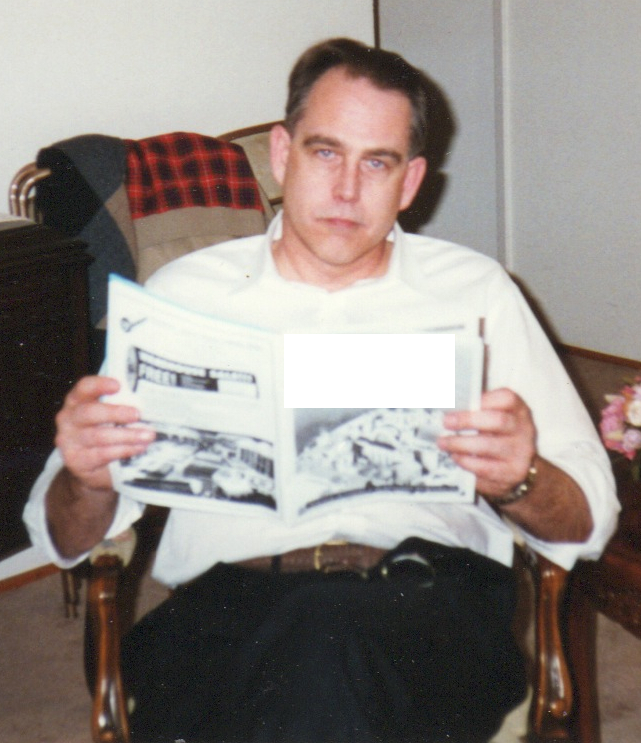
The 10 year-old photograph (above) is of a man named Ken Walter (b.@1952). He spent much of his life in Michigan, then several years in the San Francisco Bay Area. He may be in Florida now, although I’m not certain; he could be just about anywhere.

Ken Walter represents himself as a contractor who specializes in remodeling kitchens but is, in reality, a fraud, a thief and an abuser of women, especially older women. Although he has had several victims, I have come to learn the facts of one case particularly well.

One elderly widow was approached by Mr. Walter, who was then her neighbor. After her husband passed away, Walter befriended her and, little by little, gained her trust. At first, Walter offered to pick up grocery items and do small tasks around her house. Eventually, he successfully pitched her the idea of a complete custom remodel of her kitchen, based on his self-stated vast experience designing and installing commercial kitchens in Michigan. For the price of a truly custom remodel, she got an ill-fitting installation of pre-made cabinets and off-brand appliances.

Not the nicest thing to do to an elderly widow but certainly not the worst part of this story.

The widow realized, of course, she hadn’t gotten what she thought she’d agreed to but she was both flattered by Walter’s personal attentions to her and mollified by his promises of great deals on future purchases of appliances and home works.

Eventually, they became closer friends and even went out socially and traveled together. She introduced him to people who could help with his business and he introduced her to his children, whom she hosted several times for meals at her home.

Walter habitually and purposefully waved recent copies of the financial press around, periodicals like Barron’s, the Financial Times and the Wall Street Journal. He spoke about financial matters, something she had no personal experience in and didn’t feel particularly comfortable speaking about, with great confidence. Her trust in him continued to build, even in things unrelated to his stated areas of expertise.

The widow was then pretty well-fixed financially. By the time he passed away, her deceased husband had paid off their mortgage in full, had saved a fair amount in stocks and had a better-than-decent pension from 40 years of working for the same company.

Walter eventually convinced the widow the return she was getting from her stock portfolio was anemic relative to what he could generate for her. He manipulated, coerced and cajoled her into transferring her entire account, a lifetime of savings, into a fly-by-night self-service retail stock account he got himself signatory access to by telling this widow he needed it to execute trades on her behalf.

Walter also confused and flustered the widow by engineering a false crisis, so she hastily signed papers she didn’t truly understand; they turned out to be for a loan against the equity in her home, also including Walter’s signature. Because he’d obtained full access to the widow’s financial information, he took out several credit cards in her name and promptly ran up significant balances on them, which, of course, went unpaid.

Unlike the widow, you likely know where this story is headed.

Before she knew what had happened, her stock portfolio was completely liquidated and, worse still, she lost substantial equity on her only remaining asset, her home. Her losses totaled well over $750,000, and her credit was ruined. She entered her 80s, not with the financial security planned for by her deceased husband, but with staggering debts and few assets.

Walter slipped away. The widow was so filled with personal embarrassment and shame, she would not talk to authorities about Walter, in fact, could scarcely bring herself to tell even her own family.

But this is a decision she deeply regrets today, because Walter was consequently allowed the freedom to potentially victimize others.

And this is why I’m asking for your help.

Will you please forward this post and Walter’s photographs (The photo below is more current.) as broadly and to as many people as you can? If trivialities like YouTube videos of dancing cats are seen by hundreds of millions, I believe we can certainly do as well for this more important purpose.

Mr. Walter should be found: (1) so he can be brought to justice, and (2) so he can be prevented from abusing more people. His photograph should be seen by as many people as possible so no more widows lose their life savings to this vile and cold-blooded thief.

Not Off the Hook

Yesterday, a Pennsylvania jury convicted former Penn State assistant football coach Jerry Sandusky on 45 counts.

Over the past 12 months, since the Jerry Sandusky case came to broad public awareness, I’ve written 3 pieces about him, Penn State and sexual abuse:

  1. The first discusses Joe Paterno and Penn State.
  2. The second takes a look inside the PR machines that get built around these cases.
  3. The third puts the case into the broader context of the year’s PR disasters.

While I am gratified that this particular child molester has been convicted and may never be free to molest again, I think we should all be very cautious about feelings of relief. A great many people knew about Sandusky’s behavior for a very long time before his arrest and did nothing. In my professional experience with sexual abuse, which is considerable, this is often the case, despite what would-be Rambos assert afterward.

Most people will still go into denial, look away, or become impotent bystanders when faced with evidence of sexual abuse.

We can take some measure of comfort from Sandusky’s conviction, but it’s all for naught if we remain bystanders when evidence of abuse presents itself in our own lives.

Three Birthdays

The story may be apocryphal, but Ken Burns was supposed to have said that, to understand this country, one must understand three things: the Civil War, baseball and jazz. While I agree, I might suggest another trio of important keys to understanding the American character.

Three exemplary American institutions had recent birthdays. Two turned 75, the third turned 68. Together, they’ve shaped and reflected our nation’s identity.

The first is the Golden Gate Bridge. It is, as my friend Chris Forsyth recently reminded me, very American to look at the distance between two seemingly unlinkable points, then design and build a bridge between them. The bridge was, at the time it was first suggested, thought impossible to build. The Golden Gate Straight is long and naturally very deep. Contemporary bridge building techniques were unequal to it. The design was, therefore, necessarily revolutionary. It is also aesthetically revolutionary. And it has stood the test of time. It remains breathtaking. It is one of the great human constructions of all time, and is rightly an icon, not just of San Francisco, its home, but of the entire country.

The second institution celebrating its 75th birthday is the Sigmund Stern Grove concert series. For 75 years, the grove has hosted a series of extraordinary open-air concerts during the summer months. Always open to the public. Always free. The grove was purchased by a wealthy San Francisco family (They were relatives of Levi Strauss, of Levi’s jeans.) and given to the city to be held in trust and developed with the express purpose of providing a venue for the free entertainment of the city’s people in an open, natural environment. Through the Stern Grove concerts, many people have had their only opportunities to see symphonic music, grand opera, traditional American and world music. The grove is an example of those times in which business elites thought and gave to make their communities better, stronger and more hospitable to their cities’ working class.

The third institution might, more than any over event in the history of this country, be responsible for America’s democratization. Before the Second World War, about 10 percent of Americans, typically the monied elite, went to college. That changed when, 68 years ago, president Franklin Delano Roosevelt signed the GI Bill, giving millions the access, for the first time, to higher education, and many many more people the expectation that higher education was accessible and affordable. Much of our political, social and economic progress as a nation is directly due to this one policy initiative.

Happy birthday to these three great American institutions. Time to make some more films, Ken.

Big Brains

Over an entrance gate at Philadelphia’s University of Pennsylvania is the inscription ‘We will find a way, or we will make one;’ that’s the English translation of a quotation from the Roman general Hannibal, who would neither be turned back by enemies nor terrestrial boundaries in pursuit of his goals. [For all those Ivy League intellectual showoffs, however, the Penn inscription is actually in the original Latin ‘Inveniemus viam aut faciemus.’]

And so the inscription remains, since it inspired the great Benjamin Franklin, who founded the university in 1740, and it has continued to inspire work at the university since.

There’s a very big room in an engineering building on the University of Pennsylvania campus that houses an artifact. And, as is frequently the case with so many tools built for war, its most significant and lasting contributions have been toward peaceful purposes.

But, I’m getting ahead of myself.

In the 1930s and into the first years of the Second World War, it became very clear the military desperately needed more of what would now be called computing power to better complete the increasingly complex tasks of using even the contemporary technology of war.

To illustrate the importance and challenge of accurate calculations in wartime, just imagine, if you will, the number of computations it would take to fire a weapon at a target. Now, imagine how many it would take if the target were moving. Imagine if the weapon itself was moving. Imagine if the motion of both weapon and target were irregular. A concrete example? One ship firing at another, both making evasive movements in a rough ocean with lots of wind.

So, in response to these sorts of challenges, military engineers built what is widely thought of today as the world’s first super-computer, ENIAC [Electronic Numerical Integrator and Computer].

The machine itself is huge; it literally takes up every inch of a very large room about the size of a fair-scale lecture hall. ENIAC was programmed by physically connecting cables between ports in the machine’s exterior structure. Programmers rolled heavy rubberized cables on large wheeled carts around the room and plugged them in as directed by sheets on a clipboard.  New problem? Better give it a little time. New sheet, new alignment of cables.

Still, ENIAC was thought of as a marvel, as it was a huge improvement over what preceded it. Many subsequent calculating machines followed ENIAC, each with greater capacities and higher levels of computing power. Before long, there were ‘supercomputers’ developed at other American universities, and some in several other countries as well. A contemporary forecast by a highly regarded engineer supposed that, one day, there might be a powerful computer in nearly every country on the globe.

That’s one computer per country; this brave forecast was just slightly under the actual global penetration of computers, which currently stands just under 2 billion.

I guess, though, we can’t be too hard on the original forecaster. Economic, industrial and technical conditions have changed just that radically since the late 1940s. Even your phone, much less your computer, is faster, easier to obtain and use, has more computing power and capacity than ENIAC did, and all at a fraction of the cost.

This distance between prediction and reality is nothing new, of course. As our societies continue to progress and evolve, as we push forward with new things, both found and made, we will continue to outstrip projections of those who must live in the hard and limited reality of the present day.