Happy St. Patrick’s Day, Debbie

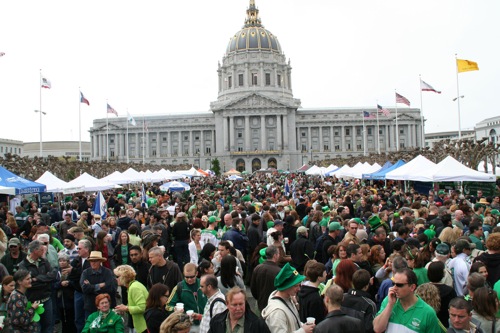
About 30 years ago, a buddy and I went out to ‘celebrate St. Patrick’s Day’ in San Francisco.

We started on Front Street, where the bars would close the block and hold a huge outdoor party. As the late afternoon became evening, we enjoyed the warm hospitality of Harrington’s, the Royal Exchange, even Shroeder’s (German, Irish, what’s the difference?).

Before long, we’d migrated west to Geary and the heavily-Irish Richmond District bars: Pat O’Shea’s, Ireland’s 32, the Abbey Tavern, and others.

Complete happenstance – in the couple of blocks that separate these bars was a tattoo parlor my pal and I kept passing as we went from place to place. It was on the third trip, as I remember, that one of us had the brilliant idea to get tattooed that night.

Hahahahahahaa.

A few more passes, then we looked at each other with that slack-jawed stare of idiots that meant we would, in fact, go in and get tattooed.

We went in and had to wait; the one artist on duty was busy branding a hoodlum. He told us to look at the designs that covered the walls and pick something out while we waited.

And here, precisely, is where our drunken stupidity evolved into inspired lunacy.

My friend and I were both involved in fairly serious relationships at the time. And for some reason I can’t for the life of me explain now, we thought it would be absolutely HI-larious to get completely grotesque tattoos with the names of other women on them. And we picked random names to permanently affix to ourselves.

I selected the name ‘Debbie.’

Now, I didn’t know anyone named Debbie particularly well, had never dated a Debbie, had no specific intention of ever doing so.  To us in that moment, that was the point.

Hahahahahahaa. Such, my friends, is the stupidity of drink.

We sat on a big red leather couch and waited for our artist to finish a very elaborate piece inspired, perhaps, by Albrecht Durer’s owl, on his client’s left butt-cheek. And I settled into a very self-satsfied state of amusement.

Out of nowhere, my pal said:

“Oh. Oh, no. We’re getting out of here.”

“What?” I said.

“We’re leaving.”

“No way!”

“Read that,” he said, pointing at a large poster entitled, ‘How To Care For Your New Tattoo.’

To the best of my blurry ability, I read:

Point 1: If swelling persists for more than 3 days, see your doctor immediately.

Point 2: If puss or other discharge oozes from the area of your tattoo, see your doctor immediately.

Point 3: If yellowing occurs in the skin around your tattoo, this could be Hepatitis; see your doctor IMMEDIATELY.

And on it went. Honestly, I never got past Point 3. Out we went, and never looked back. But for that hoodlum, but for my friend, I’d be going through life with a hideous tattoo and a stranger’s name on my upper arm forever.

So, a couple of things. Happy St. Patrick’s Day, Debbie, whoever you are. And thank you, Marty. I owe you, man.

Westward Ho

When you travel alone, you’re prone to meet more people, see more unusual things, find more adventure. At least, I am.

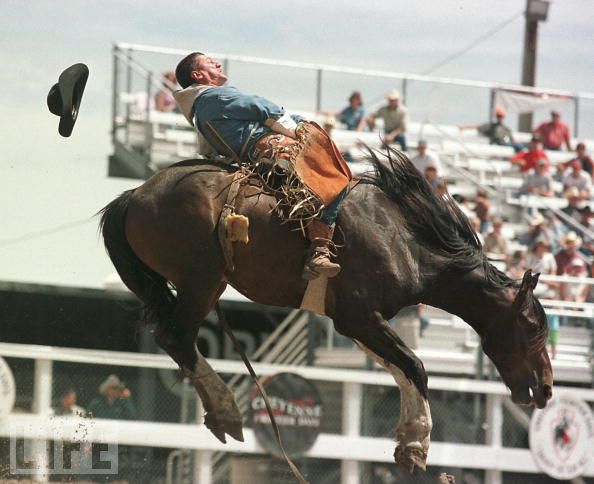
Case in point: Cheyenne, Wyoming.

Some years ago, I was driving across country, taking my time and seeing things, meandering my way west after living in the East for years, on my way back home. It was summer and I was going anywhere my map, money and little Renault would take me.

After a long, hot day of driving (no A/C in the old Renault), I pulled into Cheyenne and discovered, to my annoyance, that it was Pioneer Weekend or Frontier Days, or whatever they call their annual celebration of cowboying. The town was overfilled with loud and, by all appearances, drunk men dressed identically – new big hats, new plaid shirts, new tight jeans, big belt buckles, boots, etc.

I’m no cowboy myself, but even I can recognize the look of phonies. These weren’t real cowboys but guys dressed up to go to a cowboy party weekend, and I didn’t want any part of it. I was hot and tired and not used to the altitude and in a crappy mood. So, I decided to roll right through town and keep on going.

Before long, I saw this old hotel on the town’s outskirts. Seemed nice enough and like a place to explore a little. I checked in, had a nap and a shower. Feeling much more human.

Found the hotel’s bar and, to my happy surprise, there were a lot of people, some dancing to a live band, a solid vibe. And the band was even pretty good, biting into some danceable jazz/blues. It was a place I could hang out, I thought, so I took a stool at the bar and ordered a drink.

Within a very few minutes, I was talking with a couple of guys from the nearby Air Force base and another few locals. Everybody was from around Cheyenne and nobody was wearing brand new, department-store cowboy outfits; good signs.

This Cheyenne isn’t so bad, I thought to myself, once I found the real people.

After an hour or so, I got into a conversation with an older guy that went something like this:

Guy: So, you from around here?

Me: No, San Francisco. On my way back there right now. You?

Guy: Yup, I’ve lived in Cheyenne all my life. 55 years. Was married for 19 years before my wife left me. That’s when I had my first homosexual relationship.

Sorry, what?

It was at that exact moment I felt a veil had been lifted from my eyes. I looked around this bar I’d been enjoying. How’d I missed it? The couples dancing to that pretty good band were all men. The people sitting at tables and in booths were all men. The guys I’d been drinking with at the bar? Men.

Somehow, I’d found a gay bar in Cheyenne, Wyoming. What are the odds? And, further, having found it, what are the odds I wouldn’t have even noticed?

Well, I wasn’t about to bolt out of the place, which would have been weird and rude, so I stayed for a couple more drinks. I even got invited to the symphony by a guy I was told was one of Cheyenne’s top lawyers. (He called it a “firm function.”) I was flattered, of course, but I had to get back on the road home the next day.

See what you expect to see; perspective is a funny thing, alright.

Nukes for Iran

[Please also see my subsequent posting: https://sanfranciscoba.wordpress.com/2012/06/05/nuclear-bullsht/]


The atomic bomb was conceived and created 60-something years ago in the minds of men and the high desert of New Mexico.

Almost immediately, the very men who made it had second thoughts. Some tried to talk the president, first Roosevelt, then Truman, out of its deployment, or even disclosure.  It was reported that as nuclear physicist J. Robert Oppenheimer watched the detonation of the first atomic bomb during a test, he recalled words from the Bhagavad Gita: ‘Now, I am become Death, the destroyer of worlds.’

The bomb was, of course, deployed to devastating and horrific result. And, in the contrary nature of humankind, people were both repulsed and irresistibly attracted by the blinding light. The United States had it and everyone else wanted it. We tried our best to hold the secrets safe but, in the end, it was a fool’s errand.

The Soviet Union got it. Others got it too. Science works that way.

The sad truth is, any country on earth able and willing to devote adequate resources can have a nuclear weapon. No president, no political party, no economic sanctions, no alliance of nations, no army can prevent it. That is a stone-cold fact. Pretending otherwise is either (1) whistling past the graveyard or (2) ugly pandering for votes.

We have let the nuclear genie out of the bottle and, armies and sanctions be damned, he will not be returned. The prescient writings have been fulfilled, Dr. Oppenheimer.

‘Now, I am become Death, destroyer of worlds.’

Places of Another Time

When San Francisco went from sleepy Spanish outpost at the far-distant end of the American continent to the West’s first megalopolis, following the 1849 Gold Rush, the population skewed male, as demographers would say. Boarding houses rented beds, or portions of beds, and centrally-served, plentiful and simple meals to a diverse crowd of sailors, miners (and miner wannabes), soldiers, salesmen, bankers, cops, politicians.

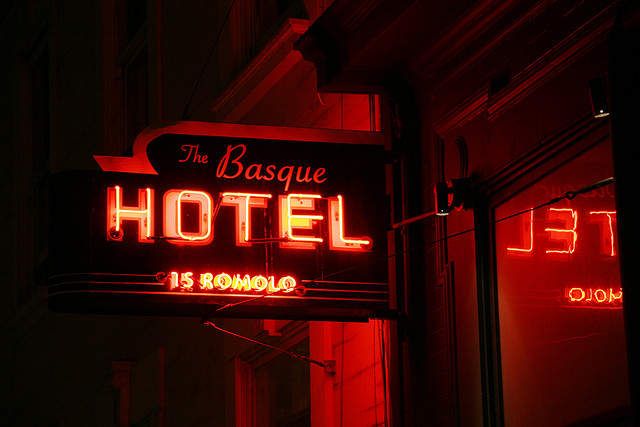
Few still exist, or do so in name only, like the Basque Hotel, formerly an actual hotel with large dining room, now only a restaurant.

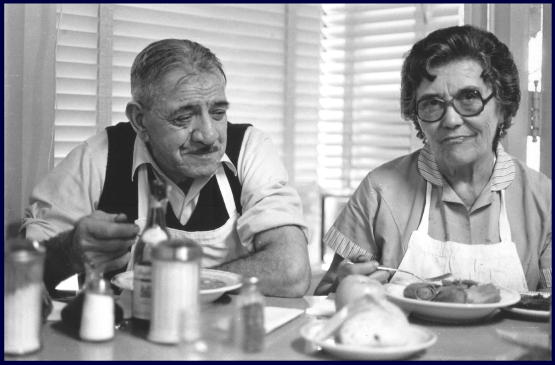
Thus began a San Francisco tradition of restaurants that served generous, family-style food. And now, some 150 years later, that tradition maybe breathing its last. Many places have disappeared and the few that remain do not appear to be long for this world.

Perhaps the king of this style of restaurant in San Francisco was the Gold Spike, which closed about six years ago, after a run of 86 years.

It was a meeting place, watering hole, feedbag, diner, neighborhood hall, party venue, lonely hearts club, museum of San Francisco history, and so much more.

My dinners at the Gold Spike were all memorable affairs. I never left without meeting people – visitors and natives alike – hoisting a few drinks, maybe sharing a dinner table. As I understand it, the Spike was unceremoniously tossed out by its landlords, so there was little time for proper goodbyes and thank yous. I do wonder if I’ll ever see those wonderful old photos again, feel the same warmth of welcome, or sit amongst the same oddly diverse crowd.

Another place I loved that has disappeared was La Pantera. The sign is, bizarrely, still there, but the place has long since departed, leaving North Beach a somewhat poorer place.

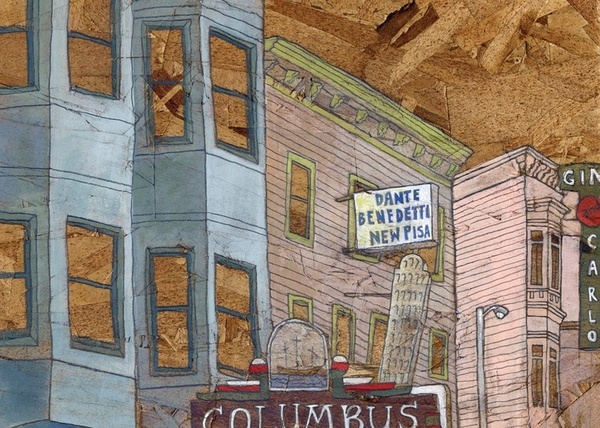
Also gone is Dante Benedetti’s New Pisa, where I had my bachelor party dinner. The New Pisa, as one reviewer suggested, “…brings to mind the essence of all that North Beach was when ‘Jolting Joe DiMaggio’ was a young man working in his family’s better known restaurant closer to the Wharf.” It was also a place where a young student could get spaghetti dinner for $5, plus a buck for a jelly-jar glass of cheap Italian red.

Two places I’m fond of carry on the tradition, Capp’s Corner and the US Restaurant.

Capp’s food can be up and down, but the atmosphere is always noisy and fun; much of the credit due to its proximity to Club Fugazi’s Beach Blanket Babylon. Pre and post show crowds keep Capp’s fun and lively.

The US Restaurant (US doesn’t stand for United States, by the way) has good food and a great family feeling, reminiscent of the best old Italian restaurants in San Francisco but isn’t really family style. Still, it does my heart good to see it busily occupying its latest spot on Columbus. It is still a great place to meet new friends and take in the smells and atmosphere of the San Francisco that was.

If you try very hard, it is still possible to find original, quirky, happy places to eat in what once was an eater’s heaven-on-earth.

Goodbye to a Philadelphian

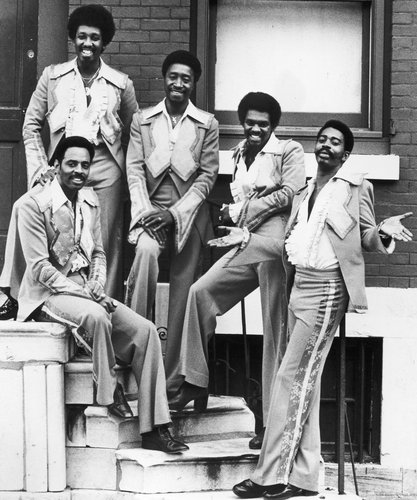
Jimmy Ellis (third from left, above) started, like so many of his generation and place, singing in church. But it wasn’t long before he and friends gathered at favorite streetcorners in his hometown of Philadelphia. (The tradition of streetcorner vocal groups continues in the City of Brotherly Love.)

The cops in Philly called these boys, huddled around trash-can fires for warmth and attention, tramps. Ellis famously remarked that, if he and his singing mates were going to be tramps, they were at least going to be high-class tramps. So, they added a second “m” to their group’s name and became The Trammps, a funky-ass soul and disco group that recorded their first album in 1975. By 1977, their disco mega-hit, “Disco Inferno,” could be heard literally everywhere – in discos, of course, on radio, in cars, schools, around city streets, and on TV dance shows.

Here’s a video of The Trammps performing their biggest hit, “Disco Inferno,” which they continued to do on tour until 2010. Makes me smile every time. (By the way, be sure to notice the fine threads. Wish I had an orange suit.)

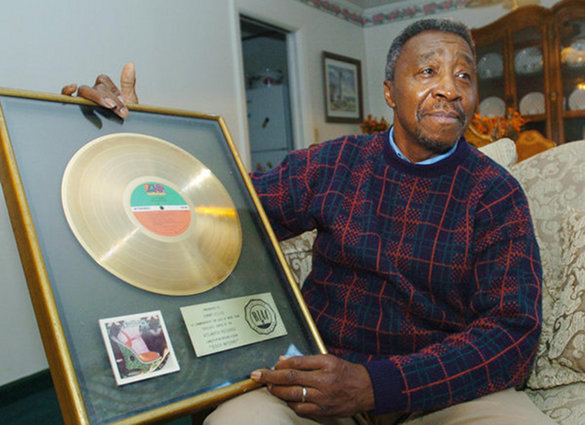
Ellis died last week, at the age of 74, while I was away. I didn’t want to let his passing go by without taking a moment to remember him. Rest in peace, Jimmy.

Looking for Real

What may seem like a short detour…

There’s one historic bar in the Union Square district of San Francisco (actually, there are hundreds, but I’m talking about one historic bar in particular), called The Gold Dust Lounge, that’s served drinks to a quintessential only-in-San Francisco crowd of sailors, businesspeople, visitors and neighbors for generations.  Its landlords have recently announced a plan to kick it out in favor of a national chain clothing store.

Now, The Gold Dust Lounge hasn’t been the city’s most popular bar for ages, but the plan pissed a lot of people off, resulting in petitions, protests, online and social media tempests, etc. The question is, why did all these people suddenly get interested in a bar few had ever been to, fewer still had been to in years?

I believe it’s because we’re in a state of national authenticity deficit. Everything we buy, eat, watch, or otherwise consume comes from some centralized corporate authority. Our cities are all filled with the same national chain stores and restaurants. We watch non-locally produced entertainment on movie and TV screens. Even amateur-generated online clips are seen by so many people and follow so few memes, they seem mass-produced.

We’re in a search for the authentic, for the real, wherever we can find it – and it seems downright offensive to shutter a real, honest-to-goodness bar so yet another national chain store that sells the same old jeans can move in.

Think about baseball – America’s self-declared pastime – for a second.

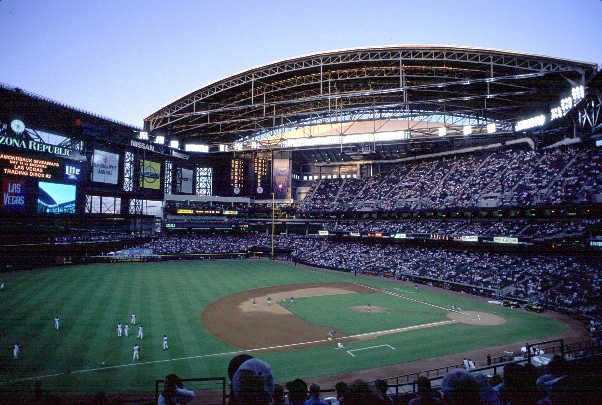
Attendance for Major League Baseball has declined for three straight years, while attendance at Spring Training has grown over the same period.

Those big, corporate-namesake stadiums, filled with untouchable millionaires, are drawing fewer of our fellow Americans.

At the same time, more people are going to Spring Training games, where a bit of baseball’s old vibe still exists. At Spring Training, it’s still possible to get close to players, talk with them before and after games, shake their hands, see them up close – the way fans used to in the majors but aren’t able to anymore.

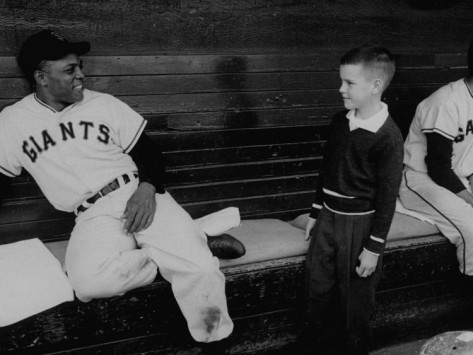
It used to be that ballplayers would live in the town they played in. They’d be seen and known around the neighborhood. They’d stay with a team a long time. They’d be part of team (and town) identity. Whether playing at the Polo Grounds (or later, at Candlestick Park), or stickball with neighborhood kids in the street, Willie Mays was a real Giant.

If I were to advise baseball, or landlords for that matter, about growing a market in these times, I’d say, keep it real. Not that they’ve asked.

Moral Certainty, and Other Fictions

The shadowy group of adolescently sanctimonious hackers known collectively as Anonymous struck at the Vatican the other day, forcing several sites to shut down. In a statement, the group said:

“Anonymous decided today to besiege your site in response to the doctrine, to the liturgies, to the absurd and anachronistic concepts that your for-profit organization spreads around the world.”

This is a philosophy which says: I know unambiguously what’s right and that I will use that consciousness to enforce my greater/better/moral vision upon you. Exactly what the world needs, I’d say. A small group of the self-appointed and self-righteous deciding what content ought to be made available (or not, as the case may be) for the rest of us.

After months of Republican primaries, it’s a principle of behavior the American electorate should be completely accustomed to by now.

Several (all?) Republican presidential candidates have insisted that their particular Biblical interpretations are not only self-evidently accurate, but are also the only possible and appropriate foundations of American public policy. Further, these candidates have expressed the desire to use the full powers available to them, once elected, to coerce behavior they find personally acceptable out of our fellow citizens.

That’s not American, not democratic, and not even civil.

These candidates have a lot in common with the group Anonymous: they believe uncritically in the correctness of their visions and in their right to make the rest of us believe uncritically in them too.

[P.S. – I’m not going to post anything new for the next few days. Don’t take it personally; other pursuits demand my full attention. See you again soon.]

Now What, GOP?

Let’s lay some things on the table to start. I’m not a registered Republican. I’m not professionally involved in any political campaigns. I don’t expect to be offered a job come November, no matter who is elected. I have no skin in the game, except as an American.

I know a great many Republicans; I’ve worked for some, others are close friends, former classmates, neighbors, colleagues, and so on. Most of these are from what is called now the corporate wing, as opposed to the social conservative wing, of the party.

I value the Republican Party, its contributions, its historic leaders. Further, I believe, and I’m not afraid to say it out loud, that our country is better off with healthy political parties of diverse philosophical stripes.

Now, let me say, I am concerned for the Republican Party.

What’s become clear to me is a growing, unhealthy and emotional division in the party between (1) the good-government, main street and corporate, power elite, fiscal conservative party establishment, and (2) the evangelical, social-conservative, grass roots party rank-and-file. And this division is not only unhealthy for the Republican Party, but also unhealthy for the country.

Super Tuesday results show that it is increasingly unlikely there will be a first-ballot selection of a presidential nominee at the convention. This opens the door for all sorts of bad outcomes: back-room deals, drafting another candidate (e.g., Sarah Palin anyone?), swinging the party platform even farther to the right – especially on social issues.

There’s irony here: yesterday’s exit polls, cited in The Hill, showed that voters are most concerned with economic issues. In other words, by staying with what has been the successfully established Republican identity, the party could conduct a campaign with a reasonable probability of connecting with the issues that matter most to Americans. This could be an absolutely winnable election for Republicans.

Instead, Republicans are allowing their primaries to be swallowed up by inherently divisive candidates and the social issues they crow about, like the New Testament foundations of American government, contraception, same-sex marriage, etc.

Who benefits from any of that? Neither Republicans nor our republic.

A Super Tuesday? Not So Much.

Today, of course, is Super Tuesday, when Republican presidential primaries are being held in Ohio, Georgia, Massachusetts, Tennessee, Vermont, Virginia, Oklahoma, Idaho, North Dakota and Alaska. We’ll know soon enough whether the eventual nomination of Mitt Romney will be again delayed by the fringe of his own party.

Let’s check in about that tomorrow.

Last night, I re-read Choose Me, a wonderful late-night book (lots of pictures, few words) by brilliant photographer Arthur Grace. Grace captures the major presidential candidates of 1988 – you may remember: Bush (senior), Dukakis, Gephardt, Dole, etc. – in searingly truthful and completely revealing portraits.

Look carefully at these photos and see precisely what candidates work so hard to hide: boredom, disdain, insecurity, surrender to the inevitability of loss, lack of focus, immaturity. Grace’s work is an eye-opener, all the better for a bit of chronological and emotional distance from the campaign and the candidates.

Especially in this era of over-produced events, pre-packaged candidates, and sound-bite communication, you can see that plain old still photography gives us a way to see inside someone’s character and intellect that we in the general population don’t often have; short of being on the inside of an actual campaign, this is as close as most people are ever likely to get.

What might unguarded photos of today’s candidates tell us? What do these tell you?

Newt Gingrich

Ron Paul

Mitt Romney

Rick Santorum

Another Day, Another World

Yesterday, San Francisco was brilliantly, extraordinarily sunny and mild; it brought out the happiest and best in us. You can read all about it here.

Today? Somewhat different story.

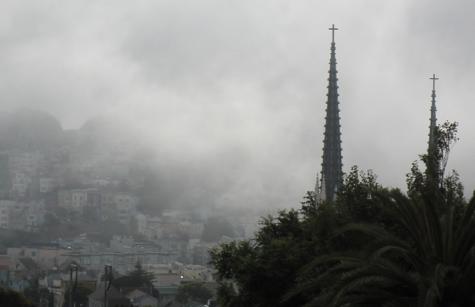
Fog, thick and moist, obscuring neighboring houses, not just the city’s landmarks, is blowing in from the great and mighty Pacific. Car headlights are on, for all the good they do. Kids bundled tight, fighting the cold and wet wind on their way to school.

The dog and I will brave the cliffs overlooking the ocean for our walk. I’ve decided on four layers – cotton, cotton, fleece, windbreaker; it will still likely be a fruitless attempt at staying warm. Once the moisture finds an opening, you’re done for.

Oh, and then there was this morning’s little earthquake. Yes, we’re all fine here. Thank you for asking. To be honest, a 4.3 earthquake, as my friend King Kaufman said earlier, doesn’t even get us out of bed.

As much as it was right to give thanks yesterday for the sun, I give thanks today for the fog, just another expression of life’s beauty. Earthquakes, not so much.