Now What, GOP?

Let’s lay some things on the table to start. I’m not a registered Republican. I’m not professionally involved in any political campaigns. I don’t expect to be offered a job come November, no matter who is elected. I have no skin in the game, except as an American.

I know a great many Republicans; I’ve worked for some, others are close friends, former classmates, neighbors, colleagues, and so on. Most of these are from what is called now the corporate wing, as opposed to the social conservative wing, of the party.

I value the Republican Party, its contributions, its historic leaders. Further, I believe, and I’m not afraid to say it out loud, that our country is better off with healthy political parties of diverse philosophical stripes.

Now, let me say, I am concerned for the Republican Party.

What’s become clear to me is a growing, unhealthy and emotional division in the party between (1) the good-government, main street and corporate, power elite, fiscal conservative party establishment, and (2) the evangelical, social-conservative, grass roots party rank-and-file. And this division is not only unhealthy for the Republican Party, but also unhealthy for the country.

Super Tuesday results show that it is increasingly unlikely there will be a first-ballot selection of a presidential nominee at the convention. This opens the door for all sorts of bad outcomes: back-room deals, drafting another candidate (e.g., Sarah Palin anyone?), swinging the party platform even farther to the right – especially on social issues.

There’s irony here: yesterday’s exit polls, cited in The Hill, showed that voters are most concerned with economic issues. In other words, by staying with what has been the successfully established Republican identity, the party could conduct a campaign with a reasonable probability of connecting with the issues that matter most to Americans. This could be an absolutely winnable election for Republicans.

Instead, Republicans are allowing their primaries to be swallowed up by inherently divisive candidates and the social issues they crow about, like the New Testament foundations of American government, contraception, same-sex marriage, etc.

Who benefits from any of that? Neither Republicans nor our republic.

A Super Tuesday? Not So Much.

Today, of course, is Super Tuesday, when Republican presidential primaries are being held in Ohio, Georgia, Massachusetts, Tennessee, Vermont, Virginia, Oklahoma, Idaho, North Dakota and Alaska. We’ll know soon enough whether the eventual nomination of Mitt Romney will be again delayed by the fringe of his own party.

Let’s check in about that tomorrow.

Last night, I re-read Choose Me, a wonderful late-night book (lots of pictures, few words) by brilliant photographer Arthur Grace. Grace captures the major presidential candidates of 1988 – you may remember: Bush (senior), Dukakis, Gephardt, Dole, etc. – in searingly truthful and completely revealing portraits.

Look carefully at these photos and see precisely what candidates work so hard to hide: boredom, disdain, insecurity, surrender to the inevitability of loss, lack of focus, immaturity. Grace’s work is an eye-opener, all the better for a bit of chronological and emotional distance from the campaign and the candidates.

Especially in this era of over-produced events, pre-packaged candidates, and sound-bite communication, you can see that plain old still photography gives us a way to see inside someone’s character and intellect that we in the general population don’t often have; short of being on the inside of an actual campaign, this is as close as most people are ever likely to get.

What might unguarded photos of today’s candidates tell us? What do these tell you?

Newt Gingrich

Ron Paul

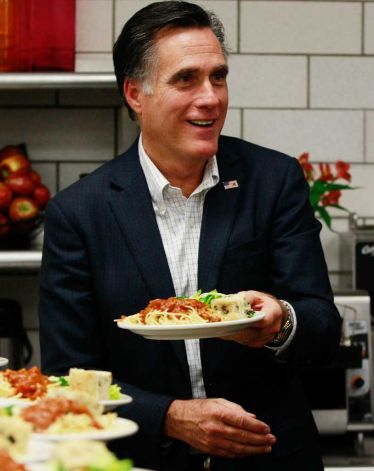
Mitt Romney

Rick Santorum

Another Day, Another World

Yesterday, San Francisco was brilliantly, extraordinarily sunny and mild; it brought out the happiest and best in us. You can read all about it here.

Today? Somewhat different story.

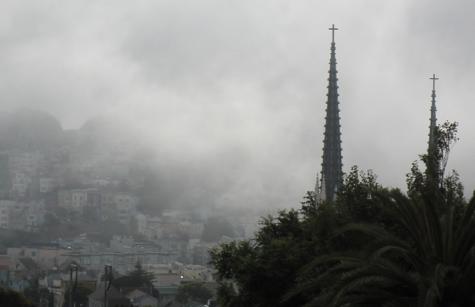
Fog, thick and moist, obscuring neighboring houses, not just the city’s landmarks, is blowing in from the great and mighty Pacific. Car headlights are on, for all the good they do. Kids bundled tight, fighting the cold and wet wind on their way to school.

The dog and I will brave the cliffs overlooking the ocean for our walk. I’ve decided on four layers – cotton, cotton, fleece, windbreaker; it will still likely be a fruitless attempt at staying warm. Once the moisture finds an opening, you’re done for.

Oh, and then there was this morning’s little earthquake. Yes, we’re all fine here. Thank you for asking. To be honest, a 4.3 earthquake, as my friend King Kaufman said earlier, doesn’t even get us out of bed.

As much as it was right to give thanks yesterday for the sun, I give thanks today for the fog, just another expression of life’s beauty. Earthquakes, not so much.

Giving Thanks on a Warm Sunday

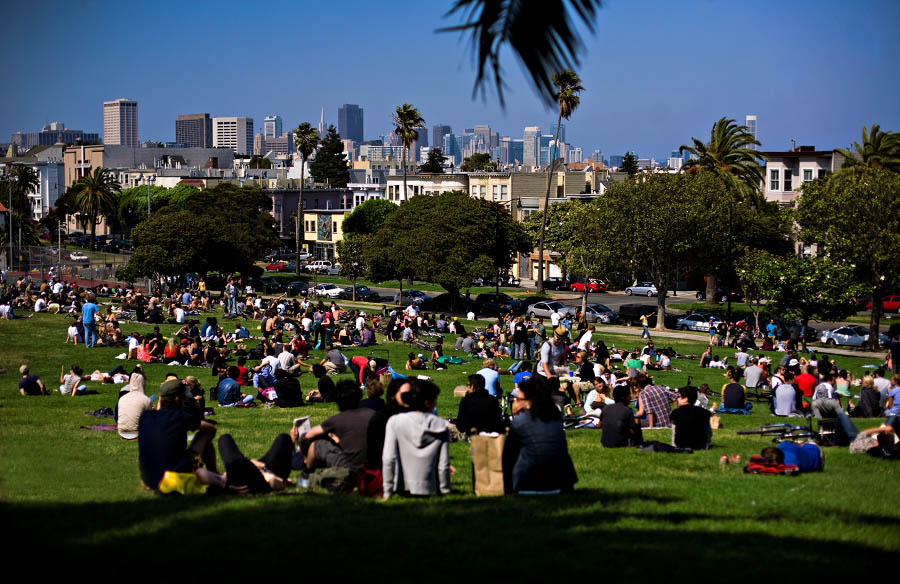
At the far edge of the North American continent, the sun hangs warm and bright in a cloudless sky. A cool breeze drifts in from the blue Pacific, lightly bending the blossom-laden branches of neighborhood cherry trees.

Couples, both old and young, stroll – stroll is the word for walking at this pace – to the greengrocer for dinner vegetables that can be barbecued along with the Mexican-spiced chicken that will go with the just-made guacamole. Friends from the next street over stop to admire the sidewalk chalk-drawing of a house made by the little blonde girl that will someday be selling Girl Scout cookies down by the MUNI station at the corner.

Young men and women sit on rooftops overlooking the Golden Gate, drinking ice-cold beer, listening to music and laughing. The day itself will seem to last forever, then drift into evening, when a designated sub-group will run to Safeway to buy the makings of a picnic supper, which will be eaten on the roof as well. By summer, the roof will be too cold for lounging this way in the afternoon; the fog will chill and wet every exterior surface, so this group, and a thousand others like it, will retreat to old favorite bars. YouTube will play endless 60-second loops of their happily endless day for special friends who know the URL and the 1.8 million friends and friends of friends they’ve forwarded it to.

Bikes, dusty with months of garage storage, are hastily brushed off and ridden to anywhere green. City parks and beaches are filled with people playing and walking their dogs; Frisbees, balls and animals flying every which way until well past the official sunset hour of 6:06 pm.

It is a Sunday to file away and remember nostalgically when things are not so warmly perfect. Life is peaceful and good. The hills of Marin appear to be only spitting distance away. Even strangers nod and say hello.

An Incomplete Satisfaction

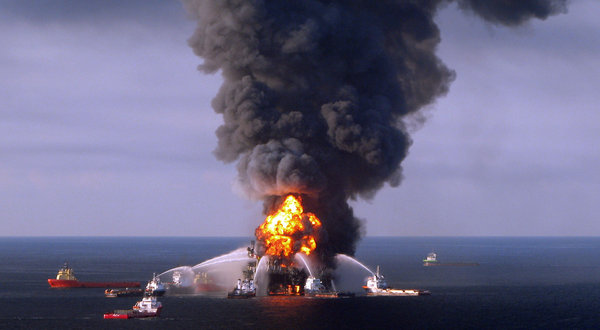
As I’d thought, the settlement between BP, and Gulf residents and businesses will not, it seems, ever come to public trial. The New York Times reports that lawyers for the parties are close to a final agreement and the trial, scheduled to begin on Monday, will be “adjourned indefinitely.” 

The Times article states:

The two lawyers who led the plaintiffs’ steering committee, Stephen J. Herman and James P. Roy, said, “This settlement will provide a full measure of compensation to hundreds of thousands — in a transparent and expeditious manner under rigorous judicial oversight.”

“Full measure of compensation,” perhaps, but this settlement will deny to people whose way of life has been significantly threatened, if not for all intents and purposes destroyed, the opportunity to face BP executives in open court, watch them testify and respond to questioning.

The expedited financial settlement was important for these people, and must have been quite literally irresistible, but it doesn’t come free. As is typically the case, it’s America’s working people who will assume the risks, cry the tears and bear the burden of crises created by the self-serving decisions of others.

Places I Like: The Orkneys

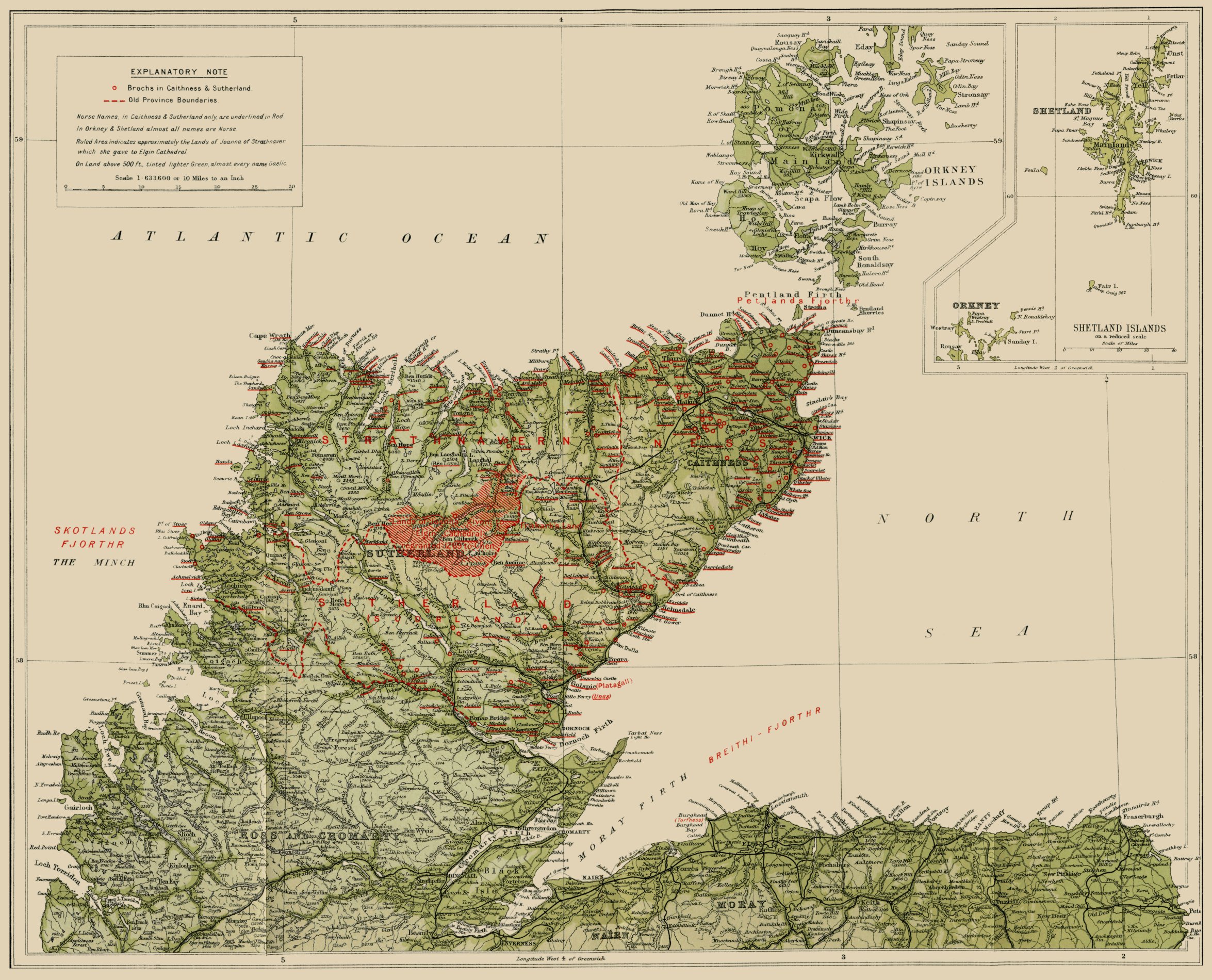
Go to the very northernmost tip of Scotland, to the town of John O’Groats. Get onto the ferry going north. Head across the North Sea. (Prepare for a rough crossing. On our trip, the rails and bathrooms were filled beyond capacity with sickened travelers.)

After losing sight of the Scottish mainland, you’ll soon be surrounded by water, the churning, freezing, foamy waters of the North Sea. Bobbing seabirds. Small, rocky, impossibly carved rock islands. This (below) is called The Old Man of Hoy; he wasn’t bathed in warm sunshine when we saw him, I can assure you.

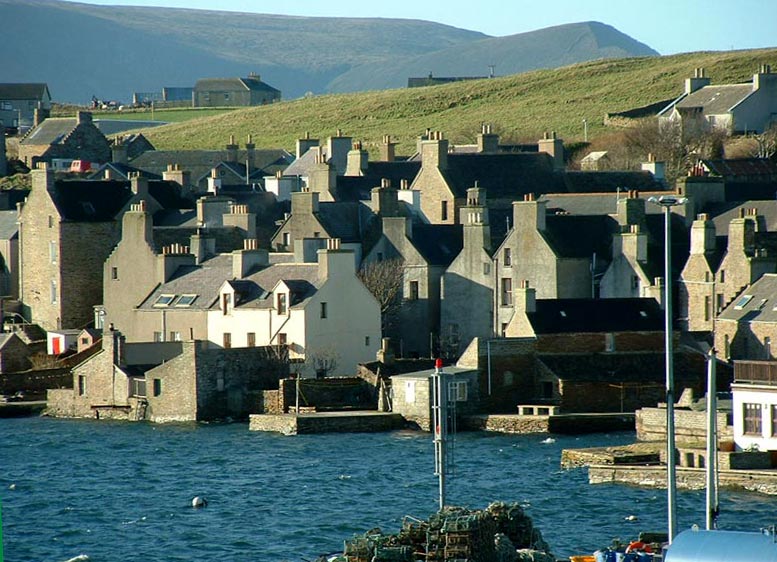
After several hours, the ferry will turn, and sail on the protected side of a land mass. The wind will mellow and the ship will slip into a movie-set harbor of waterside pubs and little houses clinging to the land’s end. Looks just as charming in real life as this photo would suggest.

And then, you’re home.

The Orkneys, a string of islands that’s a part of Scotland, is home to a 12th century cathedral, ruins of a stone age village, Scotland’s Stonehenge, an Italian-built chapel and at least one great distillery.

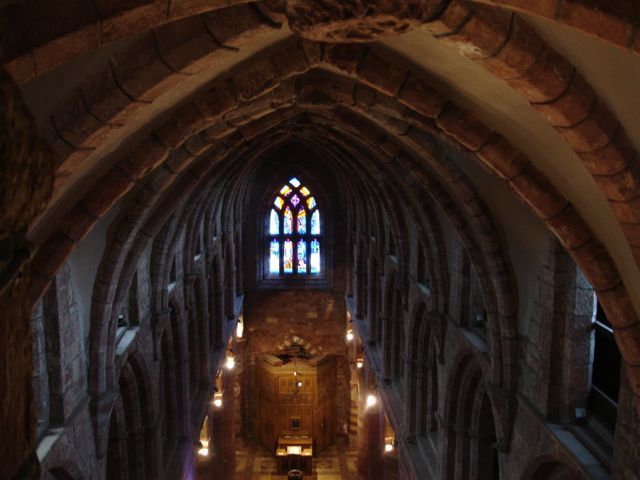
St. Magnus Cathedral, begun in the year 1137, dominates the town center of Kirkwall. It shows the influence of both Celts and Scandinavians, both of whom lived in the islands over the course of their history.

It is breathtakingly beautiful but there is a deliberate feeling of darkness and death. Tombs are prominent…

…as are other reminders of visitors’ mortality. This plaque (below) says “Memento Mori,” remember that you are mortal. As if one could forget it for a moment in this setting.

The natural setting of the islands is extraordinary. You can easily get vertigo by imagining you’re at the end of the earth (which isn’t too far from the truth), at least I could.

Skara brae, a Stone Age settlement, was unearthed by storms, the first in 1850, then in 1924.

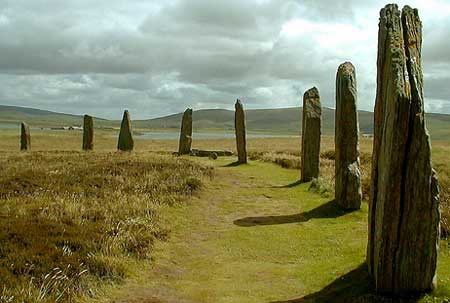
The Ring of Brodgar, constructed about 4000 years ago, has been little studied and even less well understood. The individual stones are huge, by the way.

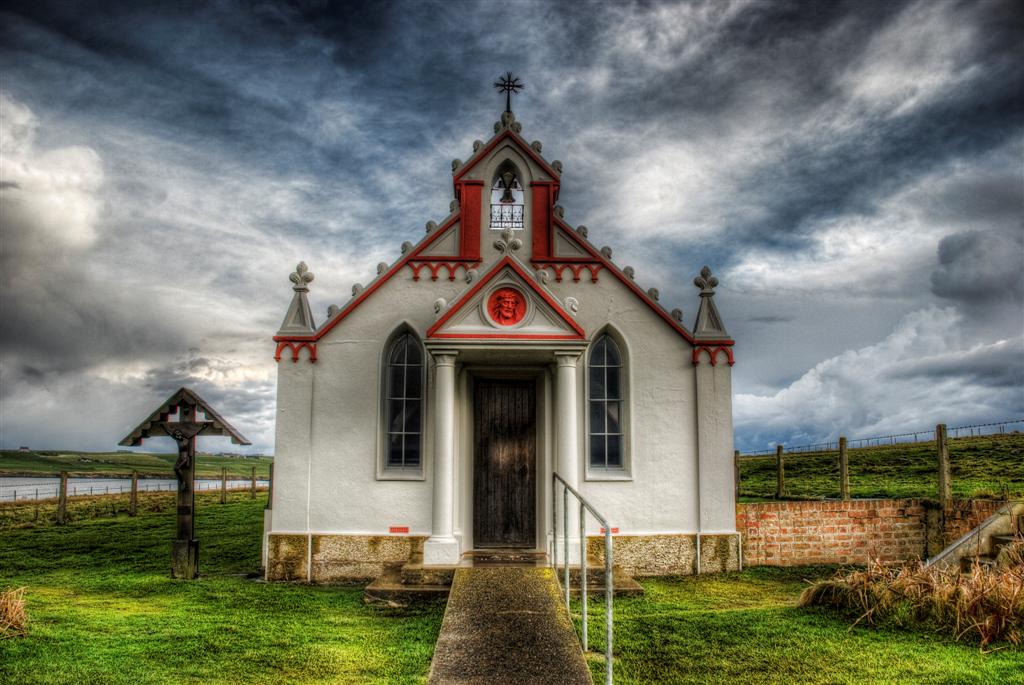
During the Second World War, Italian prisoners of war who were kept on the islands used a quonset hut and built a Roman Catholic chapel that still draws visitors for its incongruous exterior and interior painting.

And then, there’s the whiskey. Did I mention the whiskey?

My advice? Buy several bottles, to gird your loins for the ferry trip back.

Luncheon, Civility, and Other Anachronisms

I had a wonderfully restorative lunch today with a good friend. We talked about many things, some quite contentious; we agreed on lot, disagreed on a few, remained civil always.

Part of my enjoyment was due to the fact that there are fewer and fewer opportunities to openly and candidly discuss and civilly disagree about matters of interest and contention with people of shared good will. Our country has been purposefully cleaved by people whose interests are served by a hostile, mistrustful, and radically bifurcated country.

I’m reminded of this by Olympia Snow’s announcement that she will be leaving her seat in the Senate because it had become too shallowly self-serving and too uncivil. (My thoughts about her departure are here.) I’m also thinking about the death of Andrew Breitbart, who brought uncivil personal attack of his enemies, both online and in the flesh, to a high art form. And, to be fair, I also have to mention groups like Code Pink, who think nothing of shouting down and otherwise proudly interrupting people they disagree with, even during sessions of Congress and other civic functions. Or recent political campaigns based on demeaning and vile tactics that make Americans lose faith, not just in particular candidates, but also in our political system, and each other. (Thank you for this legacy, Lee Atwater, Karl Rove, et al.)

The result is a society more dysfunctional and less humane, one in which we’re split into tribes, and very mistrustful of the other.

Some years ago, I had a long philosophical conversation with a colleague and friend who happens to be a conservative Republican. Our talk crisscrossed many subjects, as conversations will do, at one point landing on immigration.

Eventually, I talked about the experience of my grandparents, who came to America virtually penniless (My grandfather arrived with $10 in his pocket; not hyperbole, I’ve seen the ship’s manifest at the Ellis Island museum. My post about him is here.), about their belief in America, concept and reality, and our family’s history of progress here.

And I choked up, as I’m wont to do when I think and speak about them.

My friend told me it was the first time he’d ever even considered the possibility that a liberal Democrat (me) might just also be patriotic; still among the saddest sentences I’ve ever heard spoken.