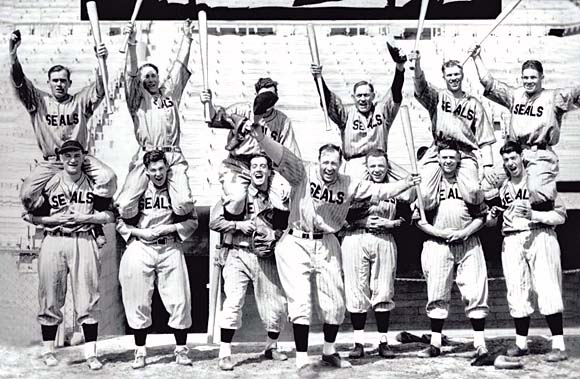
The Best I’ve Ever Seen

This is something I’ve been thinking about lately. I have selected the one person I believe to be the best ever at their position. Why create this list? Because I’m a huge baseball fan and I’m getting excited about the start of the season. My basic rule going in: I have only picked players I have seen with my own eyes, meaning in person.

If you think other players are better, say so. There’s a comment section at the bottom of this post. So, use it.

Here we go…

Pitcher (Starting): Tom Seaver, New York Mets, Cincinnati Reds, Chicago White Sox, Boston Red Sox (1967-1986)

Strength, stamina, brains. Tom Seaver was an absolute warhorse on the mound. The singularly dominant force of his era, as he would have been in any era. Still remembered and loved. And a great ambassador for the game.

Pitcher (Reliever): Mariano Rivera, New York Yankees (1995-present)

At his peak, Rivera was as close to an automatic shut-down as is possible in baseball. Total command of his pitches and any situation in which he found himself. Definition of a ‘closer.’ Call him in from the bullpen and it’s over, baby. Fierce. Close seconds? Dennis Eckersley, Rollie Fingers (points for the ‘stache), Brian Wilson (at his best, he’s fearsome).

Catcher: Johnny Bench, Cincinnati Reds (1967-1983)

As great at the plate as he was behind it. A huge part of the storied ‘Big Red Machine.’ Better, to my mind, than Piazza, Fisk, Carter. Had I seen Berra play in person, we might have had a contest.

1st Base: Albert Pujols, St. Louis Cardinals, Los Angeles Angels of Anaheim (2001-present)

Pujols, still an active player, is a force to be reckoned with. He closely beats out the universally-beloved Willie McCovey.

2nd Base: Joe Morgan, Cincinnati Reds, Houston Astros, San Francisco Giants, Philadelphia Phillies, Oakland A’s (1963-1984)

Morgan earns this spot over Jeff Kent, although Kent was better at the plate, because of his brains, his fielding and his leadership.

3rd Base: George Brett, Kansas City Royals (1973-1993)
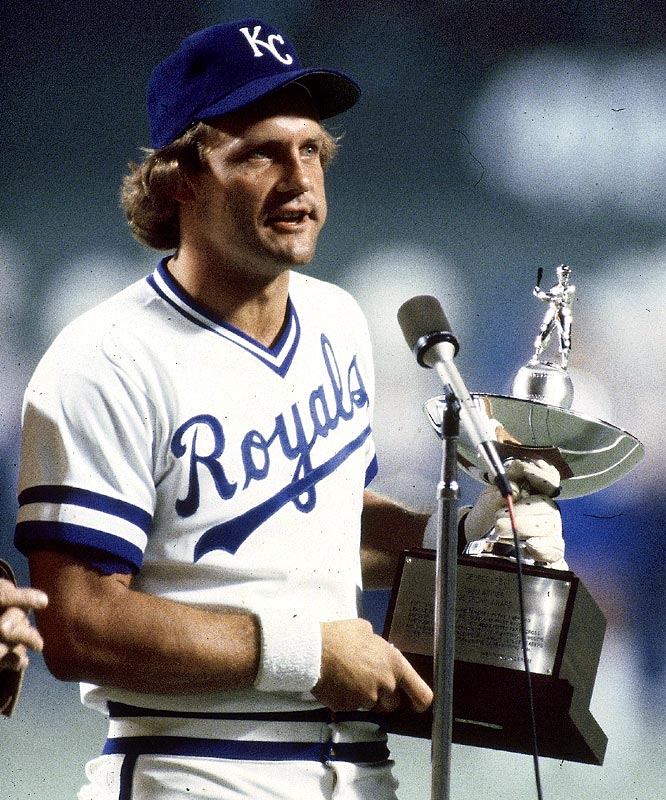
Tough competition here. Brett takes this position over Mike Schmidt mostly because I had the chance to drink with Brett once (in Chicago) and never did with Schmidt.

Shortstop: Cal Ripken, Jr. Baltimore Orioles (1981-2001)
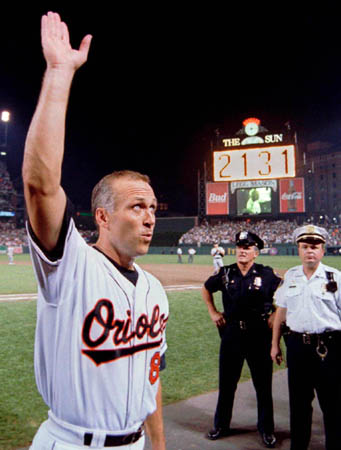
Ripken’s longevity amazes still. His leadership, steadiness and abilities were something special. What’s that, Ozzie Smith was a defensive wizard? Sure. A-Rod? Jeter? Why don’t you just make your own list?

Left Field: Carl Yastrzemski, Boston Red Sox (1961-1983)

Only one generation removed from the legendary Ted Williams; had I seen Williams play in person, he’d be on this list. Playing his entire career in the shadow of the Green Monster, Yaz earned this spot. And, before anyone asks, Barry Bonds was a far distant second.

Center Field: Willie Mays, New York and San Francisco Giants, New York Mets (1951-1973)

What superlatives can you use? Which do you need? Mays was not only the greatest person I’ve ever seen play center field, not only the greatest person I’ve ever seen play baseball. Willie Mays was the greatest athlete I’ve ever seen play anything. No contest.

Right Field: Hank Aaron, Milwaukee and Atlanta Braves, Milwaukee Brewers (1954-1976)
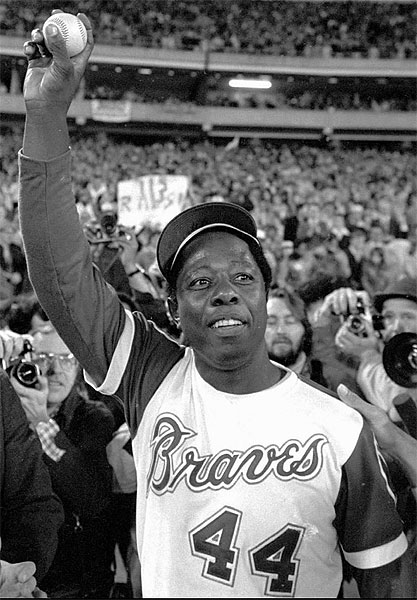
Aaron was the first person to break Babe Ruth’s home run record (without even the hint of performance-enhancing drugs) and was an All-Star every single year between 1955 and 1975. Speedy (in his earlier years) and powerful. Class act.

What’s Important

Reflecting the GOP’s current plunge from major political force to laughingstock, there are essentially now only two ‘serious’ active candidates for the Republican Party’s presidential nomination, Mitt Romney and Rick Santorum. They are, at this moment, shooting at each other in baldly personal ways, trying to capture for themselves the position of most-high arch-conservative national overseer of faith, while simultaneously plotting for the increasing likelihood of a party convention that finds itself unable to select a presidential nominee in the usual fashion.

The prospect of a brokered Republican Party convention is something that should cause paralyzing fear in the hearts of all good Americans. What as-yet-unspoken attacks might be unleashed? Who might emerge as the compromise candidate to break an electoral stalemate? What promises might be made to whom in order to secure enough votes to win? How low can these people go in their pursuit of our nation’s highest office?

You don’t want to know.

Or maybe you’ve seen HBO’s ‘Game Change‘ and you already do.

‘Game Change’ is the story of Sarah Palin’s selection as John McCain’s running mate and her preparation for and participation in the campaign. A couple of things become obvious fairly early in the film. First, McCain was headed to certain defeat without a dramatic choice of running mate; he had become almost irrelevant to the presidential election. Second, Palin was a completely irresponsible choice for Vice President (Only one 72-year-old heartbeat away from the presidency, one wag says in the film.); she was totally unprepared for the job and jaw-droppingly ignorant of governance, diplomacy, finance, or really anything about the nation she sought to govern. Furthermore, Palin was both proudly and willfully ignorant; she was deliberately deaf to experts who were brought in to help her prepare.

All this is, of course, old news. What’s most striking about the film is the fact that McCain’s campaign people knew Palin was a bad choice on so many levels, but kept working to elect her anyway because, hey, that’s the job. John McCain’s presidential campaign communications director, Steve Schmidt, said in a recent interview about the film, “When you have to do things necessary to win…” shit happens, or words to that effect.

So Schmidt and the rest of McCain’s campaign team would have put Sarah Palin in the next chair from the president despite the fact that they knew she would have been a complete disaster for our country. They even had the nerve to wrap their work in the star spangled banner of patriotism, much as today’s generation of Republican candidates continue to do.

Why should we fear backroom deals at the GOP convention? Here’s one reason: Schmidt et al. are still around and still pursuing their ‘profession.’

Why California Swings Too

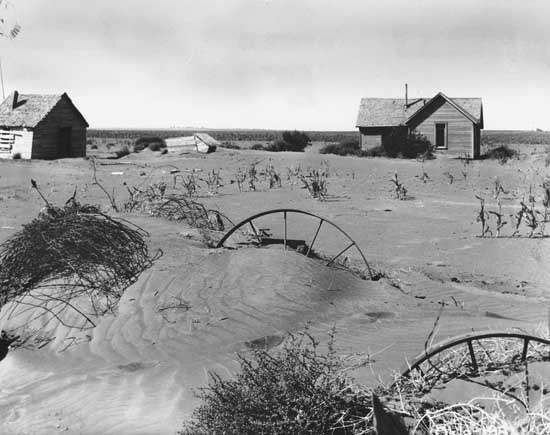
The Dust Bowl of the 1930s was the perfect combination of man-made and natural disasters, the term perfect, not connoting excellence, of course, but perfect in the sense that these two factors built and grew upon each other to reach almost boundless levels of devastation in the Midwest and Great Plains states.

The damage was not solely physical.  Families which had depended on farming the now-buried land were humbled, uprooted, reduced to abject poverty. Foreclosed upon by banks, they began a westward migration of unprecedented size and scope, looking for any sort of work that might be available.

Many of these so-called ‘Okies’ landed in California, pursuing jobs in the growing oil business or in the vast agricultural lands of the state’s valleys; both settings were sadly familiar.

Knowing they’d likely never see their old farms again, the migrants brought all they could carry on the journey – beds, family photos, pots and pans, chairs, quite literally everything. And they brought something else as well, their music.

Thus, Texas (or Western) Swing came to California. And like the cotton and artichokes and tomatoes they toiled over, the Okies’ swing music took root here in California and grew and lasted.

From Bakersfield to Brisbane, clubs opened and attracted headline acts and large crowds of displaced fans of Texas Swing. These amply-muscled oil rig workers and farmhands would wait all week to get paid so they could go down to the local club, meet women, release some pent-up frustration. At Brisbane’s 23 Club, musician Jimmie Rivers recalled, “The music started at 9, fights started at 10.”

Since that time, California has been both home and destination to countless swing bands and artists: Bob Wills, Merle Haggard, ‘Spade’ Cooley, Big Sandy, and many more. Here’s Big Sandy’s version of ‘Tequila Calling.’ We owe a great cultural debt to the migrants who brought their music here.

Swing on, California; swing on.

Happy St. Patrick’s Day, Debbie

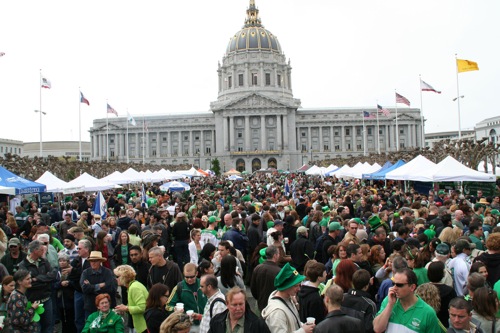
About 30 years ago, a buddy and I went out to ‘celebrate St. Patrick’s Day’ in San Francisco.

We started on Front Street, where the bars would close the block and hold a huge outdoor party. As the late afternoon became evening, we enjoyed the warm hospitality of Harrington’s, the Royal Exchange, even Shroeder’s (German, Irish, what’s the difference?).

Before long, we’d migrated west to Geary and the heavily-Irish Richmond District bars: Pat O’Shea’s, Ireland’s 32, the Abbey Tavern, and others.

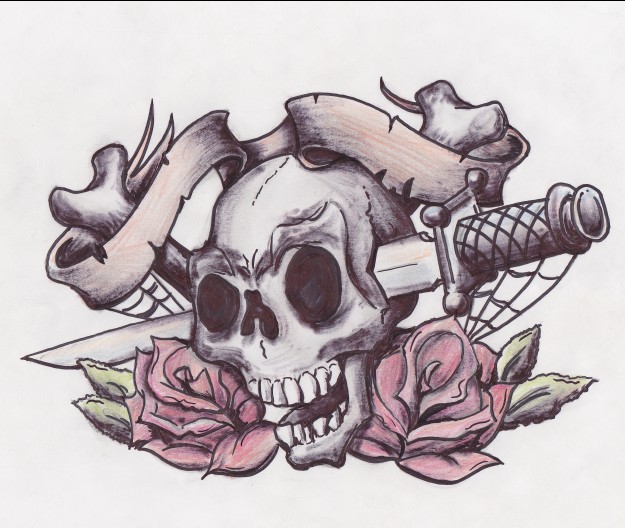
Complete happenstance – in the couple of blocks that separate these bars was a tattoo parlor my pal and I kept passing as we went from place to place. It was on the third trip, as I remember, that one of us had the brilliant idea to get tattooed that night.

Hahahahahahaa.

A few more passes, then we looked at each other with that slack-jawed stare of idiots that meant we would, in fact, go in and get tattooed.

We went in and had to wait; the one artist on duty was busy branding a hoodlum. He told us to look at the designs that covered the walls and pick something out while we waited.

And here, precisely, is where our drunken stupidity evolved into inspired lunacy.

My friend and I were both involved in fairly serious relationships at the time. And for some reason I can’t for the life of me explain now, we thought it would be absolutely HI-larious to get completely grotesque tattoos with the names of other women on them. And we picked random names to permanently affix to ourselves.

I selected the name ‘Debbie.’

Now, I didn’t know anyone named Debbie particularly well, had never dated a Debbie, had no specific intention of ever doing so.  To us in that moment, that was the point.

Hahahahahahaa. Such, my friends, is the stupidity of drink.

We sat on a big red leather couch and waited for our artist to finish a very elaborate piece inspired, perhaps, by Albrecht Durer’s owl, on his client’s left butt-cheek. And I settled into a very self-satsfied state of amusement.

Out of nowhere, my pal said:

“Oh. Oh, no. We’re getting out of here.”

“What?” I said.

“We’re leaving.”

“No way!”

“Read that,” he said, pointing at a large poster entitled, ‘How To Care For Your New Tattoo.’

To the best of my blurry ability, I read:

Point 1: If swelling persists for more than 3 days, see your doctor immediately.

Point 2: If puss or other discharge oozes from the area of your tattoo, see your doctor immediately.

Point 3: If yellowing occurs in the skin around your tattoo, this could be Hepatitis; see your doctor IMMEDIATELY.

And on it went. Honestly, I never got past Point 3. Out we went, and never looked back. But for that hoodlum, but for my friend, I’d be going through life with a hideous tattoo and a stranger’s name on my upper arm forever.

So, a couple of things. Happy St. Patrick’s Day, Debbie, whoever you are. And thank you, Marty. I owe you, man.

Westward Ho

When you travel alone, you’re prone to meet more people, see more unusual things, find more adventure. At least, I am.

Case in point: Cheyenne, Wyoming.

Some years ago, I was driving across country, taking my time and seeing things, meandering my way west after living in the East for years, on my way back home. It was summer and I was going anywhere my map, money and little Renault would take me.

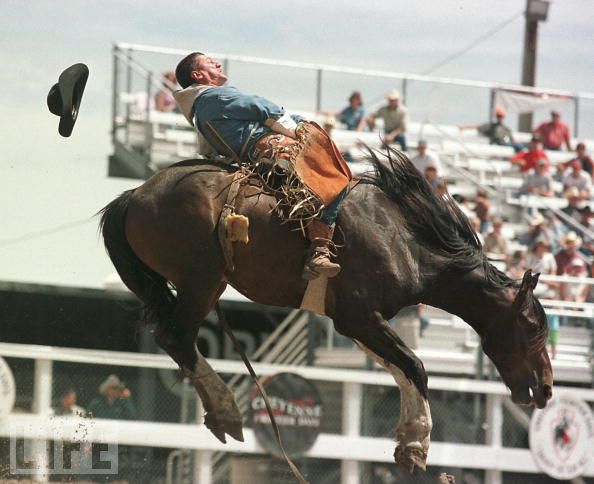
After a long, hot day of driving (no A/C in the old Renault), I pulled into Cheyenne and discovered, to my annoyance, that it was Pioneer Weekend or Frontier Days, or whatever they call their annual celebration of cowboying. The town was overfilled with loud and, by all appearances, drunk men dressed identically – new big hats, new plaid shirts, new tight jeans, big belt buckles, boots, etc.

I’m no cowboy myself, but even I can recognize the look of phonies. These weren’t real cowboys but guys dressed up to go to a cowboy party weekend, and I didn’t want any part of it. I was hot and tired and not used to the altitude and in a crappy mood. So, I decided to roll right through town and keep on going.

Before long, I saw this old hotel on the town’s outskirts. Seemed nice enough and like a place to explore a little. I checked in, had a nap and a shower. Feeling much more human.

Found the hotel’s bar and, to my happy surprise, there were a lot of people, some dancing to a live band, a solid vibe. And the band was even pretty good, biting into some danceable jazz/blues. It was a place I could hang out, I thought, so I took a stool at the bar and ordered a drink.

Within a very few minutes, I was talking with a couple of guys from the nearby Air Force base and another few locals. Everybody was from around Cheyenne and nobody was wearing brand new, department-store cowboy outfits; good signs.

This Cheyenne isn’t so bad, I thought to myself, once I found the real people.

After an hour or so, I got into a conversation with an older guy that went something like this:

Guy: So, you from around here?

Me: No, San Francisco. On my way back there right now. You?

Guy: Yup, I’ve lived in Cheyenne all my life. 55 years. Was married for 19 years before my wife left me. That’s when I had my first homosexual relationship.

Sorry, what?

It was at that exact moment I felt a veil had been lifted from my eyes. I looked around this bar I’d been enjoying. How’d I missed it? The couples dancing to that pretty good band were all men. The people sitting at tables and in booths were all men. The guys I’d been drinking with at the bar? Men.

Somehow, I’d found a gay bar in Cheyenne, Wyoming. What are the odds? And, further, having found it, what are the odds I wouldn’t have even noticed?

Well, I wasn’t about to bolt out of the place, which would have been weird and rude, so I stayed for a couple more drinks. I even got invited to the symphony by a guy I was told was one of Cheyenne’s top lawyers. (He called it a “firm function.”) I was flattered, of course, but I had to get back on the road home the next day.

See what you expect to see; perspective is a funny thing, alright.

Nukes for Iran

[Please also see my subsequent posting: https://sanfranciscoba.wordpress.com/2012/06/05/nuclear-bullsht/]


The atomic bomb was conceived and created 60-something years ago in the minds of men and the high desert of New Mexico.

Almost immediately, the very men who made it had second thoughts. Some tried to talk the president, first Roosevelt, then Truman, out of its deployment, or even disclosure.  It was reported that as nuclear physicist J. Robert Oppenheimer watched the detonation of the first atomic bomb during a test, he recalled words from the Bhagavad Gita: ‘Now, I am become Death, the destroyer of worlds.’

The bomb was, of course, deployed to devastating and horrific result. And, in the contrary nature of humankind, people were both repulsed and irresistibly attracted by the blinding light. The United States had it and everyone else wanted it. We tried our best to hold the secrets safe but, in the end, it was a fool’s errand.

The Soviet Union got it. Others got it too. Science works that way.

The sad truth is, any country on earth able and willing to devote adequate resources can have a nuclear weapon. No president, no political party, no economic sanctions, no alliance of nations, no army can prevent it. That is a stone-cold fact. Pretending otherwise is either (1) whistling past the graveyard or (2) ugly pandering for votes.

We have let the nuclear genie out of the bottle and, armies and sanctions be damned, he will not be returned. The prescient writings have been fulfilled, Dr. Oppenheimer.

‘Now, I am become Death, destroyer of worlds.’

Places of Another Time

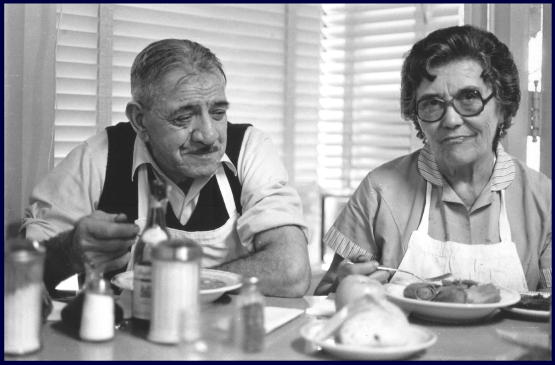
When San Francisco went from sleepy Spanish outpost at the far-distant end of the American continent to the West’s first megalopolis, following the 1849 Gold Rush, the population skewed male, as demographers would say. Boarding houses rented beds, or portions of beds, and centrally-served, plentiful and simple meals to a diverse crowd of sailors, miners (and miner wannabes), soldiers, salesmen, bankers, cops, politicians.

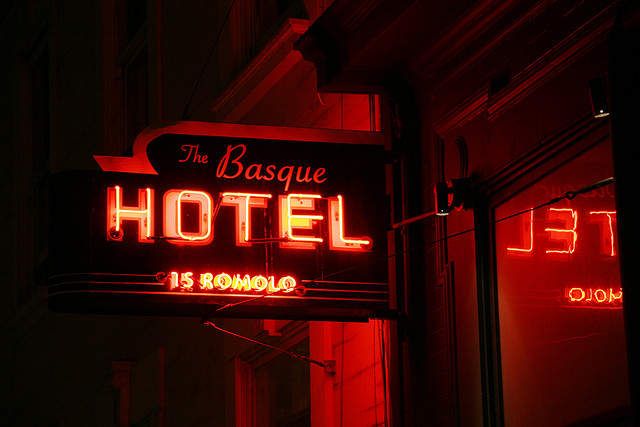
Few still exist, or do so in name only, like the Basque Hotel, formerly an actual hotel with large dining room, now only a restaurant.

Thus began a San Francisco tradition of restaurants that served generous, family-style food. And now, some 150 years later, that tradition maybe breathing its last. Many places have disappeared and the few that remain do not appear to be long for this world.

Perhaps the king of this style of restaurant in San Francisco was the Gold Spike, which closed about six years ago, after a run of 86 years.

It was a meeting place, watering hole, feedbag, diner, neighborhood hall, party venue, lonely hearts club, museum of San Francisco history, and so much more.

My dinners at the Gold Spike were all memorable affairs. I never left without meeting people – visitors and natives alike – hoisting a few drinks, maybe sharing a dinner table. As I understand it, the Spike was unceremoniously tossed out by its landlords, so there was little time for proper goodbyes and thank yous. I do wonder if I’ll ever see those wonderful old photos again, feel the same warmth of welcome, or sit amongst the same oddly diverse crowd.

Another place I loved that has disappeared was La Pantera. The sign is, bizarrely, still there, but the place has long since departed, leaving North Beach a somewhat poorer place.

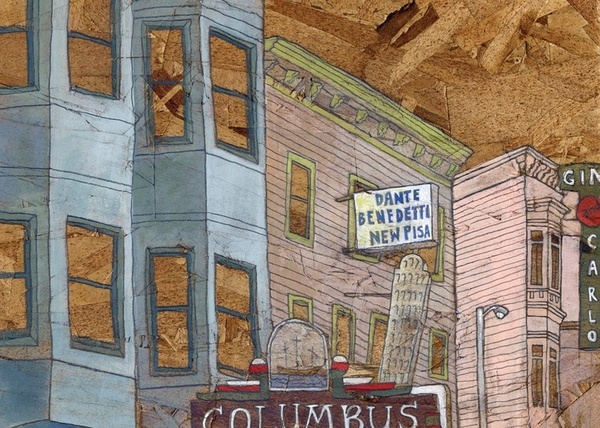
Also gone is Dante Benedetti’s New Pisa, where I had my bachelor party dinner. The New Pisa, as one reviewer suggested, “…brings to mind the essence of all that North Beach was when ‘Jolting Joe DiMaggio’ was a young man working in his family’s better known restaurant closer to the Wharf.” It was also a place where a young student could get spaghetti dinner for $5, plus a buck for a jelly-jar glass of cheap Italian red.

Two places I’m fond of carry on the tradition, Capp’s Corner and the US Restaurant.

Capp’s food can be up and down, but the atmosphere is always noisy and fun; much of the credit due to its proximity to Club Fugazi’s Beach Blanket Babylon. Pre and post show crowds keep Capp’s fun and lively.

The US Restaurant (US doesn’t stand for United States, by the way) has good food and a great family feeling, reminiscent of the best old Italian restaurants in San Francisco but isn’t really family style. Still, it does my heart good to see it busily occupying its latest spot on Columbus. It is still a great place to meet new friends and take in the smells and atmosphere of the San Francisco that was.

If you try very hard, it is still possible to find original, quirky, happy places to eat in what once was an eater’s heaven-on-earth.

Goodbye to a Philadelphian

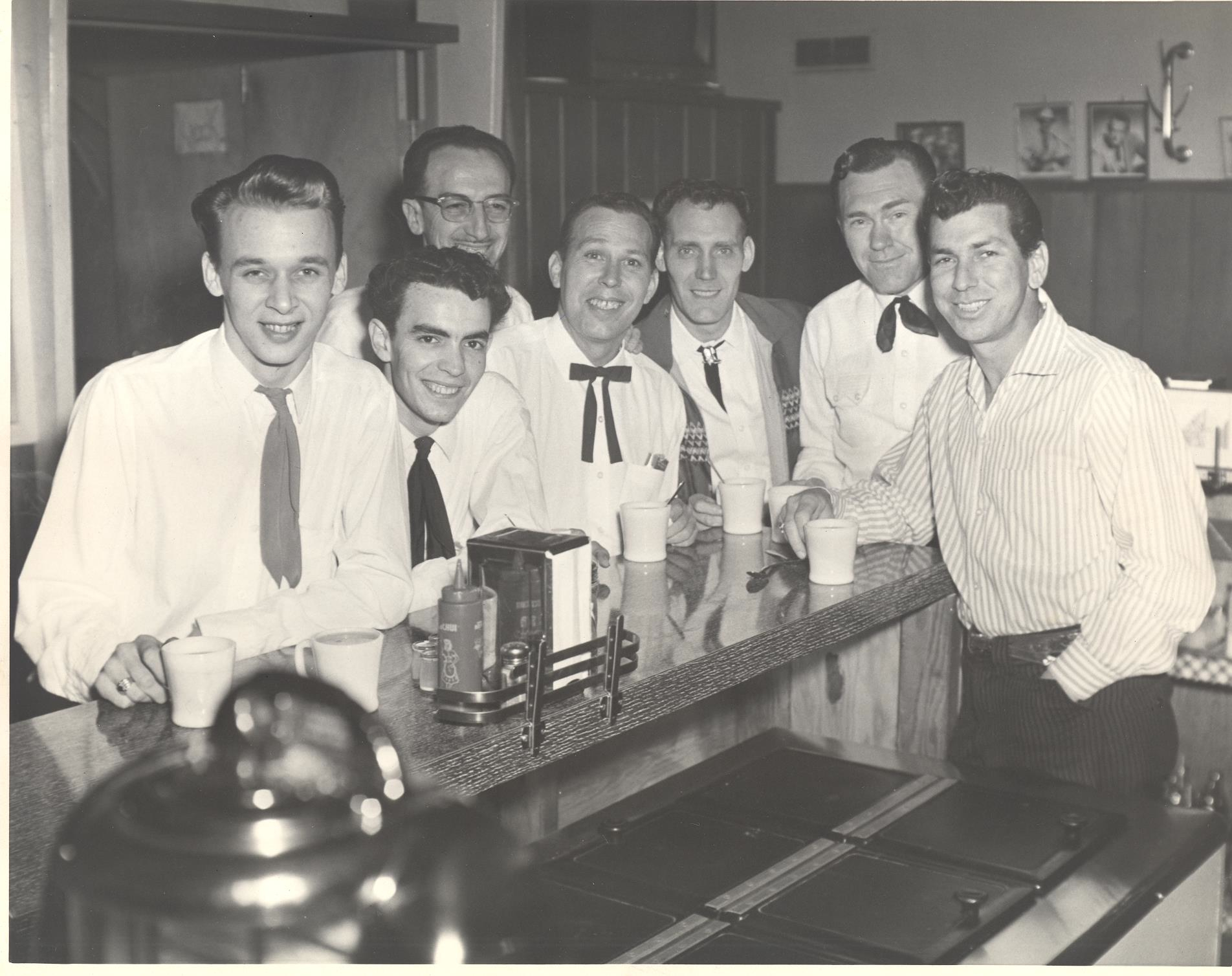
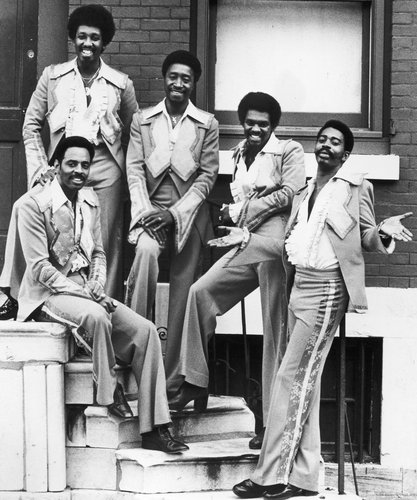
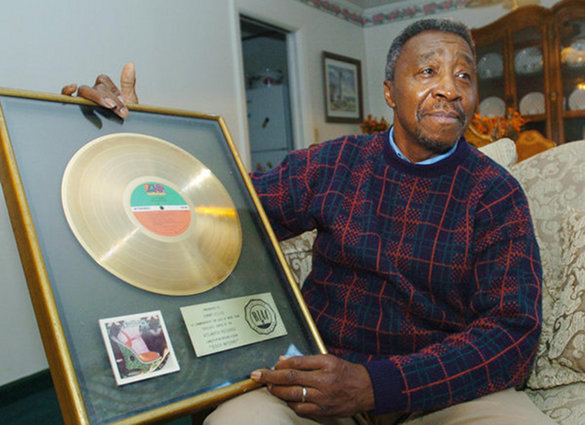
Jimmy Ellis (third from left, above) started, like so many of his generation and place, singing in church. But it wasn’t long before he and friends gathered at favorite streetcorners in his hometown of Philadelphia. (The tradition of streetcorner vocal groups continues in the City of Brotherly Love.)

The cops in Philly called these boys, huddled around trash-can fires for warmth and attention, tramps. Ellis famously remarked that, if he and his singing mates were going to be tramps, they were at least going to be high-class tramps. So, they added a second “m” to their group’s name and became The Trammps, a funky-ass soul and disco group that recorded their first album in 1975. By 1977, their disco mega-hit, “Disco Inferno,” could be heard literally everywhere – in discos, of course, on radio, in cars, schools, around city streets, and on TV dance shows.

Here’s a video of The Trammps performing their biggest hit, “Disco Inferno,” which they continued to do on tour until 2010. Makes me smile every time. (By the way, be sure to notice the fine threads. Wish I had an orange suit.)

Ellis died last week, at the age of 74, while I was away. I didn’t want to let his passing go by without taking a moment to remember him. Rest in peace, Jimmy.

Looking for Real

What may seem like a short detour…

There’s one historic bar in the Union Square district of San Francisco (actually, there are hundreds, but I’m talking about one historic bar in particular), called The Gold Dust Lounge, that’s served drinks to a quintessential only-in-San Francisco crowd of sailors, businesspeople, visitors and neighbors for generations.  Its landlords have recently announced a plan to kick it out in favor of a national chain clothing store.

Now, The Gold Dust Lounge hasn’t been the city’s most popular bar for ages, but the plan pissed a lot of people off, resulting in petitions, protests, online and social media tempests, etc. The question is, why did all these people suddenly get interested in a bar few had ever been to, fewer still had been to in years?

I believe it’s because we’re in a state of national authenticity deficit. Everything we buy, eat, watch, or otherwise consume comes from some centralized corporate authority. Our cities are all filled with the same national chain stores and restaurants. We watch non-locally produced entertainment on movie and TV screens. Even amateur-generated online clips are seen by so many people and follow so few memes, they seem mass-produced.

We’re in a search for the authentic, for the real, wherever we can find it – and it seems downright offensive to shutter a real, honest-to-goodness bar so yet another national chain store that sells the same old jeans can move in.

Think about baseball – America’s self-declared pastime – for a second.

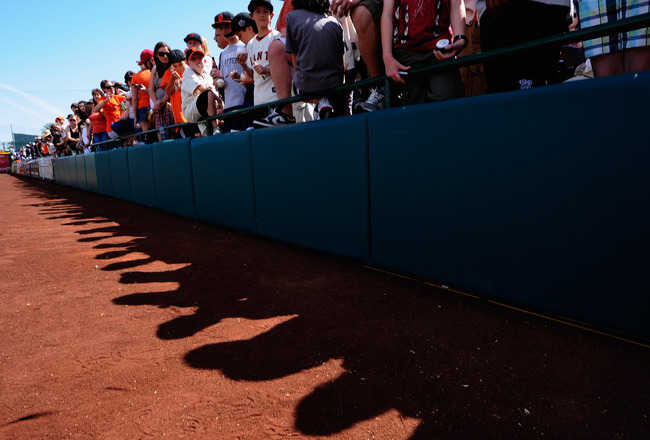
Attendance for Major League Baseball has declined for three straight years, while attendance at Spring Training has grown over the same period.

Those big, corporate-namesake stadiums, filled with untouchable millionaires, are drawing fewer of our fellow Americans.

At the same time, more people are going to Spring Training games, where a bit of baseball’s old vibe still exists. At Spring Training, it’s still possible to get close to players, talk with them before and after games, shake their hands, see them up close – the way fans used to in the majors but aren’t able to anymore.

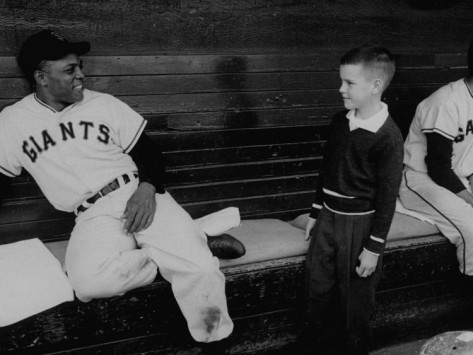
It used to be that ballplayers would live in the town they played in. They’d be seen and known around the neighborhood. They’d stay with a team a long time. They’d be part of team (and town) identity. Whether playing at the Polo Grounds (or later, at Candlestick Park), or stickball with neighborhood kids in the street, Willie Mays was a real Giant.

If I were to advise baseball, or landlords for that matter, about growing a market in these times, I’d say, keep it real. Not that they’ve asked.

Moral Certainty, and Other Fictions

The shadowy group of adolescently sanctimonious hackers known collectively as Anonymous struck at the Vatican the other day, forcing several sites to shut down. In a statement, the group said:

“Anonymous decided today to besiege your site in response to the doctrine, to the liturgies, to the absurd and anachronistic concepts that your for-profit organization spreads around the world.”

This is a philosophy which says: I know unambiguously what’s right and that I will use that consciousness to enforce my greater/better/moral vision upon you. Exactly what the world needs, I’d say. A small group of the self-appointed and self-righteous deciding what content ought to be made available (or not, as the case may be) for the rest of us.

After months of Republican primaries, it’s a principle of behavior the American electorate should be completely accustomed to by now.

Several (all?) Republican presidential candidates have insisted that their particular Biblical interpretations are not only self-evidently accurate, but are also the only possible and appropriate foundations of American public policy. Further, these candidates have expressed the desire to use the full powers available to them, once elected, to coerce behavior they find personally acceptable out of our fellow citizens.

That’s not American, not democratic, and not even civil.

These candidates have a lot in common with the group Anonymous: they believe uncritically in the correctness of their visions and in their right to make the rest of us believe uncritically in them too.

[P.S. – I’m not going to post anything new for the next few days. Don’t take it personally; other pursuits demand my full attention. See you again soon.]